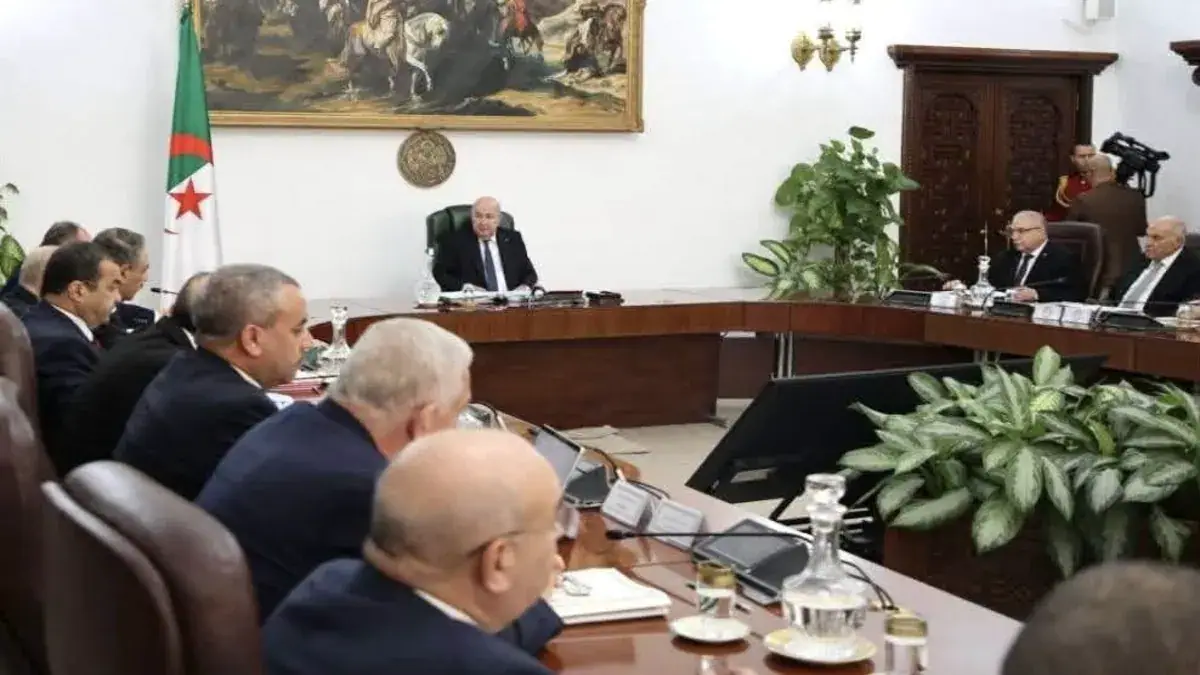
Algerian President Abdelmadjid Tebboune has taken a significant step towards transforming the country's agricultural sector, instructing the government to implement a series of radical reforms. During a meeting of the Council of Ministers on November 8, Tebboune outlined his vision for a modernized agricultural industry, emphasizing the need for greater transparency and more accurate statistics. The reforms aim to address the shortcomings exposed by the recent potato crisis.
One of the key directives issued by Tebboune involves the creation of a new local agricultural organization plan, designed to provide more precise and up-to-date statistics. Additionally, he ordered the immediate establishment of a dedicated statistics service, covering all agricultural activities and professions. This move seeks to eliminate delays in supplying the national market with essential consumer products, particularly staple goods.
The reforms also involve the creation of an office focused on dry legumes and grain storage, under the authority of the Algerian Professional Cereals Office (OAIC). Furthermore, Tebboune has mandated a reorganization of the Ministry of Agriculture, including the redistribution of responsibilities for fisheries and forestry among a delegated minister and a secretary of state.
To ensure a successful upcoming harvest, Tebboune has instructed that necessary agricultural equipment be made available from November, following the implementation of a decision to establish mechanization cooperatives. He has also prohibited the practice of leaving land fallow, deeming it incompatible with modern agriculture. Moreover, the use of maize as green fodder for livestock has been completely banned, due to its lack of positive impact on meat production and market satisfaction.
The President has emphasized the need to combat all forms of production retention by farmers and to tackle fraud throughout the agricultural sector, from production to distribution and supply. Tebboune has also called for a review of the functioning and organization of agricultural sector enterprises, as well as the relevance of their roles.
The Minister of Agriculture, Sid Ali Khaldi, presented an in-depth report on the current state and future prospects of the sector, which informed Tebboune's directives. The President has tasked Khaldi with preparing a specific report on the progress of implementing these recommendations and the effects of the new agricultural law.
The comprehensive reforms aim to revitalize Algeria's agricultural industry, addressing issues such as food security, production, and distribution. The measures are expected to have a significant impact on the country's agricultural landscape, with a focus on modernization, transparency, and efficiency.
Key points
- Algerian President Abdelmadjid Tebboune has announced 10 key measures to reform the country's agricultural sector.
- The reforms aim to modernize the industry, improve statistics, and increase transparency.
- The measures include the creation of new offices, reorganization of the Ministry of Agriculture, and bans on certain practices.