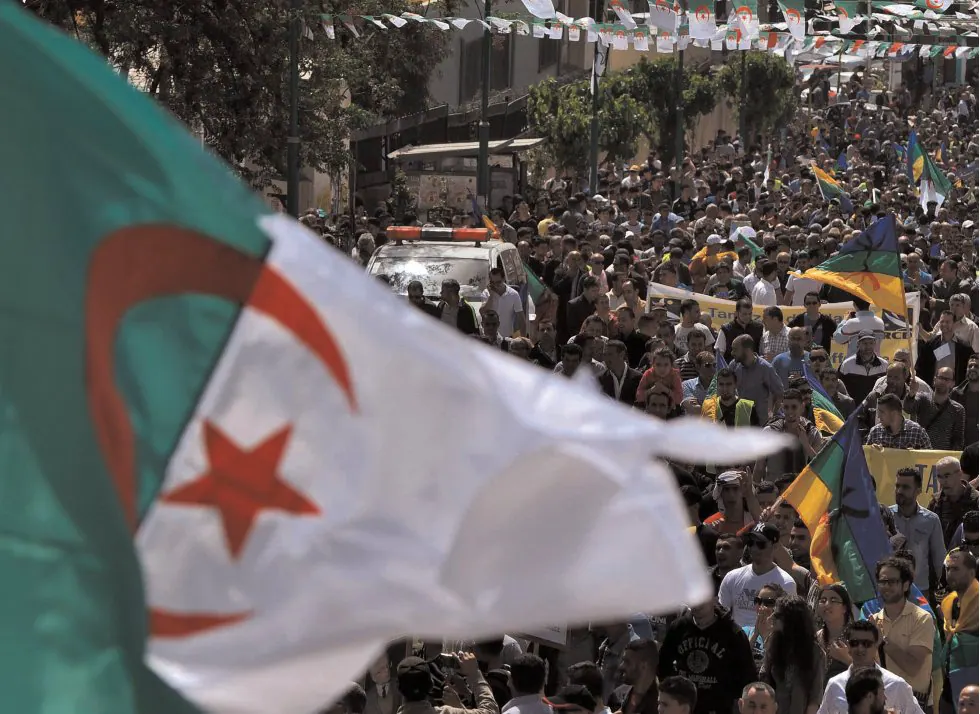
A sense of uncertainty hangs over Algeria's politics as protests continue and the formation of a new government stalls. The weekly protests, which have become a regular occurrence, are set to continue with no clear outcome in sight. Despite their generally peaceful nature, the demonstrations are always fraught with uncertainty. The unpredictable weather forecast, which predicts disruptions, may also deter some protesters.
The delay in announcing the new government's lineup has sparked concerns, with various factions and individuals being approached but showing little enthusiasm. Leaks from discussions suggest that many potential candidates are hesitant to join a government associated with the current system, which is widely rejected by civil society. Several unions have publicly stated their opposition to the current power structure and have declined invitations to engage in dialogue.
The prolonged process of forming a new government has raised eyebrows, with some observers noting that it has taken longer than usual under President Bouteflika's rule. The delay has sparked speculation about whether Prime Minister Bedoui will announce the new government's lineup this weekend. If an announcement is made, it is likely to be after the weekly protests.
Tensions between the FLN and RND, two key parties, have also escalated, with both sides engaging in public spats. The two parties are likely to play a significant role in shaping the country's future, and their disagreements may impact the government's formation. The tensions between the FLN and RND are being closely watched by observers.
The FFS party is also facing an internal crisis, with a deepening rift between its leaders. A national council meeting has been convened by two members of the party's presidium, but three other members have rejected the move and announced a separate meeting. The crisis has been ongoing since the ousting of Hadj Djillani and the subsequent replacement of M'Hena Haddadou with Hakim Belahcel.
The FFS party's internal conflict has sparked concerns about potential violence, with some supporters of the rival factions threatening to take to the streets. The situation is being closely monitored by authorities and observers, who fear that the tensions may boil over into clashes. The party's crisis has weakened its position and raised questions about its future.
As Algeria navigates this period of uncertainty, the international community is watching closely. The country's stability has significant implications for the region, and any further escalation of tensions could have far-reaching consequences. The government's formation and the resolution of the FFS party's crisis will be crucial in determining the country's future trajectory.
Key points
- The Algerian government's formation has stalled due to a lack of enthusiasm from potential candidates.
- Tensions between the FLN and RND have escalated, impacting the government's formation.
- The FFS party is facing an internal crisis, with a deepening rift between its leaders.