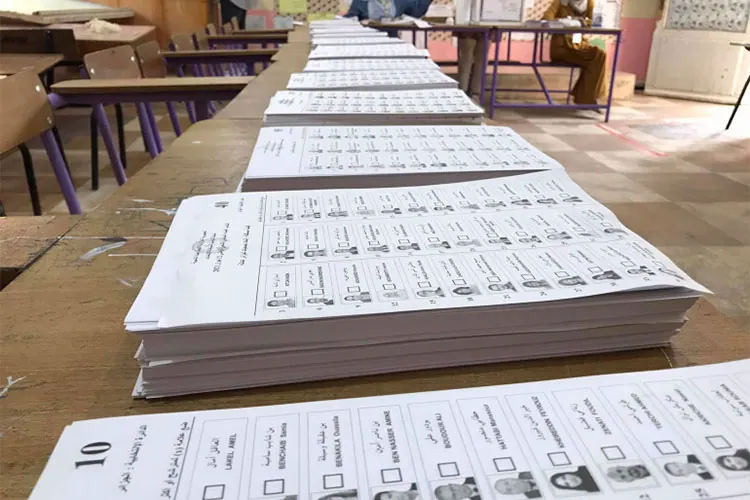
Algerian political parties are entering a critical phase in preparations for the upcoming local elections scheduled for November 28. As of Sunday, they will begin submitting their candidate lists to the Independent National Electoral Authority. However, many parties are struggling to finalize their lists due to a shortage of candidates, leading some to form alliances with other parties to ensure a stronger presence in municipal and provincial councils.
The last-minute scramble has revealed significant challenges for some parties, with several describing a shortage of candidates. This has prompted some parties to form alliances with others, not necessarily based on ideological alignment, but rather on calculations of participation and positioning at the local level. For example, the Movement of Society for Peace has formed alliances with the National Democratic Rally, the National Building Movement, and the Future Front.
Other parties, such as the Socialist Forces Front, have also formed agreements, as have the Voice of the People, the Workers' Party, and the Rally for Culture and Democracy. This comes as parties continue to receive and review candidatures, with some still working to complete their lists before the deadline of October 8. The pressure is mounting, with only a few days left to submit the lists.
Some parties, like the National Liberation Front, have reportedly completed their candidate selection process and are expected to begin submitting their lists to the electoral authority on Sunday. The authority will then review the files to ensure they comply with electoral law and candidacy requirements. This process is crucial, as it will determine the final lineup of candidates for the local elections.
However, some parties have expressed concerns about the phenomenon of "political wandering," where candidates switch parties or run as independents. This has caused uncertainty and forced some parties to re-search for alternative candidates in a short amount of time. Leaders of some parties have criticized the practice, citing instances of candidates being poached by other parties or offered financial incentives to join.
The challenges facing Algerian parties are further complicated by Article 184 of the Electoral Law, which requires parties to ensure their candidates are not linked to illicit financial activities. To mitigate risks, some parties have prepared backup lists, but this has added to the pressure on parties already struggling to finalize their candidate lists.
As the deadline for submitting candidate lists approaches, Algerian parties are working to overcome their challenges and ensure a strong presence in the local elections. The outcome will depend on their ability to navigate the complexities of the electoral process and secure viable candidates. The elections will be a crucial test of the country's democratic processes and the ability of its political parties to engage with voters at the local level.
Key points
- Algerian parties face challenges in finalizing candidate lists due to a shortage of candidates and allegations of candidate poaching.
- Parties are forming alliances to ensure a stronger presence in municipal and provincial councils.
- The electoral process is complicated by Article 184 of the Electoral Law, which requires parties to ensure their candidates are not linked to illicit financial activities.