The Algerian government has announced a substantial increase in electronic payments in 2026, with online payments rising by 63% to 391 billion Algerian dinars (DA) during the first nine months of the year. This growth is part of the government's efforts to modernize the country's payment systems and promote financial inclusion. The increase in electronic payments is seen as a key step towards reducing the use of cash and enhancing the overall efficiency of the financial sector.
The government's roadmap for modernizing electronic payments focuses on three main areas: adapting the regulatory framework, developing electronic payment solutions, and digitalizing payment flows. The goal is to strengthen financial inclusion, modernize public banking and financial systems, and improve transaction monitoring nationwide. By promoting electronic payments, the government aims to reduce the reliance on cash and enhance the security and transparency of financial transactions.
In addition to the surge in online payments, other electronic payment methods also experienced significant growth. Payments made using terminals de paiement électronique (TPE) increased by 48% to 133 billion DA, while mobile payments rose to 56.4 billion DA. However, withdrawals from automated teller machines (ATMs) declined by 14% to 3,777 billion DA. These trends indicate a shift towards electronic payments and a reduction in cash transactions.
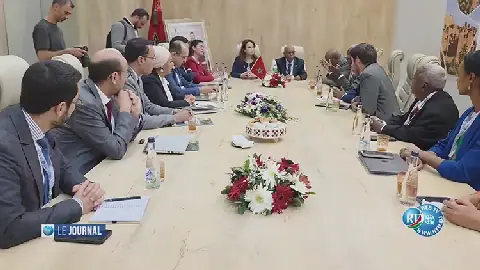
The Algerian government is also focusing on digitalizing sectoral statistics and improving the control of goods at ports and airports. During a recent meeting, the government discussed the implementation of measures to apply decisions made by President Abdelmadjid Tebboune during the last Council of Ministers meeting. These measures aim to enhance the digitalization of sectoral statistics and improve the monitoring of goods.
Another key area of focus is the homologation of construction products. The government has finalized a regulatory framework that defines the conditions and modalities for homologating construction, maintenance, and exploitation products for public works and basic infrastructure. This framework is crucial for promoting the use of reliable and high-quality products in construction projects.
The homologation of construction products is expected to have a positive impact on the quality and durability of infrastructure projects, such as roads, ports, airports, and railways. By ensuring that products meet specific standards and technical specifications, the government aims to protect users, guarantee the solidity of infrastructure, and reinforce environmental norms.
The Algerian government's efforts to promote electronic payments and digitalize sectoral statistics are part of a broader strategy to enhance the efficiency and transparency of the financial sector. By leveraging technology and modernizing payment systems, the government aims to promote financial inclusion, reduce corruption, and improve the overall business environment in Algeria.
Key points
- Online payments in Algeria increased by 63% to 391 billion DA in 2026.
- The government's roadmap for modernizing electronic payments focuses on adapting the regulatory framework, developing electronic payment solutions, and digitalizing payment flows.
- The homologation of construction products is expected to promote the use of reliable and high-quality products in infrastructure projects.
Reporting sources
- Algérie : les paiements en ligne bondissent de 63 % en 2026 · tsa-algerie.com