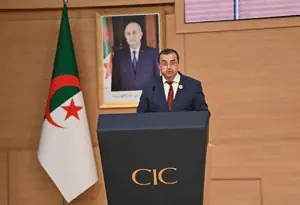
Algerian Minister of State for Energy, Mohamed Arkab, has emphasized the country's commitment to establishing a comprehensive national approach to climate finance and carbon markets. This approach aims to direct investments towards projects with economic viability and measurable climate impact, while ensuring alignment with national priorities and energy security requirements. Arkab made these remarks during a national workshop on climate finance and carbon markets, which was attended by Prime Minister Aïmen Benabderrahmane.
The workshop, held in Algiers, brought together various stakeholders to discuss the role of climate finance and carbon markets in supporting Algeria's energy transition. Arkab highlighted the need for innovative financing mechanisms and international cooperation to address climate challenges. He also stressed the importance of protecting national economic interests and carbon-related project rights through a comprehensive regulatory framework. Algeria aims to reduce greenhouse gas emissions by 14% by 2035, with the potential to increase this target to 31%.
Energy and Renewable Energy Minister, Mourad Adjali, highlighted the strategic importance of climate finance in mobilizing investments for clean energy projects and reducing emissions. He reviewed Algeria's efforts to develop renewable energy, including a national program targeting 15,000 megawatts of renewable energy production by 2035. The program's first phase includes projects with a capacity of 3,200 megawatts, of which 760 megawatts have already been commissioned. Adjali also discussed plans to develop a hydrogen industry, citing the country's significant potential in this area.
Finance Minister, Mohamed Lamin Labo, emphasized the need to integrate climate finance into Algeria's public finance framework, ensuring that resources are directed towards national climate priorities. He highlighted the importance of developing environmental taxation, providing incentives for green investments, and promoting clean technologies and renewable energy. Labo also discussed the role of carbon markets in assigning economic value to emission reductions and attracting low-carbon investments.
Environment and Quality of Life Minister, Kouther Kriko, noted that Algeria has made significant progress in building its national climate framework, integrating environmental considerations into development policies and programs. She highlighted the country's commitment to reducing emissions and adapting to climate change, citing the Nationally Determined Contribution and the National Adaptation Plan. Kriko also emphasized the importance of international cooperation and knowledge sharing in addressing climate challenges.
Sonatrach CEO, Noureddine Dawdi, considered the workshop a crucial step in developing a comprehensive national approach to climate finance and carbon markets. He emphasized the need for a clear regulatory framework and accurate emission measurement methodologies to ensure the effective use of climate finance and carbon markets. Dawdi also highlighted the importance of international cooperation and knowledge sharing in supporting Algeria's efforts to reduce emissions and adapt to climate change.
The workshop concluded with a call for concrete recommendations and actionable mechanisms to support Algeria's climate efforts. Key points emphasized during the workshop include the importance of climate finance and carbon markets in supporting the country's energy transition, the need for a comprehensive regulatory framework, and the role of international cooperation in addressing climate challenges.
Key points
- Algeria aims to reduce greenhouse gas emissions by 14% by 2035.
- The country targets 15,000 megawatts of renewable energy production by 2035.
- Officials stress the importance of climate finance and carbon markets in supporting Algeria's sustainable development goals.