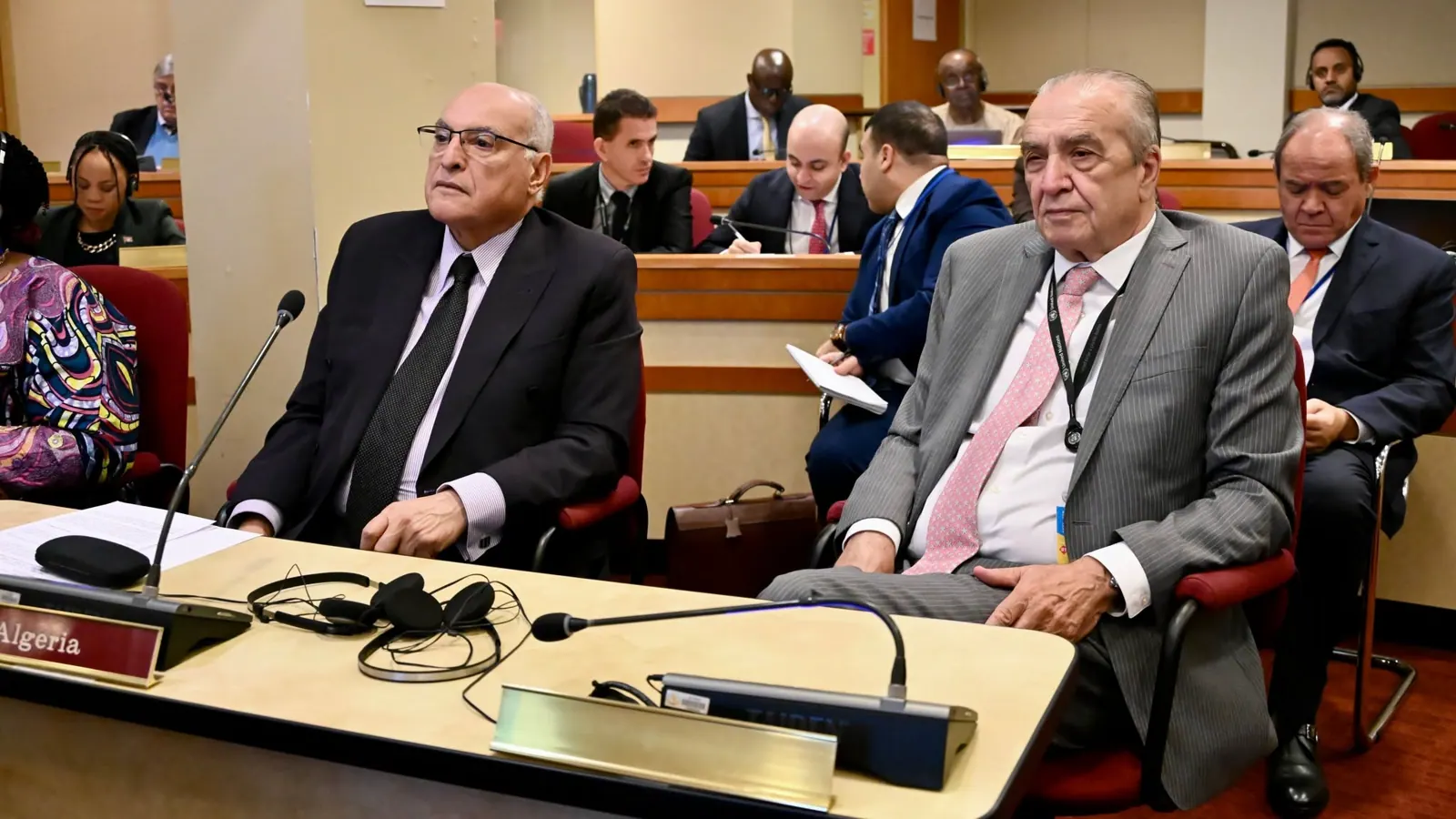
Algerian Minister of State for Foreign Affairs, Ahmed Attaf, participated in the ministerial meeting of the African Union's Peace and Security Council in New York, which focused on "good neighborliness and regional responses to security and terrorist challenges in Africa." During his address, Attaf stressed that good neighborliness has become a fundamental condition for achieving collective security in Africa, given the growing cross-border nature of terrorist threats, organized crime, and the flow of illicit arms and funds.
Attaf emphasized the need to shift from isolated national responses to coordinated regional action based on dialogue, consultation, and security cooperation, while respecting the sovereignty and independence of states. He also highlighted Algeria's priority of combating terrorist financing and drying up its sources, particularly by countering the exploitation of advanced technologies for terrorist purposes. Attaf recalled the "Algerian Guiding Principles" adopted by the UN Security Council in January 2025 as a reference framework for enhancing international efforts in this area.
The Algerian minister noted the role played by President Abdelmadjid Tebboune, as the champion of the African Union in the fight against terrorism and violent extremism. He added that Algeria's approach is based on the conviction that a military and security response, although necessary, cannot alone achieve sustainable security and stability unless accompanied by development, reconciliation, and the strengthening of state institutions.
Attaf reviewed Algeria's experience in the Sahel region, which is based on supporting dialogue and reconciliation, promoting security and border cooperation, and combating terrorism and organized crime, in parallel with promoting development and regional integration. He cited structuring projects such as the Trans-Saharan Highway, the optical fiber network, and the Nigeria-Algeria gas pipeline, which contribute to opening up new economic prospects and supporting the pillars of sustainable security.
The minister emphasized the need to enhance African ownership and leadership of security responses on the continent and to move from early warning to early action, and from crisis management to prevention. He reiterated Algeria's conviction that African security is indivisible and that good neighborliness, solidarity, development, and reconciliation are essential pillars for sustainable security and peace.
Attaf's address also highlighted the importance of a comprehensive approach to addressing security challenges in Africa, including the fight against terrorism, organized crime, and the trafficking of illicit goods. He stressed that this approach should be based on a deep understanding of the root causes of these challenges and should involve the active participation of all stakeholders, including governments, regional organizations, and civil society.
In conclusion, Attaf's participation in the African Union's Peace and Security Council meeting in New York underscored Algeria's commitment to promoting collective security and stability in Africa through good neighborliness, regional cooperation, and a comprehensive approach to addressing security challenges. His emphasis on the importance of African ownership and leadership of security responses on the continent reflected Algeria's desire to see Africans take charge of their own security and development.
Key points
- Good neighborliness is a fundamental condition for achieving collective security in Africa.
- Algeria prioritizes combating terrorist financing and drying up its sources.
- A comprehensive approach is needed to address security challenges in Africa, including the fight against terrorism, organized crime, and the trafficking of illicit goods.