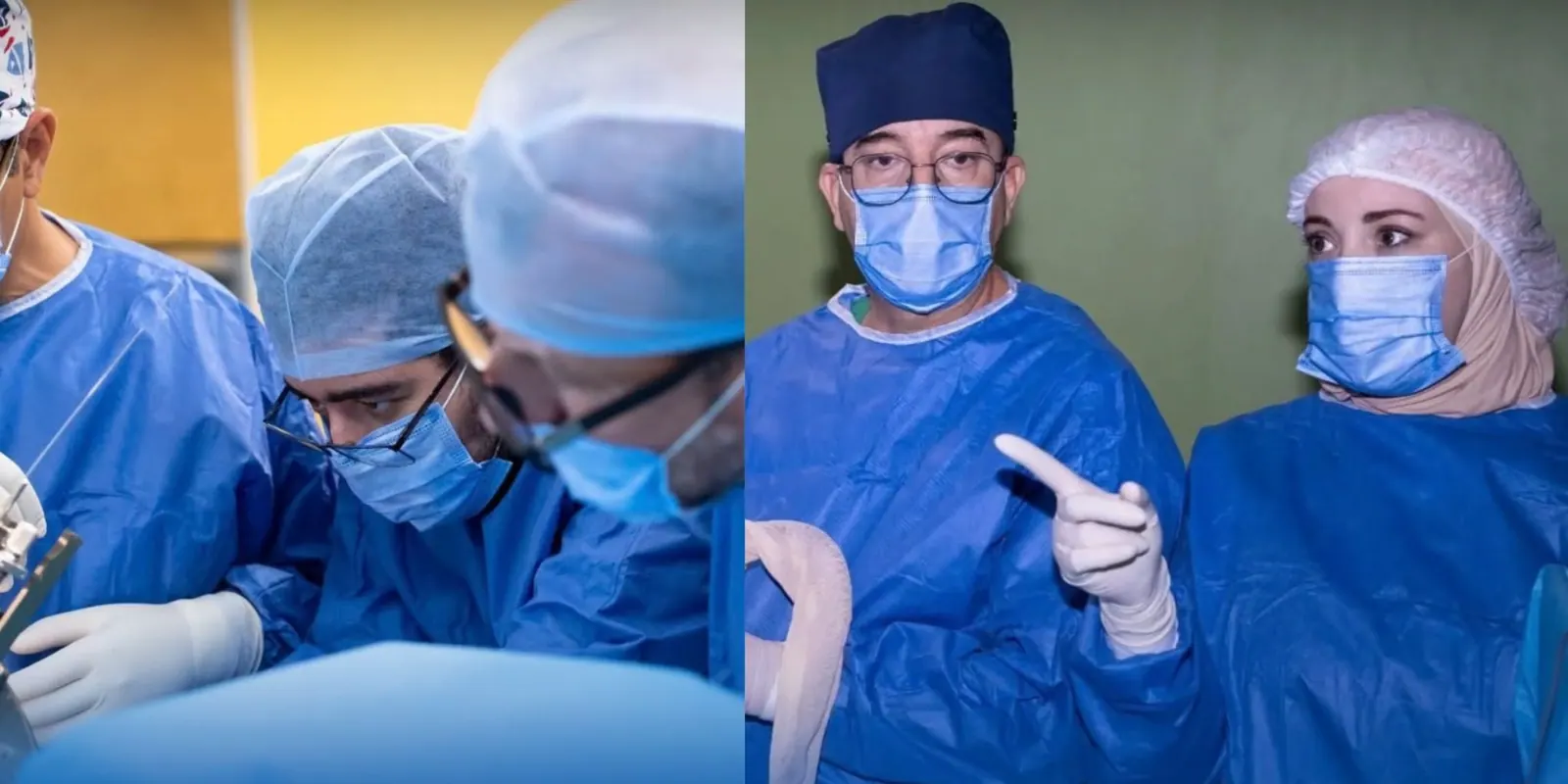
The CHU de Blida has taken a significant step forward in its neurosurgery capabilities with the acquisition of the StealthStation S8, a navigation system developed by Medtronic. This technology allows surgeons to track the trajectory of their instruments in real-time within the brain, reducing the risk of complications and improving patient outcomes. The system has been installed in the hospital's neurosurgery department, which is led by Professor Sohail Taliba. According to the IMC, the official representative of Medtronic in Algeria, no other hospital in North Africa has this technology.
The StealthStation S8 system works by superimposing images of the patient's brain with the real-time position of the surgical instruments, providing a precise and updated view of the surgical site. This allows surgeons to navigate complex brain structures with greater accuracy and confidence. The system is particularly useful in procedures such as brain tumor removal, where precision is critical to avoid damaging surrounding brain tissue. By reducing the risk of complications, this technology can improve patient outcomes and reduce recovery times.
The acquisition of the StealthStation S8 system is part of a broader effort to modernize Algeria's healthcare infrastructure. The CHU d'Oran, in western Algeria, has also made significant investments in advanced medical technology, including 3D printing-assisted cranioplasty. These developments reflect a growing trend towards providing high-quality medical care in Algeria, reducing the need for patients to travel abroad for treatment. The CHU de Blida's investment in neurosurgery technology is a significant step forward in this effort.
The StealthStation S8 system has several key applications, including the removal of brain tumors and the treatment of Parkinson's disease. In brain tumor removal procedures, the system allows surgeons to precisely locate and remove tumors while preserving surrounding brain tissue. For patients with Parkinson's disease, the system can be used to implant electrodes that help regulate abnormal brain activity. These procedures require a high degree of precision, and the StealthStation S8 system provides surgeons with the accuracy and confidence they need to achieve optimal outcomes.
The CHU de Blida's neurosurgery department has a strong reputation for providing high-quality care, and the acquisition of the StealthStation S8 system is expected to further enhance its capabilities. The hospital's team of neurosurgeons has already demonstrated its expertise in complex procedures, including a recent successful reconstruction of a patient's femur using a mega-prosthesis. With the StealthStation S8 system, the hospital is well-positioned to become a regional reference center for precision surgery.
The introduction of the StealthStation S8 system in Algeria also reflects a growing collaboration between Algerian healthcare professionals and international experts. Recently, a scientific conference on Parkinson's disease treatment was held in Sétif, bringing together Algerian and international experts to share knowledge and best practices. This kind of collaboration is essential for ensuring that Algerian patients have access to the latest medical advancements and technologies.
The long-term impact of the StealthStation S8 system on Algerian healthcare remains to be seen, and will depend on factors such as maintenance, ongoing training, and patient volume. However, the acquisition of this technology represents a significant investment in the country's healthcare infrastructure, and is likely to have a positive impact on patient outcomes and the country's medical reputation.
Key points
- The CHU de Blida is the first hospital in North Africa to acquire the StealthStation S8 neurosurgery navigation system.
- The system allows for real-time tracking of surgical instruments within the brain, reducing the risk of complications and improving patient outcomes.
- The acquisition of the StealthStation S8 system reflects a broader effort to modernize Algeria's healthcare infrastructure and provide high-quality medical care to patients in the region.