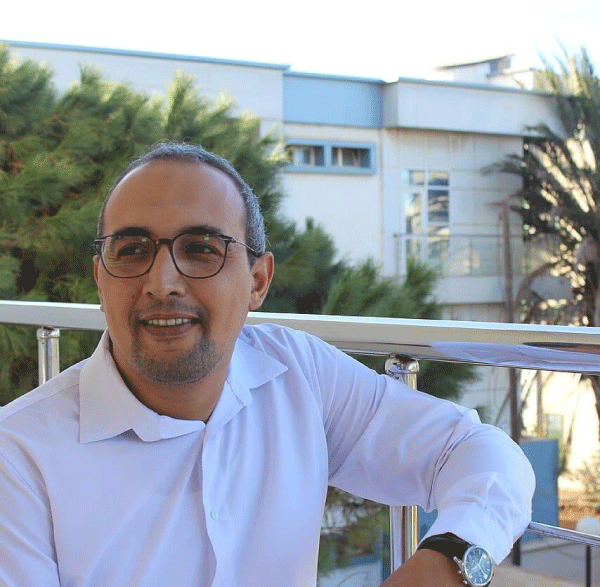
Abdelwahab Issaoui, a renowned Algerian writer and novelist, has spoken about the current state of historical novels in Algeria. In an interview with An-Nasr, Issaoui emphasized that the conditions for writing novels and history differ, despite their intersections. He believes that historical writing aims to convey facts from a particular perspective, while novels explore possibilities, often contradicting the concept of certainty. This fundamental difference allows novels to achieve freedom that is inherent to the human condition.
Issaoui's views on historical novels are informed by his extensive reading of the genre. He notes that, unlike earlier generations of Algerian writers, contemporary authors are exploring new areas and approaches to historical fiction. According to Issaoui, the current generation of writers is driven to discover unexplored territories in Algerian history and culture. With Algeria's rich history, diverse geography, and complex cultural heritage, Issaoui believes that there are many stories waiting to be told.
The writer highlights the significance of historical novels in understanding the past and its relevance to the present. He argues that the past requires multiple reviews and reinterpretations, and that novels are uniquely suited for this task. Issaoui's own work, including his award-winning novel "Al-Diwan Al-Isberti," demonstrates his commitment to exploring Algeria's history and culture through fiction.
Issaoui also reflects on the evolution of historical novels in Algeria. He notes that earlier works, such as those by pioneers of Algerian literature, approached history from a more epic and heroic perspective. In contrast, contemporary writers are more inclined to explore the complexities and nuances of historical events. This shift, according to Issaoui, allows for a more diverse and inclusive representation of Algerian history.
The use of historical documents and archives in novels is another aspect that Issaoui discusses. He believes that incorporating these elements can enrich the narrative and provide a more authentic representation of the past. However, Issaoui also cautions against reducing novels to mere historical accounts or relying too heavily on documentation. Instead, he advocates for a balanced approach that blends historical accuracy with literary creativity.
Issaoui's own literary career is a testament to his passion for exploring Algeria's history and culture. His works, including "Sinima Jacob" and "Sihera Di Moirti," have received critical acclaim and won several awards. Through his writing, Issaoui aims to contribute to a deeper understanding of Algeria's complex past and its ongoing impact on the present.
In conclusion, Issaoui's insights offer a nuanced perspective on the state of historical novels in Algeria. As a writer and novelist, he is committed to exploring the country's rich cultural heritage and encouraging future generations of writers to do the same. With its complex history, diverse geography, and vibrant culture, Algeria remains a fertile ground for historical novels that can educate, inspire, and challenge readers.
Key points
- The current generation of Algerian writers is driven to discover unexplored territories in Algerian history and culture.
- Historical novels in Algeria have evolved from a more epic and heroic perspective to a more nuanced and complex approach.
- The use of historical documents and archives in novels can enrich the narrative and provide a more authentic representation of the past.