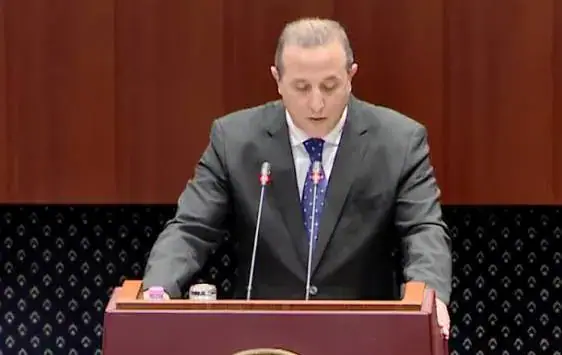
Algeria's Minister of Finance, Mohamed Lamine Lebbou, presented the country's 2027 budget plan to lawmakers, outlining efforts to diversify public revenue, attract informal funds, and mitigate the impact of global inflation. The plan aims to protect the purchasing power of citizens, particularly those with low incomes, while rationalizing public spending. Lebbou emphasized that the budget reflects the state's social character and commitment to protecting the power of purchase of vulnerable categories.
The 2027 budget plan focuses on encouraging productive investment, supporting sectors outside of hydrocarbons, and expanding the economic and tax base without increasing tax rates. Measures include improving tax collection, strengthening tax administration, and combating tax evasion. Lebbou also highlighted the importance of supporting economic growth and accelerating the implementation of large economic projects with high returns, particularly in the mining, transportation, industry, agriculture, and agri-food sectors.
To preserve citizens' purchasing power and reduce inflationary pressures, the government aims to ensure price stability, guarantee the availability of essential products, and combat speculation and monopolies. This will be achieved through continued support for essential consumer products and services, rehabilitation of wholesale markets, strengthened market control, and the development of strategic stocks and digital control mechanisms.
Lebbou explained that the implementation of targeted support policies is linked to the completion of the digitalization process, which will ensure fairness and equality in the distribution of aid. In response to lawmakers' questions about the state's financial balances, Lebbou stated that Algeria's public debt remains below the reference threshold for emerging markets. He emphasized that 99% of public debt is domestic, giving the country significant autonomy in making economic decisions.
The minister discussed the budget deficit, stating that it will be addressed through a balanced approach that mobilizes financial resources, uses domestic debt and the Regulation Fund, and prioritizes rationalizing spending, expanding the tax base, and combating tax evasion. Lebbou also mentioned the state's orientation towards diversifying financing tools, such as sovereign checks, and improving the effectiveness of public spending.
Lebbou provided examples of measures to attract circulating funds and valorize national assets, including updating the land tax rate from 1% to 2.5%. He also reported that the 11 recently created wilayas have received a total financial envelope of 152 billion dinars in commitment authorizations and 132 billion dinars in payment credits. These funds will be used to build vital structures and infrastructure in these wilayas.
The minister concluded by emphasizing the importance of the 2027 budget plan in achieving the state's social and economic objectives. The plan aims to promote economic growth, improve citizens' living standards, and ensure the country's financial stability. Key aspects of the plan include diversifying revenue, controlling inflation, and supporting economic growth.
Key points
- The 2027 budget plan prioritizes the protection of citizens' purchasing power and the promotion of economic growth.
- The plan aims to diversify public revenue and reduce reliance on hydrocarbons.
- The government will focus on supporting sectors outside of hydrocarbons, such as start-ups and small businesses.