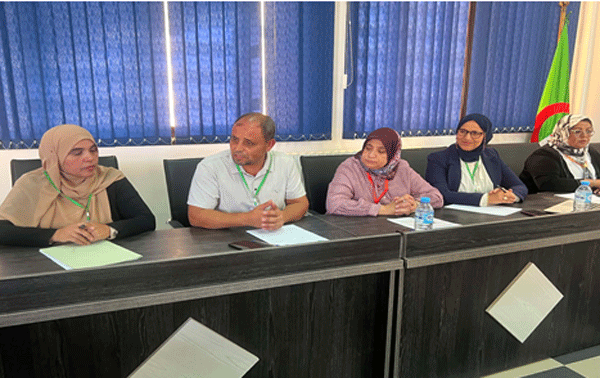
Algerian experts and educators gathered at a national forum to discuss the growing phenomenon of private tutoring and its impact on the education system. The forum, organized by the Department of Educational Sciences at the University of Psychology and Educational Sciences, brought together professors from around 20 universities to share their insights and concerns. They highlighted that nearly 60% of high school students rely on private tutoring to prepare for their baccalaureate exams.
The experts warned that private tutoring has become a commercialized market rather than a means of supporting students. They expressed concerns about the negative impact on the education system, particularly on the role of teachers. The forum's participants emphasized the need to regulate private tutoring and restore the teacher's position in the educational process. They also discussed the social and economic implications of this phenomenon, including the creation of social disparities among students.
According to Professor Hazem Hamani, Dean of the University of Psychology and Educational Sciences, the forum's topic is timely, given the growing reliance on private tutoring. He described private tutoring as a parallel market that imposes its own logic, including scheduling and pricing. Hamani noted that many Algerian families sacrifice a significant portion of their income to support their children's private tutoring, which can be a significant burden.
Dr. Amina Boudderabene, representative of the Ministry of Education, highlighted the findings of a field study she conducted on private tutoring. The study revealed that students from all socio-economic backgrounds rely on private tutoring, despite the availability of public education. Boudderabene explained that families use private tutoring to achieve specific goals, such as improving their children's chances of success in the baccalaureate exams or accessing prestigious educational programs.
The experts also discussed the negative consequences of private tutoring, including student burnout, stress, and difficulties in balancing public and private education. They emphasized that private tutoring can perpetuate social inequalities and undermine the role of teachers. Dr. Sabrine Tabouche, president of the forum, stressed that the goal of the discussion was not to condemn private tutoring but to initiate a scientific debate about its causes, forms, and impact on the education system.
The forum's participants also examined the relationship between private tutoring and teacher training. Dr. Eid Qrain noted that the phenomenon of private tutoring is linked to the quality of teacher training and the challenges faced by teachers in the education system. He emphasized that teaching is a mission, not just a profession, and that the commercialization of education can undermine the role of teachers.
The experts concluded that regulating private tutoring and promoting equal access to quality education are essential to addressing the negative consequences of this phenomenon. They called for a comprehensive approach to address the root causes of private tutoring and to restore the role of teachers in the education system. The forum's discussions highlighted the need for a collaborative effort to ensure that all students have access to quality education, regardless of their socio-economic background.
Key points
- Experts warn that private tutoring has become a parallel market affecting the education system and the role of teachers.
- The phenomenon of private tutoring perpetuates social inequalities and undermines the role of teachers.
- Experts call for regulating private tutoring and promoting equal access to quality education.