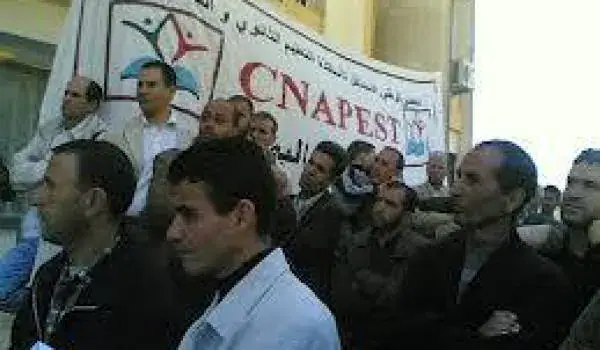
Algerian education sector unions, grouped under the intersyndicale coalition, have launched a nationwide strike and marches. The strike, which began on Monday, is aimed at pressuring the government to address the sector's problems. The coalition, comprising six unions, including Cela, Cnapeste, Satef, Snapest, Snte, and Unpef, had previously called for a two-day strike on February 26 and 27, which reportedly had no impact.
The intersyndicale coalition has announced that it will boycott all activities and meetings organized by the Ministry of National Education. The unions are demanding a real and effective handling of their grievances, which include the annulment of the retirement reform, participation in the preparation of the new labor law, and a revision of the salary grid. They also want an improvement in the purchasing power of all workers in the sector.
According to the chargé de communication of Unpef, the strike is motivated by the lack of good will from the government to address the problems of sector workers. The unions have repeatedly raised these issues with high authorities, but to no avail. The coalition is demanding the implementation of decree 266/14, which would allow teachers with licenses or DEUA to be classified in category 12 of the salary grid, rather than category 11.
The education sector unions are also calling for a revision of the particular status of sector workers and the lifting of restrictions on union freedoms. They want the maintenance of work through the joint commission, the preservation of proportional retirement and retirement without age conditions, and the definitive abolition of article 87 bis of the 2015 finance law.
Furthermore, the coalition is demanding the creation of a specific bonus for common and qualified workers. The strike and marches are taking place across the country, with demonstrations starting from the education directorates in all wilayas. The unions had previously attempted to negotiate with the Ministry of National Education, but their efforts were unsuccessful.
The current strike action is part of a series of protests by the education sector unions. Despite attempts by the ministry to dissuade them, the unions remain determined to press for their demands. The situation remains tense, with no clear indication of a resolution in sight. The impact of the strike on the education sector and the country as a whole remains to be seen.
The strike has significant implications for the education sector in Algeria. With the unions refusing to back down, the government faces increasing pressure to address their demands. The coming days will be crucial in determining the outcome of the strike and the future of the education sector in Algeria.
Key points
- The Algerian education sector unions are demanding a revision of the salary grid and an improvement in the purchasing power of all workers in the sector.