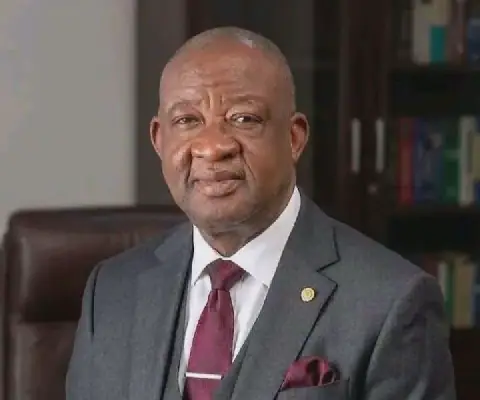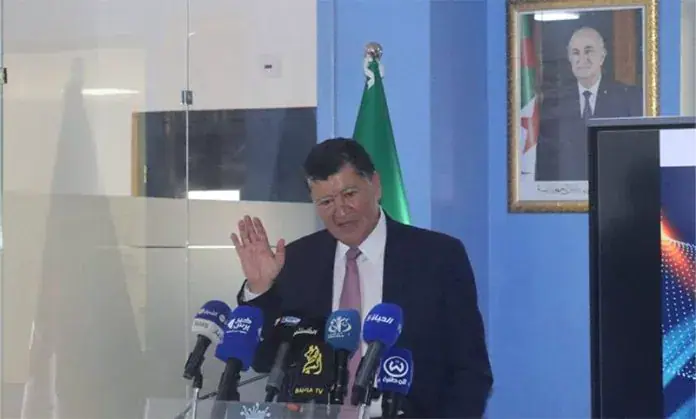
On November 4, 2026, Professor Elias Zerhouni, president of the Algerian Higher Council of Scientists Abroad, spoke at a conference organized by the University of Science and Technology Houari-Boumediene (USTHB). The conference focused on the strategy and development prospects of the Center for Technologies and Innovation in Virtual Education Systems (TIVES). Zerhouni emphasized that integrating artificial intelligence (AI) in higher education requires a transformation of pedagogical methods while preserving students' intellectual autonomy.
USTHB Rector Djamal Eddine Akretche highlighted the need to reassess teaching methods in light of technological changes. He noted that traditional teaching methods from the 1970s and 1980s are no longer suitable for new generations of students. The widespread absences in university courses raise questions about the adequacy of current pedagogical practices. Akretche stressed that new approaches are necessary to adapt to the possibilities offered by digital technologies.
Professor Elias Zerhouni advocated for a personalized approach to teaching, taking into account students' different capacities, learning rhythms, and needs. He suggested that educational content should be tailored to each student's profile, transmitted in an appropriate manner, and at the right time. Zerhouni recommended introducing AI in higher education first, allowing for the development and testing of tools before extending them to other educational levels.
Zerhouni emphasized that introducing AI in education should not be limited to adopting new digital tools but also involves a rethinking of pedagogical approaches and the role of teachers. He stressed the importance of verifying AI-generated results and confronting them with available scientific data. The goal is not to substitute AI for human reasoning but to use it as a tool to support learning and research.
The conference also highlighted the importance of teacher training in successfully integrating AI in education. Zerhouni emphasized that users must master AI tools before transmitting them effectively. The TIVES center plans to prioritize the development and experimentation of its solutions before launching large-scale training programs. A community of teachers and students will be established to test these devices and contribute to the diffusion of skills within universities.
The dimension of ethics is also crucial in the integration of AI in education. Zerhouni stressed that AI use must preserve students' capacity for reflection, responsible behavior, and critical thinking. AI should not reduce learning to accumulating answers but rather promote a genuine understanding of knowledge. The TIVES center aims to establish a program that supports cooperation between researchers in Algeria and those abroad.
As part of its strategy, TIVES will support a doctoral program for 20 researchers, thanks to funding from foundations. Zerhouni emphasized the importance of allowing young researchers to focus on their scientific work to promote knowledge production and the development of new technological solutions. The center aims to establish a system that fosters cooperation between established researchers in Algeria and those living abroad, focusing on national competence, scientific rigor, and infrastructure development.
Key points
- Professor Elias Zerhouni advocates for integrating AI in higher education while preserving student autonomy.
- The TIVES center aims to develop and experiment with AI solutions before launching large-scale training programs.
- A doctoral program will be established to support 20 researchers in their scientific work.