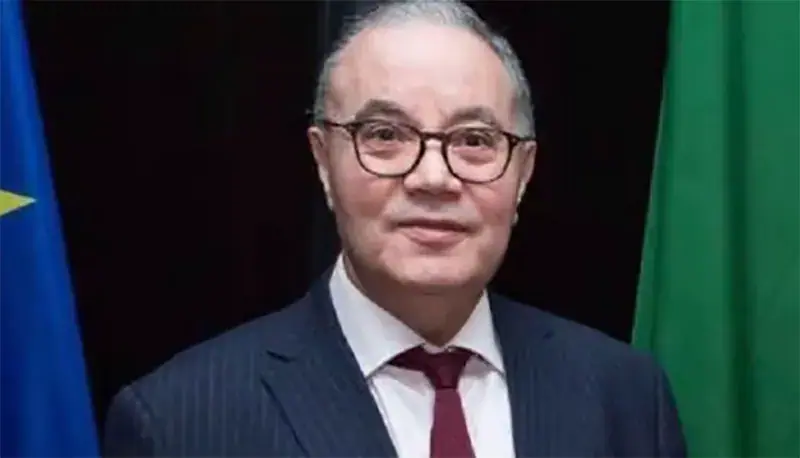
The recent decision by the UN Security Council not to renew the mandate of MINURSO, the UN mission for the organization of a referendum on self-determination in Western Sahara, has sparked controversy. The Moroccan government has interpreted this decision as a victory, but Algerian diplomat Amar Belani argues that it does not signify the end of the Sahrawi issue's examination by the UN Security Council.
According to Belani, the Sahrawi issue predates the creation of MINURSO in 1991 and is rooted in the UN's recognition of Western Sahara as a non-autonomous territory in 1963. The Sahrawi people's struggle for independence continues, and the principle of self-determination is an inalienable right that cannot be canceled.
Belani points out that UN Secretary-General António Guterres recently emphasized this principle, which may not sit well with Morocco. In a Facebook post, Belani analyzed the Security Council's resolution adopted on October 31, 2025, and argued that it maintains important guarantees for the Sahrawi people, including their right to self-determination and the involvement of the Polisario Front in the political process.
The resolution, according to Belani, calls for parties to engage in negotiations without prior conditions and maintains the Polisario Front as a party to the political process. These dispositions, unlike the MINURSO mandate, do not contain an expiration clause and are not automatically interrupted by the non-renewal of the MINURSO mandate.
Furthermore, Belani notes that the resolution's paragraph 6 stipulates that the Security Council remains seized of the issue. He also emphasizes that Staffan de Mistura, the UN Secretary-General's personal envoy, retains his mandate, but must maintain neutrality and avoid taking positions that favor one party over the other.
Belani warns that de Mistura should not repeat past mistakes, such as supporting autonomy under Moroccan sovereignty, which would be a deviation from his required neutrality. He stresses that Morocco has no authority to unilaterally end the Security Council's examination of the Sahrawi issue or abrogate the dispositions of a resolution adopted by the Council.
The Algerian diplomat asserts that the UN's responsibility in the Sahrawi dossier remains intact, regardless of the MINURSO mandate's expiration or failed draft resolutions. He cites the UN Charter and previous resolutions that enshrine the Sahrawi people's right to self-determination, ensuring that the decolonization process has its own independent legal foundation.
Key points
- The end of MINURSO's mandate does not signify the end of the Sahrawi issue's examination by the UN Security Council.
- The UN's responsibility in the Sahrawi dossier remains intact, regardless of the MINURSO mandate's expiration.
- The Sahrawi people's right to self-determination is an inalienable right that cannot be canceled.