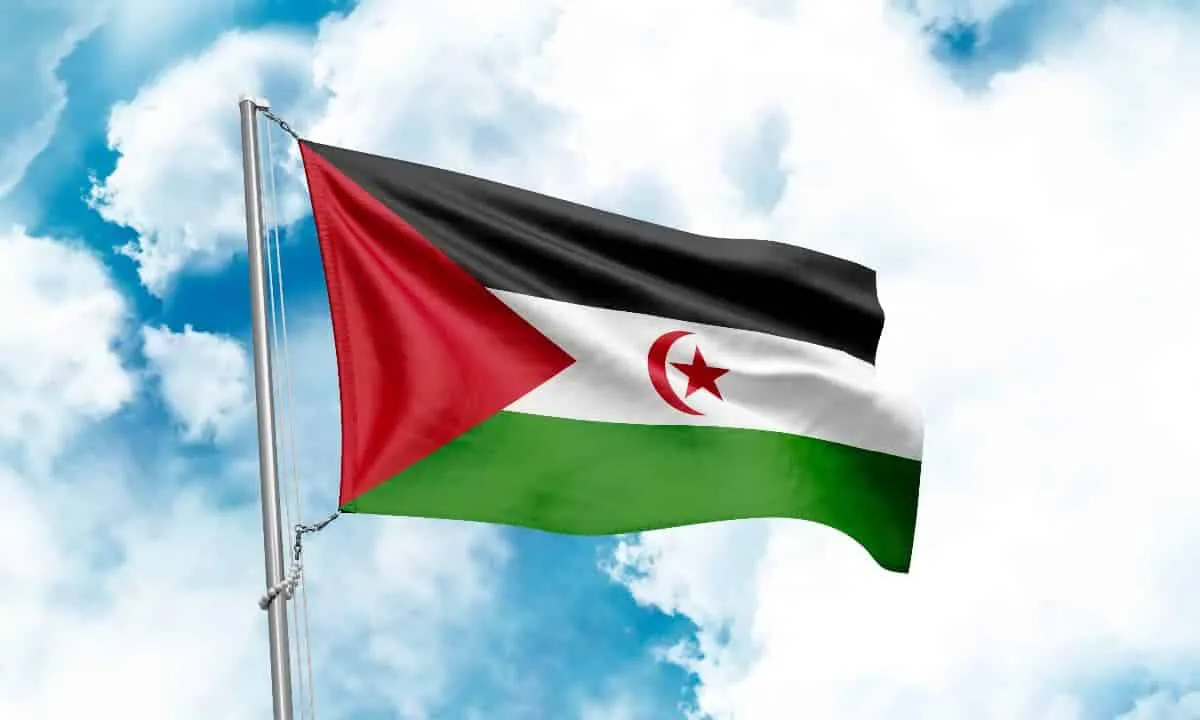
As the deadline of October 31 approaches, the international community is closely watching the developments in the Western Sahara conflict. Amar Belani, a former Algerian diplomat, has shared his insights on the situation, highlighting the crucial elements that will shape the future of the region. According to Belani, the principle of self-determination for the Sahrawi people remains a non-negotiable aspect of the conflict, as it is a fundamental doctrine of the United Nations.
The Western Sahara conflict has been a longstanding issue, with Morocco claiming sovereignty over the territory and the Polisario Front fighting for independence. Belani emphasizes that any political agreement must be freely accepted by the Polisario Front, which is the legitimate representative of the Sahrawi people. He also notes that the Moroccan government's attempts to impose its own parameters for negotiations will not be accepted, and that the international community will not recognize any fait accompli.
The role of the MINURSO mission, established in 1991 to organize a referendum, has been a critical aspect of the conflict. However, with the referendum yet to take place, the mission has shifted its focus to military observation and monitoring tensions. Belani suggests that the MINURSO's future will be a key topic of discussion at the UN Security Council, with some members, including the United States, pushing for a more limited mandate.
The position of the Moroccan government, led by Foreign Minister Nasser Bourita, has been described as "schizophrenic" by Belani. On one hand, Morocco claims to be willing to negotiate with the Polisario Front, but on the other hand, it seeks to delegitimize the group as a "separatist militia". Belani argues that this contradictory approach undermines Morocco's claims of good faith in negotiations.
The international community's stance on the conflict is divided, with some countries, including China and Russia, expressing reservations about the Moroccan position. These countries, along with Pakistan, abstained from voting on Resolution 2797, which extended the MINURSO mandate until October 31, 2026. Belani notes that these countries remain committed to a UN-led framework and the principle of self-determination for the Sahrawi people.
The US administration, under President Trump, has called for more focused and results-driven peacekeeping missions. This approach may impact the future of the MINURSO mission, which has been criticized for its open-ended mandate. Belani suggests that the October 31 deadline will be crucial in determining the future of the mission and the Western Sahara conflict.
As the deadline approaches, the international community will be closely watching the developments in the Western Sahara conflict. A clear direction for the MINURSO mission and a framework for negotiations will be essential in moving the conflict towards a peaceful resolution. The involvement of key players, including the US, Morocco, and the Polisario Front, will be critical in shaping the future of the region.
Key points
- The principle of self-determination for the Sahrawi people remains a non-negotiable aspect of the Western Sahara conflict.
- The MINURSO mission's future will be a key topic of discussion at the UN Security Council.
- The international community's stance on the conflict is divided, with some countries expressing reservations about the Moroccan position.