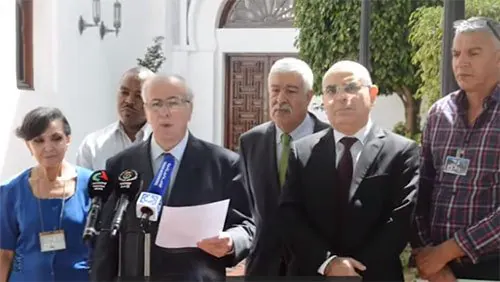
Karim Younes, head of Algeria's national dialogue panel, has warned that the group may suspend or dissolve if the government's commitments are not met. In a Facebook post, Younes cited seven prerequisites for the dialogue to begin, which were agreed upon by President Abdelkader Bensalah. The prerequisites include the release of detained protesters, respect for peaceful demonstrations, and an end to violence against protesters.
The seven prerequisites also include reducing the police presence in the capital, opening up access to the city during protests, freeing the media, and forming a new government with non-partisan technocrats. Younes' warning comes amid growing pressure from protesters, who have been demonstrating for 23 weeks. The panel, formed in response to Bensalah's July 3 speech, met with him on Thursday and was given the freedom to propose measures to ease tensions.
The panel, comprising six credible personalities, includes Benabbou Fatiha, Lalmas Smail, Lazhari Bouzid, Abdelwahab Bendjelloul, and Benaissa Azzedine, in addition to Younes. They have been tasked with leading an inclusive national dialogue. However, the process appears to be stalled, according to Younes' public statement. The protesters have rejected any dialogue with the current government, adding to the pressure on the panel.
Younes' statement described the upcoming week as decisive, saying that if the government's commitments are not met, the panel will consider suspending its work or even dissolving. This move would be a significant escalation in the ongoing crisis. The protesters have been demanding reforms and an end to corruption, leading to a significant challenge to the government.
The crisis began with the Hirak movement, which has seen millions of Algerians take to the streets to demand change. The movement has led to the resignation of several high-ranking officials and the appointment of a new government. However, protesters continue to demand more reforms and greater accountability from the government.
The panel's meeting with Bensalah was seen as a positive step towards finding a solution to the crisis. However, Younes' statement suggests that the government's commitments have not been met, leading to renewed tensions. The situation remains uncertain, with the panel's next move unclear.
The developments have raised concerns about the future of Algeria's transition. The country's stability and economic growth depend on finding a resolution to the crisis. The international community has been watching closely, urging calm and a peaceful resolution.
Key points
- The Algerian dialogue panel has threatened to suspend or dissolve if the government's commitments are not met.
- The panel's prerequisites for dialogue include the release of detained protesters and the formation of a new government.
- The crisis has led to significant challenges for the government, with millions of Algerians demanding reforms and greater accountability.