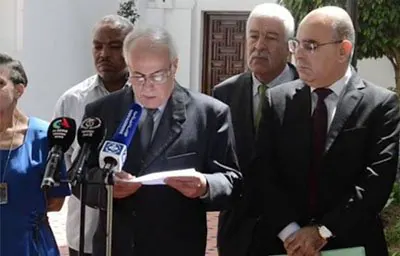
The Algerian dialogue panel, led by Karim Younes, is facing significant opposition from several key figures, including Mokrane Aït Larbi, Hamrouche, Ben M’hidi, and Ben Yeles, who have refused to join the panel. Younes has defended his role in the panel, stating that he is not an emissary of the government, but rather a citizen trying to contribute to the country's stability. He emphasized that his goal is to help resolve the country's political crisis.
Younes' comments come after the four opposition figures rejected his invitation to join the panel, which aims to facilitate a national dialogue to address the country's ongoing crisis. Younes expressed his disappointment and sadness over the rejection, stating that his call for action had been misinterpreted as a call for reaction. He questioned whether it was wrong to demand the release of young protesters who were arrested for carrying national flags or to call for an end to police violence against demonstrators.
The opposition figures' rejection of the panel has sparked concerns about the prospects for a successful national dialogue. Younes had proposed seven prerequisites for the dialogue, including the release of detained protesters, an end to police violence, and greater media freedom. However, these prerequisites have been rejected by the country's powerful military, which has expressed support for the dialogue process but insisted that it should not be conditional on specific demands.
General Ahmed Gaïd Salah, the country's chief of staff, has categorically rejected the prerequisites proposed by Younes and other opposition figures. In a speech on August 31, Gaïd Salah stated that the military supports the dialogue process but will not accept any diktats or conditions. He emphasized that the focus should be on organizing presidential elections as soon as possible, rather than debating prerequisites.
Gaïd Salah also rejected the demand to release detained protesters, stating that this was a matter for the justice system. He emphasized that the military will not interfere in the work of the judiciary and will respect its decisions. The general also opposed the idea of scaling back security measures in Algiers on days of protest, stating that these measures were in place to protect the public.
The developments have sparked concerns about the prospects for a successful national dialogue. The opposition figures' rejection of the panel has highlighted the deep divisions within Algerian society and the challenges facing efforts to resolve the country's ongoing crisis. Younes and other panel members have emphasized the need for an inclusive dialogue to address the country's many challenges.
The situation remains uncertain, with many Algerians eagerly awaiting the outcome of the national dialogue. The country's crisis has been ongoing for several months, with widespread protests demanding the departure of the current government and greater democratic reforms. The international community has been watching closely, with many countries expressing support for a peaceful and inclusive resolution to the crisis.
Key points
- The Algerian dialogue panel faces opposition from several key figures, including Mokrane Aït Larbi and Hamrouche.
- General Ahmed Gaïd Salah has rejected the prerequisites proposed by Karim Younes and other opposition figures.
- The developments have sparked concerns about the prospects for a successful national dialogue in Algeria.