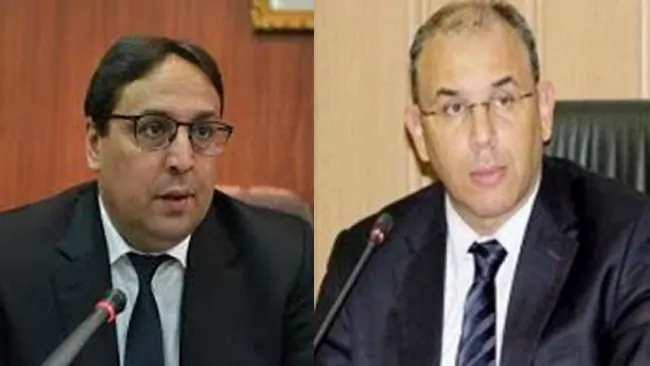
The appeal trial of the vehicle assembly case and occult financing of the electoral campaign entered its second day, with two former ministers and owners of car assembly plants testifying. Mahdjoub Bedda, the former Minister of Industry, was the first to be questioned by the judge and prosecutor. Bedda denied all charges against him, including granting undue advantages and concluding contracts contrary to regulations. He claimed he was a victim of the Bouteflika system, which he said removed him from his position as minister after less than three months.
Bedda explained that during his tenure, he criticized the SKD/CKD system and requested a new set of charges, but his term was abruptly ended. He also stated that he refused to reinstate 13 ministry cadres, which led to his dismissal. Bedda detailed the functioning of the system surrounding authorizations and operator choices in the vehicle assembly file. The judge then called Ahmed Mazouz, head of the Mazouz Group, who denied all accusations, including corruption. Mazouz stated that he has been a businessman since 1987 and listed his various activities and businesses.
Mazouz did not deny, however, that he provided 39 billion centimes to support Abdelaziz Bouteflika's candidacy in exchange for allowing his Boumerdès factory to benefit from an electrical network and natural gas connection. He explained that his factory remained without these energy sources for three years. Mazouz also claimed to have met Ali Haddad twice to finance Bouteflika's campaign but denied knowing the Kouninef brothers, whom he said he met in El-Harrach prison. Hassan Arbaoui, another defendant, presented himself as a victim of a conspiracy that damaged his reputation.
Arbaoui stated that he has been a businessman since 1999 and established his first company in 2005. He explained that in 2013, his company assembled buses, and in 2014, he obtained a plot of land to assemble Mercedes buses. Arbaoui claimed that all his activities were declared in the commercial registry and that he gained experience in assembly before obtaining the authorization to assemble Kia vehicles. The judge then called Fares Sellal, son of former Prime Minister Abdelmalek Sellal, who rejected all accusations against him.
Fares Sellal admitted, however, that he made a mistake by receiving 11 billion centimes for his 269 shares that he ceded to Baïri. Abdelghani Zaâlane, another former minister, testified that Saïd Bouteflika appointed him to lead Abdelaziz Bouteflika's electoral campaign. Zaâlane claimed that he received his nomination on March 5, signed by Abdelaziz Bouteflika himself. He denied participating in campaign financing, stating that his focus was on working for the country's interest during his 11 years as wali in several provinces.
Zaâlane maintained his previous statements made before the Sidi M'Hamed court during the first-instance trial, regarding the assets and bank accounts of the electoral campaign. The hearing of Abdelghani Zaâlane was ongoing when the session ended. Previously, Abdelmalek Sellal, the former Prime Minister, rejected all charges against him, stating that his role was to implement the President's program adopted by Parliament. Youcef Yousfi also denied all charges against him in the vehicle assembly case.
The trial continues with other defendants set to testify. The case involves several high-profile figures and allegations of corruption and undue advantages in the vehicle assembly sector. The court's proceedings aim to shed light on the circumstances surrounding the financing of Abdelaziz Bouteflika's electoral campaign and the granting of favors to certain businessmen.
Key points
- Former Minister of Industry Mahdjoub Bedda denied all charges against him, claiming he was a victim of the Bouteflika system.
- Ahmed Mazouz admitted to providing 39 billion centimes to support Abdelaziz Bouteflika's candidacy.
- Abdelghani Zaâlane denied participating in campaign financing, stating that his focus was on working for the country's interest.