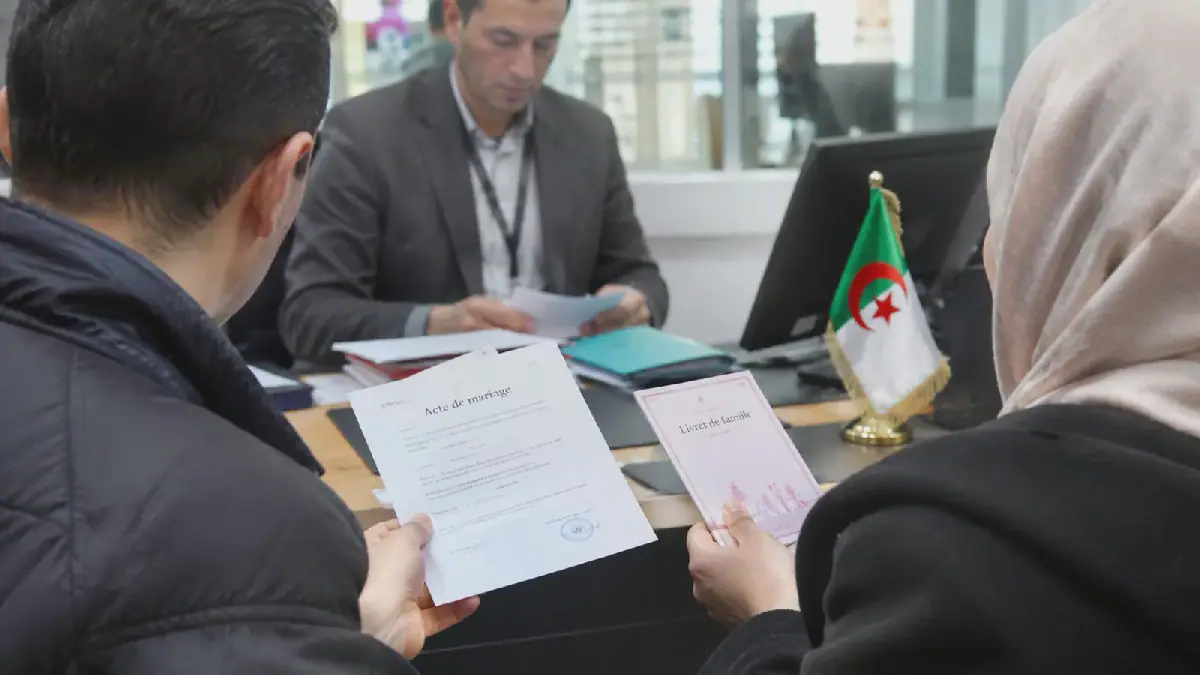
For Algerian couples who get married in France, their union is valid in France but not automatically recognized in Algeria. To gain recognition, the Algerian spouse must transcribe the marriage at the relevant Algerian consulate. This process involves registering the French marriage certificate on the Algerian civil registry. The transcription has practical implications, such as obtaining an Algerian family booklet and registering children born from the marriage. It is also necessary for various administrative tasks in Algeria, including inheritance, property sales, and divorce recognition.
The competent consulate for transcribing a marriage is determined by the location where the marriage took place, not the couple's place of residence. For instance, a couple married in Val-de-Marne would typically contact the consulate that covers this department. Each consulate publishes its jurisdiction on its official website. The Algerian consulate in Créteil, for example, covers Val-de-Marne, Essonne, Seine-et-Marne, Yonne, and Nièvre. The consulate general in Paris covers Paris, Loiret, Indre-et-Loire, Cher, Indre, Loir-et-Cher, and overseas territories, with some flexibility for Algerians residing in its jurisdiction.
To initiate the transcription process, couples must submit a set of documents, typically including the original marriage certificate issued by the French municipality, a written request, and a copy of the Algerian identity document. Additional documents may be required, such as birth certificates for both spouses, which must be issued by their respective municipalities of birth and dated within the last three months. The specific requirements can vary between consulates, so it is advisable to check the relevant consulate's website beforehand.
When an Algerian woman marries a non-Muslim, the transcription of the marriage is subject to additional requirements. According to the Algerian Family Code, the marriage can only be transcribed if the non-Muslim spouse has converted to Islam. In such cases, an attestation of conversion issued by a competent religious authority is necessary. The requirements may differ depending on the country of origin of the non-Muslim spouse and the specific consulate.
After the transcription is completed, the consulate issues an Algerian family booklet. In some consulates, the same dossier serves for both transcription and obtaining the family booklet. The booklet is issued free of charge for the first issuance, while a duplicate costs 20 euros. Additionally, the Algerian birth certificate of the spouse born in Algeria must be updated to reflect the marriage.
The process of transcribing a marriage and obtaining an Algerian family booklet can be complex and time-consuming. It is essential for Algerian couples married in France to understand the requirements and procedures involved. They should consult the relevant consulate's website and, if necessary, seek guidance from the consulate's services.
In conclusion, transcribing a marriage in Algeria is a crucial step for couples who wish to have their union recognized in Algeria. By following the necessary procedures and submitting the required documents, Algerian couples married in France can obtain an Algerian family booklet and facilitate various administrative tasks.
Key points
- Algerian couples married in France must transcribe their marriage at the relevant Algerian consulate to gain recognition in Algeria.
- The competent consulate is determined by the location where the marriage took place, not the couple's place of residence.
- Additional requirements apply when an Algerian woman marries a non-Muslim, including an attestation of conversion to Islam.