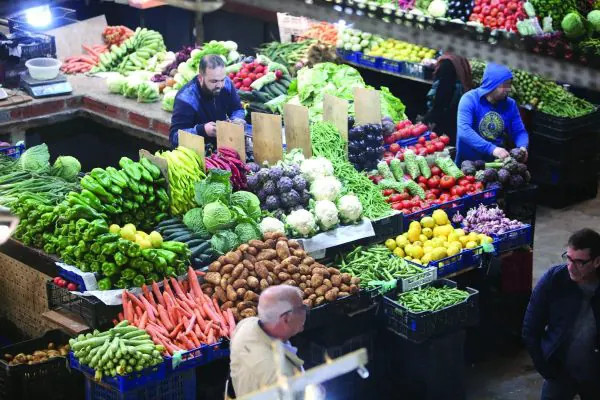
Algeria's El-Aman association for consumer protection has called on the government to launch an immediate investigation into the rising prices of essential goods. The group says the continuous price hikes are weighing heavily on households and demands greater transparency in the market. El-Aman wants the authorities to examine the pricing mechanisms and identify the causes of the increases. The association also wants to verify if certain price hikes are linked to objective economic factors or if they result from unjustified commercial practices.
The El-Aman association has expressed concerns over the rising prices of several widely consumed products in Algeria. In a statement, the group said some price increases may be attributed to objective economic factors such as production costs, transportation, seasonality, or supply conditions. However, El-Aman believes other price hikes require closer examination, particularly in relation to the state's support for national production. The association wants to assess whether the current price levels are justified, considering the aids and benefits granted by the state to economic operators.
El-Aman has identified several factors that may be contributing to the current price tensions. These include difficulties related to imports, the persistence of the parallel market, the slow pace of digitalization of commercial circuits, and shortcomings in distribution networks. The association is urging greater vigilance against practices that may artificially create market tensions or fuel panic buying among consumers. El-Aman emphasizes the need to determine responsibilities based on verified elements and in accordance with existing legislation.
The El-Aman association is demanding a national investigation into the formation and evolution of prices of widely consumed products, particularly with the approach of Ramadan and religious holidays. The probe should track price changes from producers or importers to final consumers, identify increases at each level of the distribution chain, and monitor profit margins of various stakeholders. El-Aman also recommends examining the role of intermediaries, potential speculation, and stock levels.
El-Aman suggests that the investigation should identify any practices of retention or unjustified storage of goods. The association also recommends evaluating the impact of import restrictions or difficulties on prices and diagnosing dysfunctions related to informal distribution circuits. The goal, according to El-Aman, is to determine whether observed price hikes are genuinely linked to economic factors or result from unjustified commercial practices.
The El-Aman association believes that control should not only intervene when prices rise but should cover the entire price formation chain, from production or importation to sales to consumers. The group advocates for accelerating the digitalization of commercial circuits, establishing official, organized, and traceable distribution networks, and strengthening profit margin controls and speculative practices. El-Aman also calls for greater transparency in price fixing and a gradual reduction in dependence on the parallel market.
El-Aman demands regular communication from public authorities to limit the spread of rumors and inaccurate information that may fuel panic buying and unjustified price hikes. The association also wants the investigation results to be made public to better inform consumers about the causes of price hikes, the different levels where they occur, and the stakeholders involved. For El-Aman, protecting purchasing power, ensuring the availability of essential products, and promoting market transparency are crucial elements of food security and social cohesion.
Key points
- El-Aman demands a national investigation into rising prices of essential goods in Algeria
- The association wants to assess if price hikes are linked to objective economic factors or unjustified commercial practices
- El-Aman advocates for greater transparency in price fixing and a reduction in dependence on the parallel market