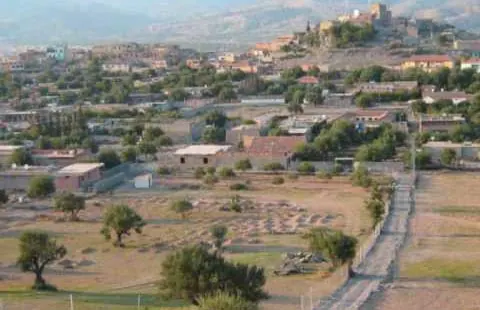
The commune of Ath Mansour in Algeria was once renowned for its thriving gardens and agricultural practices. Residents cultivated the land with dedication, relying on agriculture and livestock for their livelihood. Despite limited resources, the community worked the land, producing a variety of crops and fruits. However, with changes in lifestyle, the land has been left uncultivated and neglected. Today, only small plots are cultivated for family consumption, a stark contrast to the community's former agricultural prosperity.
Elderly residents of Ath Mansour fondly remember the region's agricultural heyday, which has gradually fallen into disuse over time. The modernization of the area has contributed to the decline of farming practices, with olive cultivation being one of the few remaining agricultural activities. Until the 1980s, gardening was still a common practice, with many residents maintaining gardens and orchards near the RN5 highway. The village of Taourirt, the communal capital, was particularly known for its terraced gardens, which produced high-quality fruits and vegetables.
A local septuagenarian recalls the village's former landscape, where residents cultivated the hillside with a variety of fruit trees, creating a small paradise. The area was irrigated by wells and springs, which supplied water to the gardens through a network of channels. The community's agricultural produce was sold in local markets, with the region's white peaches being highly prized for their flavor. The area's dense vegetation and rich soil made it an ideal location for farming.
The fertile plain of Taghzout, located on the right bank of the Sahel River, was another area that was heavily cultivated by the community. Residents produced high-quality fruits and vegetables, which were sold in local markets. The region's unique white peaches were in high demand, attracting traders from distant locations. However, with the passage of time, agricultural practices have largely disappeared in the area, replaced by barren landscapes and urbanization.
The rapid and unplanned urbanization of the area has led to the destruction of the region's famous gardens, with many trees being uprooted for construction projects. Residents are nostalgic for the past, when the land was worked and the community was self-sufficient. While some residents acknowledge the need for development, they regret that agricultural land was not preserved for future generations.
The decline of agriculture in Ath Mansour has had a significant impact on the community's way of life. The loss of traditional farming practices has led to a disconnection from the land and a reliance on external sources of food. Efforts to revive agricultural practices in the area have been limited, with many residents expressing a desire to see the land restored to its former glory.
As the community looks to the future, there is a growing recognition of the importance of preserving agricultural heritage. Residents hope that one day, the land will be restored to its former state, and traditional farming practices will be revived. Until then, the legacy of Ath Mansour's gardens and agricultural practices will remain a nostalgic memory for the community.
Key points
- The Algerian community of Ath Mansour has abandoned its traditional farming practices, leading to a decline in agricultural production and a loss of community self-sufficiency.