The Algerian book market is experiencing a significant shift, with French language books losing ground at the Salon international du livre d’Alger (SILA). This trend has been observed over several editions of the event, with the space dedicated to French language literature, essays, and scientific publications decreasing. Instead, the market is turning towards Arabic language publications. This change is not just a reflection of readers' preferences but also of cultural, linguistic, economic, and editorial transformations affecting the book market in Algeria.
The French language has historically played a significant role in Algerian reading habits, serving as a working language, teaching language, research language, and language of literary creation. Many Algerian writers have built their work in French, contributing to the country's literary recognition globally. However, the presence of French language books seems less visible at SILA. Publishers specializing in French language publications face several challenges, including rising printing costs, import difficulties, weak purchasing power, reduced print runs, and changing cultural consumption habits.
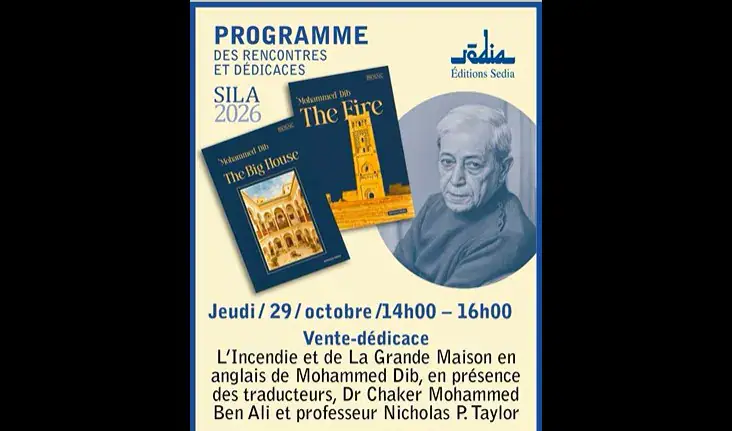
A new generation of readers with different linguistic practices and cultural references is emerging, and the English language is gaining ground, particularly among young readers. Some professionals at SILA 2026 have noted a growing interest in English language literature. New publishing houses are now choosing to publish English classics and novels targeting this new clientele. This shift is sometimes at the expense of French, which no longer occupies a dominant position in the cultural references of younger generations.
Despite this trend, the demand for French language books still exists, with long queues of visitors at certain stands and the success of several publications. Classic world literature continues to attract readers, with works by Dostoïevski, Tolstoï, Victor Hugo, Flaubert, and Faulkner selling well in Arabic. Some titles have even sold out quickly. The return of major French publishing houses like Gallimard, Flammarion, and Actes Sud has also been noted, but their prices remain prohibitively high for Algerian readers.
Algerian intellectuals continue to play a significant role, with over 70 Algerian Francophone authors established in Algeria and abroad, compared to around 50 Arabophone authors. The best-selling authors in Algeria remain Francophone, including Yasmina Khadra, Rachid Boudjedra, Mohamed Dib, Mouloud Feraoun, Assia Djebbar, and Amin Zaoui. However, Arabophone authors like Ahlem Mostghanemi, Wassini Laaredj, Tahar Ouatar, and Abdelhamid Benhadouga also occupy an important place in the Algerian literary landscape.
The Algerian literary heritage in French is significant, with authors like Kateb Yacine, Mouloud Feraoun, Mohammed Dib, Assia Djebar, Rachid Mimouni, and Boualem Sansal contributing to the country's intellectual history. This heritage has allowed many Algerian authors to gain international recognition. Efforts to promote the Arabic language and Tamazight, essential for enriching Algerian cultural identity, should not come at the expense of other languages of creation and knowledge.
SILA 2026 brings together 1,567 publishing houses from 51 countries, including 350 Algerian, 554 Arab, and 663 international exhibitors. This diversity offers a unique opportunity to promote multilingualism and facilitate exchanges between different editorial traditions. However, there is a lack of official statistics to measure the share of publications or books sold in each language. The decline of French language books is a trend that warrants serious study, and the challenge is to preserve cultural diversity and ensure Algerian readers have access to major literary, scientific, and intellectual works.
Key points
- The Algerian book market is shifting towards Arabic and English language publications, with French language books losing ground.
- The decline of French language books is not a simple evolution of reader preferences but a reflection of cultural, linguistic, economic, and editorial transformations.
- Preserving cultural diversity and promoting multilingualism are essential for the future of the Algerian book market.