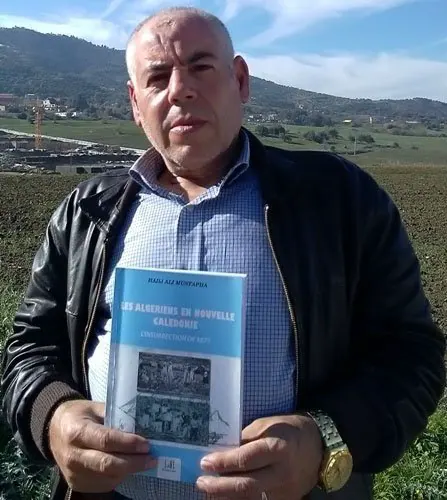
Algerian writer Mustapha Hadj Ali has recently published his second book, "Les Algériens en Nouvelle-Calédonie l’insurrection de 1871," which delves into the painful history of Algerians deported to New Caledonia. This follows his first book, "Les bagnards algériens de Cayenne," which explored the history of Algerian convicts in French Guiana. Hadj Ali's work focuses on the often-overlooked chapter in Algerian history, shedding light on the fate of those who defied colonialism.
The idea for the book came about after Hadj Ali attended a gathering of the Association des oubliés de l’histoire du soulèvement de 1871, also known as the deported to New Caledonia. Intrigued by the stories of his ancestors, he embarked on extensive research to document their experiences. The book reveals that between 1864 and 1897, French Emperor Napoleon III instituted the transportation of convicts to overseas colonies, including New Caledonia. This policy targeted political prisoners and those deemed "incorrigible."
According to Hadj Ali's research, 160 Algerians were relinquished to New Caledonia, while 1,300 were sent to French Guiana. However, he discovered that a staggering 20,000 Algerian individuals were deported to the penal colonies in New Caledonia and French Guiana, making up 30% of the prison population in New Caledonia. The significant number of Algerian deportees can be attributed to the country's early colonization by France, its large population, and the fierce resistance of Algerians against colonial rule.
The author highlights that Algeria was among the first countries colonized by France, and its people were known for their bravery and resistance. The insurrection of 1871, in particular, led to the deportation of many Algerians to New Caledonia. Hadj Ali's book aims to give voice to these forgotten individuals and shed light on a painful period in Algerian history. He notes that the French colonial powers' actions were inhumane, and it is essential to acknowledge and learn from this dark chapter.
To write his book, Hadj Ali conducted extensive research, including gathering documents from various sources, including those sent by people from New Caledonia. He spent years studying the history of deportation, and his work has made him a specialist in the field. The book provides a detailed account of the conditions faced by deportees, including the grueling 188-day journey from Brest to Nouméa.
Hadj Ali's work is not limited to this book, as he is already working on a new project. He plans to explore the history of internment camps in metropolitan France, where thousands of Algerians perished. His goal is to travel to France to consult archives and visit these camps to uncover more secrets and write a compelling book on this lesser-known aspect of Algerian history.
Reflecting on his research, Hadj Ali expresses his emotions and concerns about the treatment of Algerians by French colonial powers. He regrets that a country like France resorted to such inhumane punishments against a people fighting for their independence and rights. Through his work, Hadj Ali aims to raise awareness about this dark period and contribute to a better understanding of Algerian history.
Key points
- The book "Les Algériens en Nouvelle-Calédonie l’insurrection de 1871" sheds light on the history of Algerians deported to New Caledonia.
- Algerian writer Mustapha Hadj Ali has published two books on the history of Algerian convicts in French colonies.
- The author is working on a new project to explore the history of internment camps in metropolitan France.