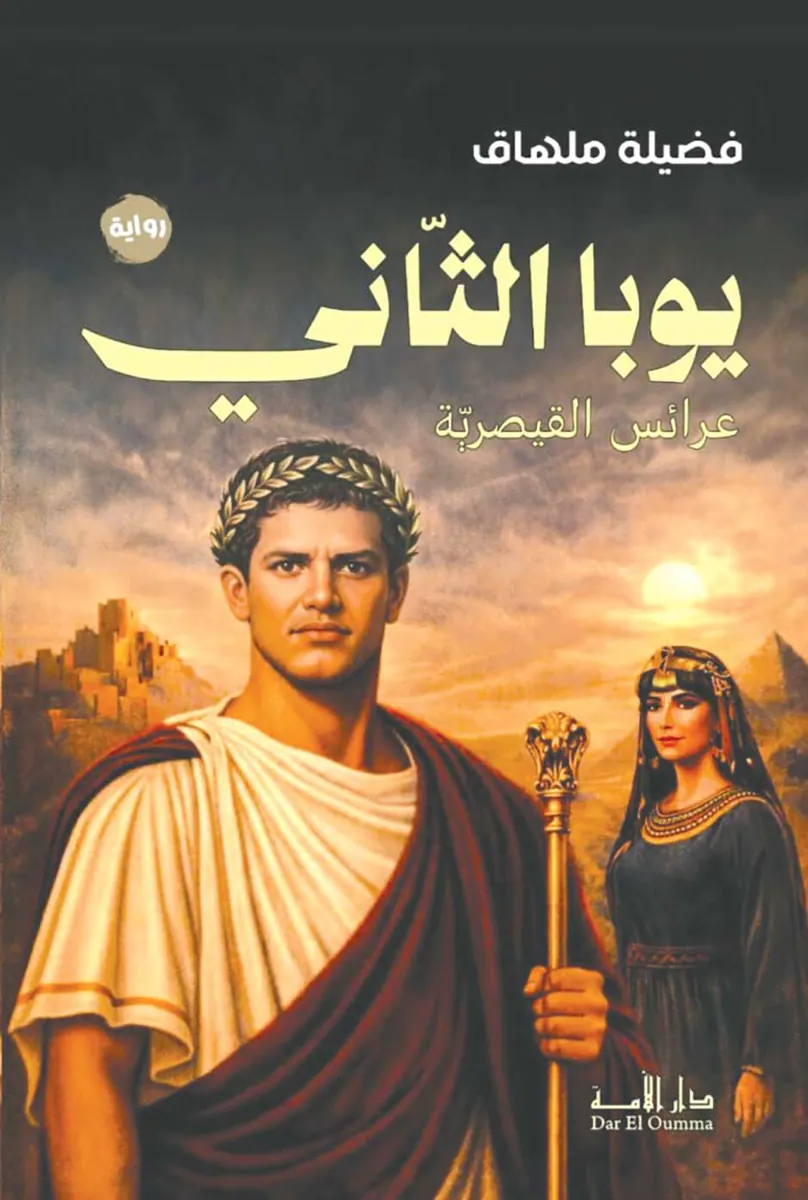
Algerian author Fadlilah Malhaq has published a historical novel titled "Juba II: Caesarean Brides," which explores the life of King Juba II, ruler of Mauretania. The novel navigates the complexities of historical fiction, balancing factual accuracy with literary creativity. Malhaq's work delves into the intersection of history and fiction, weaving a narrative that not only recounts events but also examines identity, memory, and power. By reimagining the life of King Juba II, Malhaq aims to provide a nuanced understanding of the past and its relevance to the present.
Malhaq's novel is set against the backdrop of the Roman Empire's expansion into Mauretania, a region in present-day Algeria and Morocco. The story follows King Juba II, who was taken captive by the Romans and later educated in Rome. As Juba II navigates his way through the complexities of Roman politics and culture, he must confront his own identity and the legacy of his father, King Juba I. Through Juba II's journey, Malhaq sheds light on the intricate relationships between the Roman Empire and its client kingdoms, as well as the cultural exchange that occurred during this period.
One of the key challenges Malhaq faced in writing this novel was striking a balance between historical accuracy and literary creativity. By drawing on historical records and archaeological findings, Malhaq constructs a narrative that is both informative and engaging. At the same time, she allows herself the freedom to imagine the thoughts, feelings, and motivations of her characters, creating a rich and immersive reading experience. The result is a novel that not only educates readers about the past but also invites them to reflect on the human experiences that transcend time and culture.
Malhaq's use of multiple narrative voices and perspectives adds depth and complexity to the story. Through the characters of Brosius, Akli, and others, Malhaq creates a multifaceted portrait of King Juba II and his world. This approach also allows her to explore themes such as power, identity, and cultural exchange from different angles, providing a more nuanced understanding of the historical context. By giving voice to various characters, Malhaq demonstrates her commitment to creating a nuanced and multidimensional narrative.
The novel spans several decades, from 29 BCE to 21 BCE, and covers significant events such as the wars, alliances, and political marriages that shaped the ancient world. However, Malhaq's focus is not solely on the grand events of history but on the personal experiences of her characters and how they intersect with larger historical trends. By doing so, she creates a narrative that is both historically grounded and deeply human. This approach enables readers to engage with the past on a more intimate level, making the historical events and figures more relatable and accessible.
Malhaq's writing style has been praised for its clarity and elegance, making the novel an enjoyable read for both scholars and general readers. Her use of language is evocative and immersive, transporting readers to the ancient world of Mauretania and Rome. Through her vivid descriptions and characterizations, Malhaq brings the past to life, making it possible for readers to imagine themselves in the midst of historical events. By crafting a compelling narrative, Malhaq invites readers to explore the complexities of the past and its ongoing relevance to contemporary society.
Malhaq's achievement in "Juba II: Caesarean Brides" lies in her ability to navigate the complexities of historical fiction while creating a compelling and engaging narrative. By exploring the life of King Juba II and his world, Malhaq provides a unique perspective on the ancient world and its cultural exchange. The novel is a significant contribution to the literary landscape of Algeria and the wider region, showcasing Malhaq's skill as a storyteller and historian. Her work will undoubtedly appeal to readers interested in history, literature, and culture.
Key points
- Malhaq's novel explores the intersection of history and fiction, examining identity, memory, and power through the life of King Juba II.