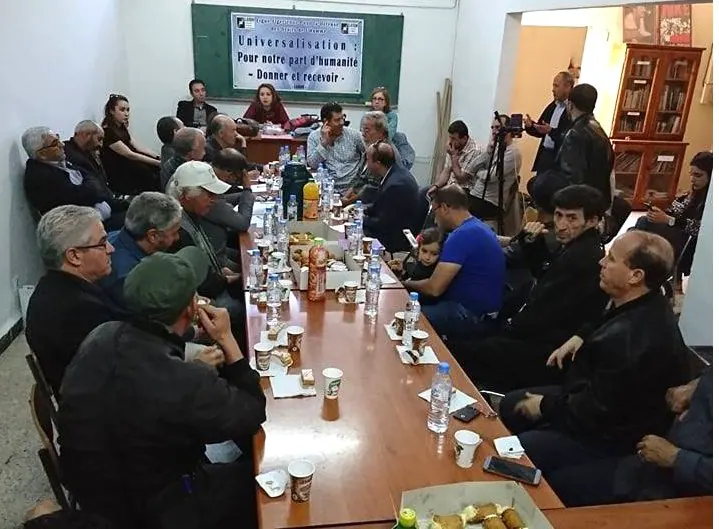
A recent meeting at the Maison des droits de l'homme in Tizi-Ouzou brought together numerous activists from Algeria's Amazigh movement, including veterans of the 1980 and 2001 uprisings, university professors, and human rights lawyers. The gathering, organized by the Congrès mondial amazigh (CMA), provided a platform for attendees to address various issues related to the future of Amazigh identity and human rights. Belkacem Lounès, former CMA president and newly appointed expert on indigenous peoples' rights at the United Nations, was in attendance.
The meeting's discussions focused on the need to adapt Algeria's internal laws to align with international conventions ratified by the country. Lawyers present, including maitre Rahem, maitre Sadeg, and maitre Haddad, emphasized the importance of reformulating domestic laws to ensure conformity with UN standards. Algeria has ratified all UN conventions, including the UN Declaration on the Rights of Indigenous Peoples, which guarantees cultural, linguistic, social, and environmental rights for indigenous communities.
According to Belkacem Lounès, there are approximately 400 million indigenous people worldwide, many of whom face threats to their cultures and languages due to state neglect or dominant cultural influences. Lounès highlighted that the UN committee responsible for indigenous peoples' rights can only intervene if the communities themselves express a desire for their concerns to be addressed.
The recognition of Tamazight as an official language in Algeria in 2016 marked a significant step forward for the Amazigh community. However, attendees stressed that more work is needed to ensure the effective implementation of international conventions and to promote Amazigh identity. Kamira Nait Sid, president of the CMA, noted that international law takes precedence over national law, even if Algeria's domestic legislation has yet to be brought into line with international texts.
Lawyers and activists present at the meeting, including maitre Sadeg, argued that Algeria's national legislation should be strengthened to align with international standards. This, they believe, would help safeguard the rights of indigenous communities and promote greater recognition of Amazigh identity.
The discussions also touched on the role of the UN in supporting indigenous communities worldwide. As one of seven representatives globally, Belkacem Lounès emphasized the importance of indigenous communities themselves taking the initiative to express their concerns and advocate for their rights.
The meeting concluded with a renewed commitment to promoting Amazigh identity and human rights in Algeria. Activists and lawyers present emphasized the need for continued dialogue and cooperation to ensure the effective implementation of international conventions and the protection of indigenous communities' rights.
Key points
- Algeria has ratified all UN conventions, including the UN Declaration on the Rights of Indigenous Peoples.
- The recognition of Tamazight as an official language in Algeria marked a significant step forward for the Amazigh community.
- Activists stress the need for Algeria to adapt its national legislation to align with international standards on indigenous peoples' rights.