An Algerian court has sentenced Abdelwahab Farsawi, a former president of the youth organization "Rassemblement d'Action des Jeunes" (RAJ), to six months in prison for expressing his opinions on social media. Farsawi was found guilty of posting content that criticized the government and expressed solidarity with prisoners of conscience. The sentence was handed down by the Kherrata court in the province of Bejaia on November 23.
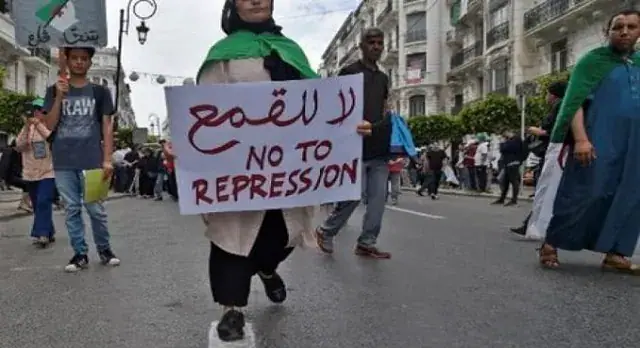
The sentence has sparked criticism from human rights organizations, who argue that it represents a continuation of the Algerian government's crackdown on free speech. The organization "Rayon de lumière pour les droits de l'homme" (Lumière pour les droits de l'homme) denounced the sentence, stating that it was related to Farsawi's peaceful exercise of his right to freedom of expression and solidarity with prisoners of conscience.
Farsawi's sentence includes a fine of 50,000 Algerian dinars. His conviction has raised concerns about the limits of free speech in Algeria and the government's treatment of activists and critics. Many argue that the sentence is an attempt to intimidate and silence Farsawi and others who dare to speak out against the government.
The Algerian government has faced criticism in recent years for its handling of human rights and free speech. The country has a history of cracking down on activists, journalists, and critics, often using vague laws to justify arrests and prosecutions. Farsawi's case has drawn attention to the ongoing challenges facing freedom of expression in Algeria.
Human rights organizations are calling on the Algerian government to overturn Farsawi's sentence and drop all charges related to his peaceful activities. They argue that expressing opinions and criticizing government policies should not be considered a crime. The organizations also demand that Farsawi be allowed to exercise his right to freedom of expression and association without fear of reprisal.
The case has sparked a wider debate about the state of human rights in Algeria and the government's commitment to upholding international standards. Algeria has ratified several international human rights treaties, including the International Covenant on Civil and Political Rights, which guarantees the right to freedom of expression.
Farsawi's supporters and human rights organizations are continuing to monitor the case and advocate for his release. They argue that his sentence is a test of the Algerian government's commitment to human rights and that it has significant implications for the country's democratic development.
Key points
- The sentence has sparked criticism from human rights organizations, who argue that it represents a continuation of the Algerian government's crackdown on free speech.