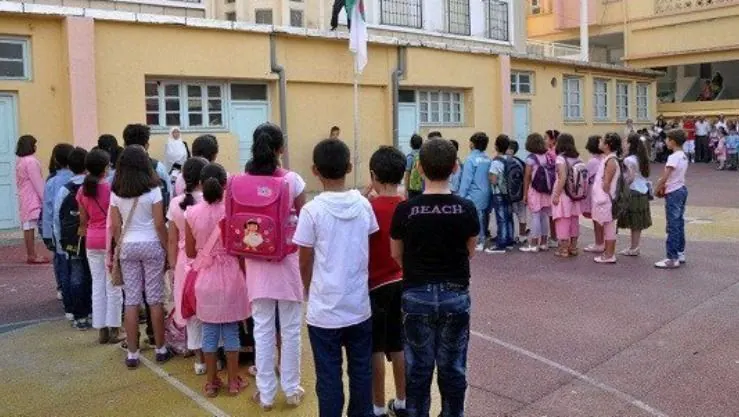
The new academic year in Algeria commenced with approximately 12 million students enrolling in schools nationwide. This development occurs under the guidance of President Abdelmadjid Tebboune, who emphasized the need for optimal utilization of gains achieved in the education sector during a recent cabinet meeting. The President instructed the Minister of National Education, Mohamed Small Saadawi, to ensure a successful and distinguished academic year.
In preparation for the new academic year, the Ministry of Housing, Urban Planning, and City Planning handed over 289 new educational facilities. These include 151 primary schools, 90 middle schools, and 48 high schools. Additionally, educational institutions damaged by fires in several eastern and central provinces have been repaired and are ready to welcome students.
The Ministry of National Education has implemented various pedagogical innovations for the new academic year. One notable initiative is the introduction of special arrangements to support students with autism. This program, coordinated with the Ministry of National Solidarity, aims to ensure the integration and proper educational attainment of these students.
To address concerns about textbook availability, the Ministry of National Education has taken measures to guarantee a sufficient supply. Over 80 million textbooks have been distributed across the country. Furthermore, the ministry has reinforced human resources by recruiting teachers who successfully passed a competitive exam based on their qualifications.
The new academic year also features the second edition of the National School Health Week. Organized by the Ministry of National Education in collaboration with the Ministry of Health, this event is themed "School Health... for a safe and healthy future." The theme focuses on different topics according to educational stages.
For primary school students, the topic is "the relationship between trees and human health." Middle school students will discuss "the impact of forest damage on public health," while high school students will explore "the necessity of protecting the forest environment for health." These initiatives reflect Algeria's efforts to integrate health and environmental awareness into its education system.
As the 2026-2027 academic year begins, the Algerian government remains committed to enhancing its education sector. With a focus on quality and infrastructure, authorities aim to provide students with a conducive learning environment. The initiatives undertaken will likely have a positive impact on the country's educational outcomes.
Key points
- Algeria's President Abdelmadjid Tebboune emphasizes the need for optimal utilization of gains achieved in the education sector.
- Over 80 million textbooks have been distributed across the country to address concerns about availability.
- The Ministry of National Education has introduced special arrangements to support students with autism.