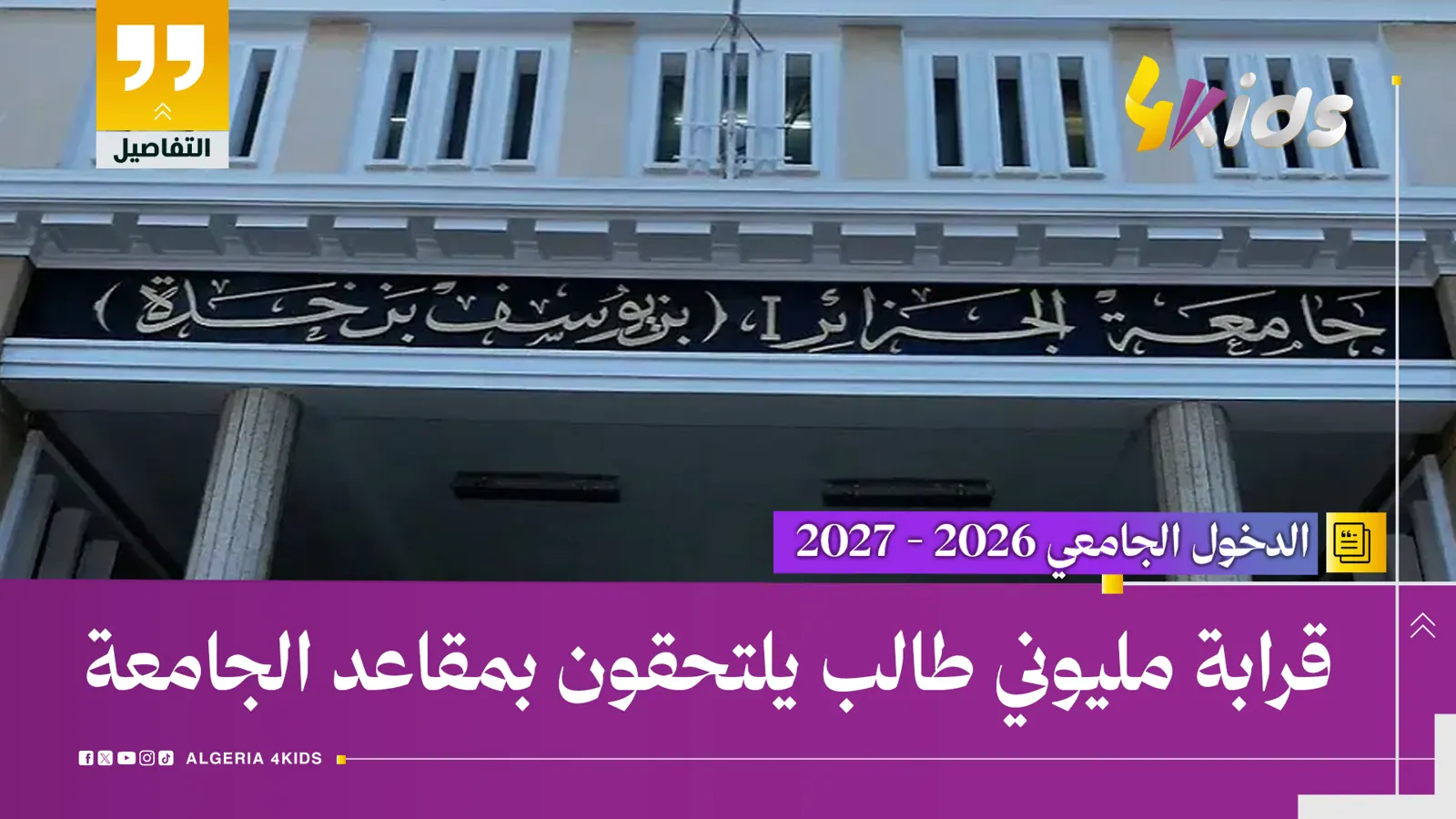
The 2026-2027 academic year has commenced in Algeria, with approximately 1.884.839 students enrolling in various universities and research centers nationwide. The Ministry of Higher Education and Scientific Research has made significant efforts to provide a stimulating educational environment, enabling students to achieve innovation and excellence. This aligns with the country's vision of transforming universities into active partners in economic development and wealth creation.
The Algerian university system has seen an increase in international students, with 2600 students from 36 countries benefiting from the "Study in Algeria" program. This move is part of the country's efforts to become a hub for higher education and research. The new academic year also marks a significant shift towards making Algerian universities more competitive and innovative.
The Algerian government has emphasized the importance of universities in driving national development and contributing to the economy. President Abdel Madjid Tebboune has consistently highlighted the role of universities in producing knowledge and developing technology. In line with this vision, Algerian universities are focusing on emerging fields such as artificial intelligence, cybersecurity, renewable energy, and biotechnology.
The 2026-2027 academic year has introduced 13 new specializations, including a Master's program in artificial intelligence and a Master's program in space systems mechanics. Additionally, new programs have been launched in collaboration with the Ministry of Health, including a Bachelor's degree in dental health and hygiene, and a Master's program in genetic counseling.
The Algerian university system is also placing greater emphasis on promoting national identity and culture. A new program in media and communication in the Amazigh language has been introduced, as well as a Master's program in news agency journalism. Furthermore, the teaching of Algerian history and citizenship has been made compulsory across various fields of study.
The Ministry of Higher Education and Scientific Research has taken steps to strengthen international partnerships, with six new agreements signed with foreign universities. This will enable Algerian students to benefit from international exchange programs and joint research initiatives.
As the 2026-2027 academic year begins, Algerian universities are poised to play a significant role in shaping the country's future. With a focus on innovation, entrepreneurship, and internationalization, Algerian universities are set to become major players in the region. The government has expressed its commitment to supporting the development of higher education, and it remains to be seen how these efforts will impact the country's socio-economic landscape.
Key points
- Almost 2 million students have enrolled in Algerian universities for the 2026-2027 academic year.
- New programs and specializations have been introduced, including artificial intelligence, cybersecurity, and biotechnology.
- The Algerian government is emphasizing the importance of universities in driving national development and contributing to the economy.