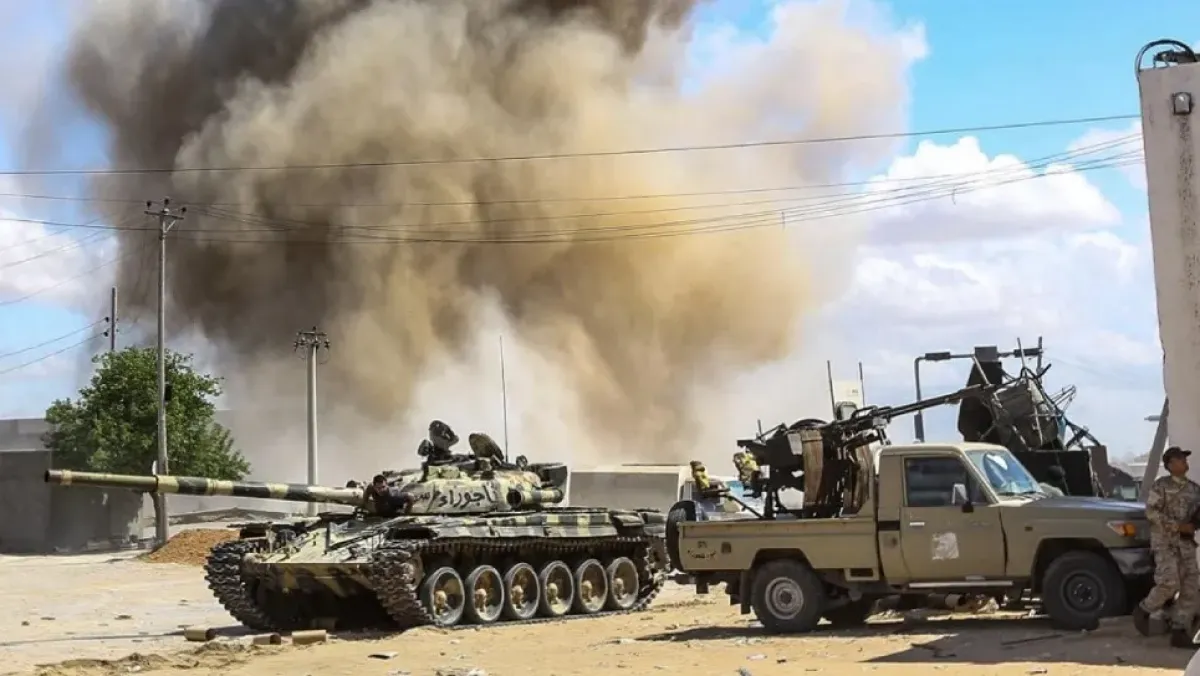
Algeria has renewed its call for an end to foreign interference in Libya, with Foreign Minister Ahmed Attaf urging the international community to allow Libyans to determine their own future. Speaking at the United Nations, Attaf emphasized the need for a Libyan-led solution to the country's crisis, warning that external interference was exacerbating the situation. Libya has been plagued by instability and conflict since the overthrow of Muammar Gaddafi in 2011.
Reports have emerged of secret meetings between Libyan officials and Israeli leaders, sparking concerns about the growing influence of external actors in the country. According to Italian media, a meeting took place in Abu Dhabi between Sadam Hifter, son of Libyan commander Khalifa Hifter, and Israeli Prime Minister Benjamin Netanyahu. While the details of the meeting are unclear, it has raised questions about the nature of Libya's relationships with external powers.
The reported meeting has sparked concerns about the potential for increased Israeli and Emirati influence in Libya. Algeria has long been a vocal advocate for a Libyan-led solution to the country's crisis, and has warned about the dangers of external interference. The country's concerns are shared by many in the region, who fear that increased external involvement could exacerbate the country's instability.
The influence of external powers in Libya has significant implications for regional stability. The UAE has been accused of playing a destabilizing role in several countries, including Libya, Sudan, and Somalia. Its growing ties with Israel have also raised concerns about the potential for increased conflict in the region. Algeria's warnings about the dangers of external interference come at a time of heightened tensions in the region.
Algeria's position on Libya reflects its long-standing commitment to regional stability and security. The country has consistently called for a Libyan-led solution to the country's crisis, and has warned about the dangers of external interference. As the situation in Libya continues to deteriorate, Algeria's voice is likely to remain an important one in regional discussions about the country's future.
The international community has a critical role to play in supporting a Libyan-led solution to the country's crisis. Algeria's warnings about the dangers of external interference serve as a reminder of the need for caution and restraint in international engagement. As the situation in Libya continues to evolve, it will be important for external actors to prioritize the country's sovereignty and stability.
The situation in Libya remains complex and fluid, with multiple external actors vying for influence. Algeria's commitment to a Libyan-led solution to the country's crisis is clear, and the country is likely to continue to play an important role in regional discussions about Libya's future. The international community must prioritize support for a stable and sovereign Libya, and work to mitigate the risks of external interference.
Key points
- Algeria has called for an end to foreign interference in Libya, warning that external involvement is exacerbating the country's instability.
- Reports have emerged of secret meetings between Libyan officials and Israeli leaders, sparking concerns about the growing influence of external actors in the country.
- The influence of external powers in Libya has significant implications for regional stability, with many in the region fearing that increased external involvement could exacerbate conflict.