Algeria has reaffirmed its commitment to becoming a major player in the global transition to renewable energy, while maintaining its position as a leading gas exporter. At the 8th Summit of Heads of State and Government of the Gas Exporting Countries Forum (GECF) in Moscow, Algerian President Abdelmadjid Tebboune announced a strategic investment plan of nearly $22 billion to finance the country's national renewable energy program. This move is part of Algeria's efforts to consolidate its status as a global gas giant while playing a key role in the transition to cleaner energy.
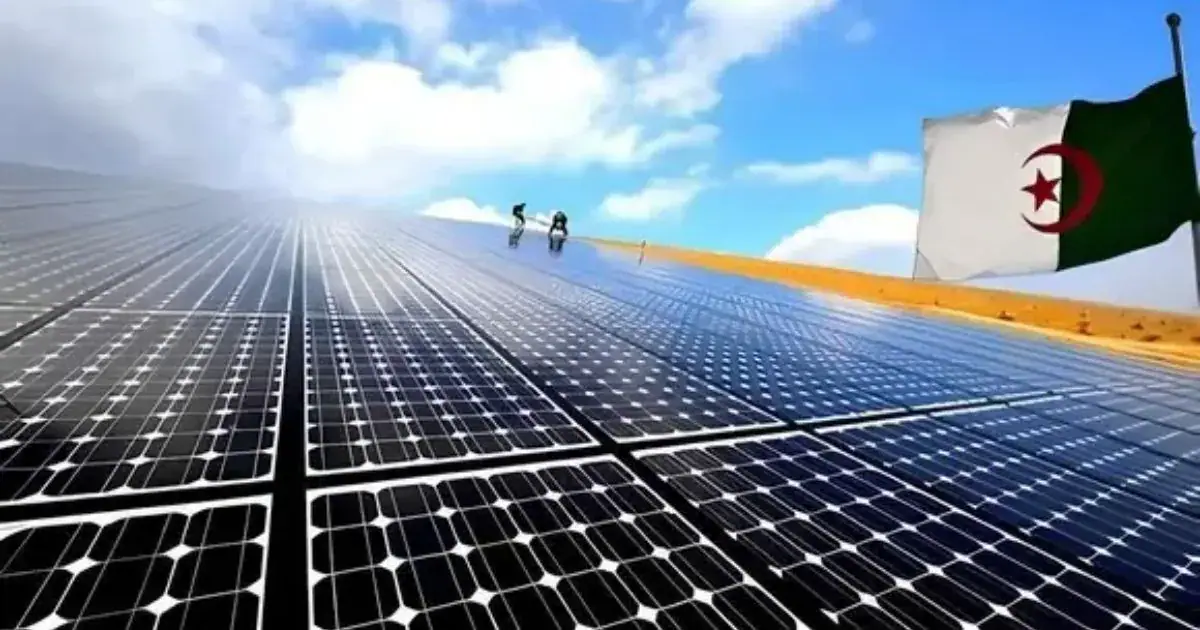
The investment plan aims to increase Algeria's renewable energy production capacity to 15,000 megawatts (MW) by 2035. President Tebboune emphasized that Algeria is committed to a just and orderly transition to renewable energy, balancing climate imperatives, national sovereignty, and energy security. The country plans to achieve this goal through a combination of solar, wind, and green hydrogen power, including the SoutH2 Corridor project, which will enable Algeria to become a transcontinental energy hub capable of exporting gas, electricity, ammonia, and hydrogen.
President Tebboune defended the central role of natural gas in the global energy mix, describing it as a "natural partner" to renewable energy sources. He argued that gas is not a barrier to decarbonization but rather a "bridge" to achieving it safely by ensuring the stability of electrical networks. However, the President also warned against the volatility of international regulatory frameworks, which can discourage long-term investments. He called for durable contracts, fair valuation of resources, and a consensual dialogue to secure global supplies.
Algeria's commitment to renewable energy is also reflected in its efforts to develop its industrial sector, including the valorization of major projects such as the Gara Djebilet iron mine and the integrated phosphate project. The country is also a pioneer in the production of liquefied natural gas (LNG) and a major supplier of gas to the European Union through pipelines. President Tebboune emphasized that Algeria's energy strategy is designed to support the country's economic development and reduce its reliance on imported energy.
On the continental level, Algeria reaffirmed its financial and technical commitment to the Trans-Saharan Gas Pipeline (TSGP) project, which aims to transport 30 billion cubic meters of gas per year. President Tebboune described the project as a symbol of a united and sovereign Africa, using energy as a lever for sustainable development and the fight against energy poverty. The TSGP project is expected to play a key role in promoting economic integration and cooperation among African countries.
The GECF Summit in Moscow provided a platform for President Tebboune to engage with other leaders on issues related to energy security, climate change, and sustainable development. The Algerian President emphasized the need for a balanced approach to energy transition, taking into account the interests of both producing and consuming countries. He also called on the GECF's Gas Research Institute to accelerate the deployment of artificial intelligence and digital technologies in decarbonization efforts.
Algeria's renewable energy plan is part of a broader strategy to diversify its economy and reduce its dependence on hydrocarbons. The country's energy sector is expected to play a key role in driving economic growth and job creation in the coming years. With its significant investment in renewable energy, Algeria is positioning itself as a leader in the transition to cleaner energy sources in Africa and beyond.
Key points
- Algeria aims to increase its renewable energy production capacity to 15,000 MW by 2035.
- The country has unveiled a $22 billion plan to finance its national renewable energy program.
- Algeria is committed to a just and orderly transition to renewable energy, balancing climate imperatives, national sovereignty, and energy security.