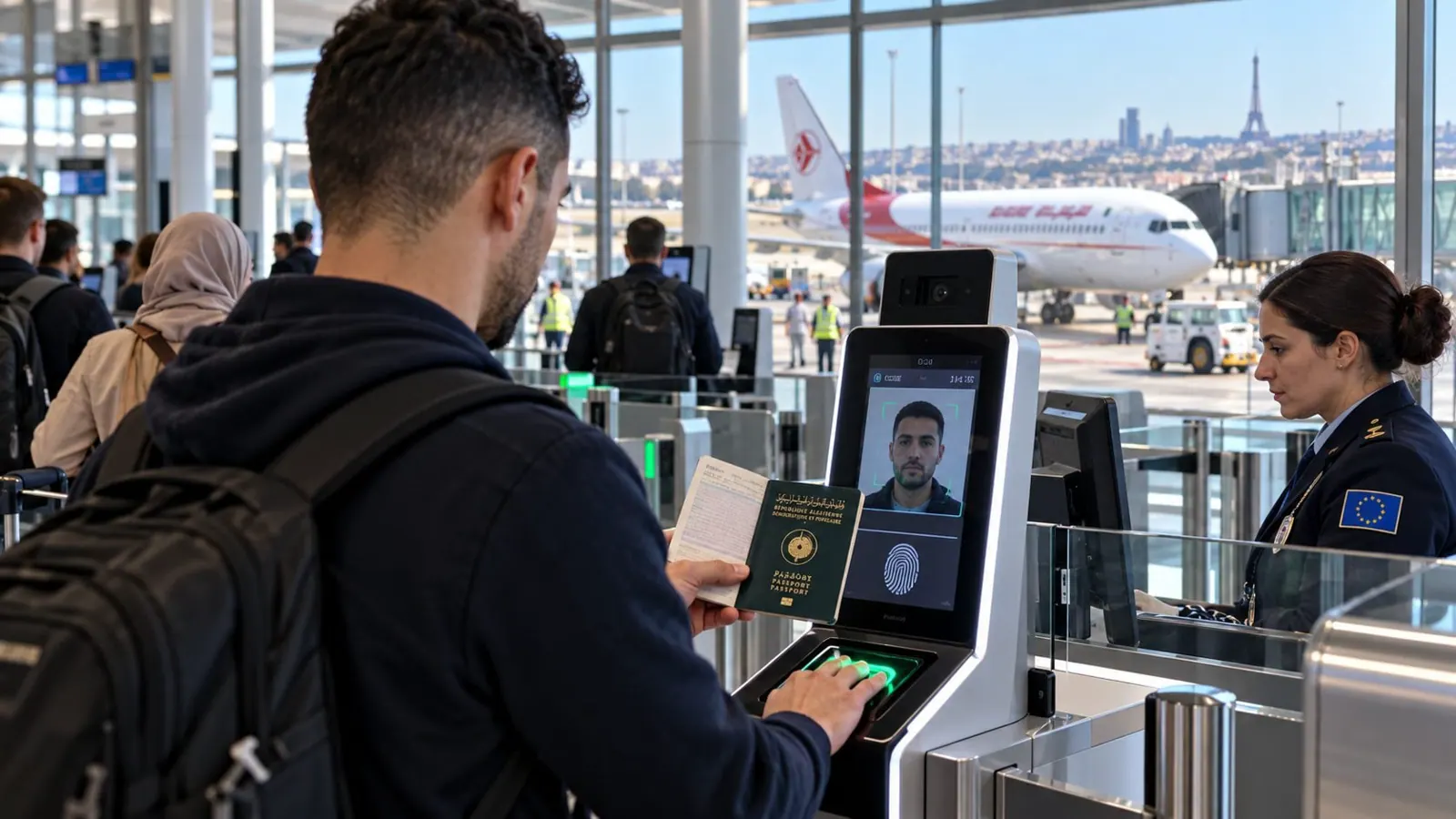
The European Entry-Exit System (EES) has been fully operational since April 10, 2026, recording electronic entries and exits of travellers from third countries, including Algeria, for short stays in 29 European countries. The system automatically calculates the 90-day authorised stay. As the All Saints' Day holidays approach, travellers from Algeria must be aware of the new rules. The EES system was launched in October 2025 and has been gradually implemented.
The EES applies to nationals of third countries entering for a short stay of 90 days or less within any 180-day period. Algerian nationals holding a short-stay Schengen visa (visa C) are therefore concerned. The system operates in 29 European countries, including all EU countries except Cyprus and Ireland, as well as Iceland, Liechtenstein, Norway, and Switzerland. However, certain categories of travellers are exempt, including those with a residence permit or long-stay visa issued by an EES-applicating country.
There are specific rules regarding biometric data collection. For travellers subject to a visa, the system only stores their facial image, as their fingerprints are already in the visa file. For visa-exempt travellers, the system records four fingerprints and a photo. Children under 12 years old are not subject to fingerprint collection. The EES also records passport data, entry and exit dates and locations, and any entry refusals.
The EES automatically calculates the 90-day period for each traveller, and this period is calculated for all 29 countries, not individually. Travellers can request information on their remaining stay from border control agents or check it online or at certain border posts. If a traveller exceeds their authorised stay, they will be automatically listed as overstaying, and this information will be accessible to border and immigration authorities.
The EES retains traveller data for three years, which resets with each new trip. If a traveller does not register an exit after their authorised stay, the data retention period increases to five years. Travellers have the right to access, rectify, or delete their data by contacting the competent authority of any participating country. The European Data Protection Supervisor and national independent authorities oversee the system.
Temporary exemptions from biometric data collection at busy border posts were allowed during the system's initial phase and summer. However, this exemption expired on September 6, 2026, and no extension has been announced. The European Commission reported that the EES functioned well during the summer, but airlines expressed concerns about potential disruptions.
In conclusion, Algerian travellers to Europe must be aware of the new EES rules to avoid any issues. The system aims to enhance border management and security, but it also requires travellers to be informed about the new procedures. By understanding the rules, travellers can ensure a smooth journey and avoid any potential problems.
Key points
- The EES system applies to Algerian nationals holding a short-stay Schengen visa (visa C).
- The system automatically calculates the 90-day authorised stay for travellers.
- Travellers have the right to access, rectify, or delete their data retained by the EES system.