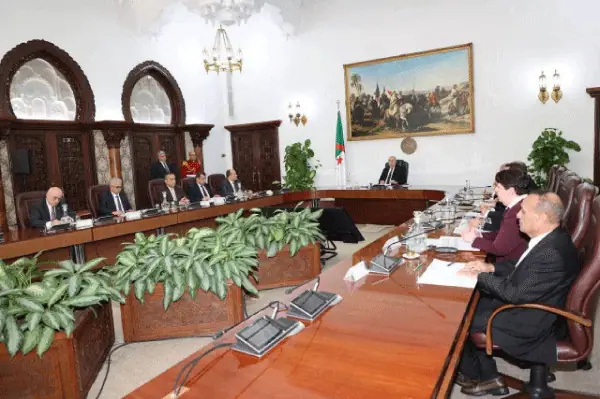
Algerian President Abdelmadjid Tebboune chaired a meeting focused on the production of fertilizers and compound fertilizers. The meeting resulted in a decision to start marketing concentrated phosphate in the first quarter of 2027. This move is part of the integrated phosphate project, which aims to develop the mining and processing industry. The project is expected to reduce Algeria's dependence on foreign markets for fertilizers.
The start of production at the Blada Hedba mine in Tebessa province is scheduled for late 2027. This mine will provide the necessary raw materials for fertilizer production. By 2028, Algeria plans to become completely self-sufficient in fertilizer production and end imports. The project is considered a strategic one, as it will allow Algeria to move from extracting raw materials to processing and transforming them into industrial products with added value.
The integrated phosphate project is based on exploiting significant phosphate reserves in the Blada Hedba area of Tebessa province. The project involves building a complex to extract, enrich, and process phosphate, with an extraction capacity of 10.5 million tons per year. The production of enriched phosphate is expected to reach 5.5 million tons per year, while the production of concentrated phosphate will be around 3.2 million tons per year.
The project goes beyond just exploiting the mine, as it involves a complete production chain. This chain starts with phosphate extraction and enrichment in Blada Hedba, then moves to the industrial pole for chemical conversion in Oued Kebir, Souk Ahras province. The pole will have units for producing phosphate and nitrogenous fertilizers, as well as intermediate chemicals.
The first phase of the project involves building an industrial complex in Oued Kebir with a production capacity of 2.4 million tons per year of phosphate fertilizers and 570,000 tons of nitrogenous fertilizers. This will enhance national production capacities and provide the agricultural sector with basic inputs. The surplus production will be directed towards foreign markets.
To ensure the integration of different parts of the project, accompanying infrastructure is being built. This includes the Eastern Mining Railway Line, which connects production and conversion areas to the port of Annaba. The line is 422 kilometers long and will allow for the transportation of phosphate and transformed products under suitable conditions.
The project also involves expanding port facilities in Annaba and building a mining dock for loading phosphate and its derivatives. This will provide the necessary logistical capabilities for marketing production and exporting surplus. The project reflects a trend towards building a complete phosphate industry, allowing for the valuation of natural resources locally and increasing the contribution of mining industries to diversifying the national economy.
Key points
- Algeria aims to market concentrated phosphate in early 2027 and become self-sufficient in fertilizer production by 2028.