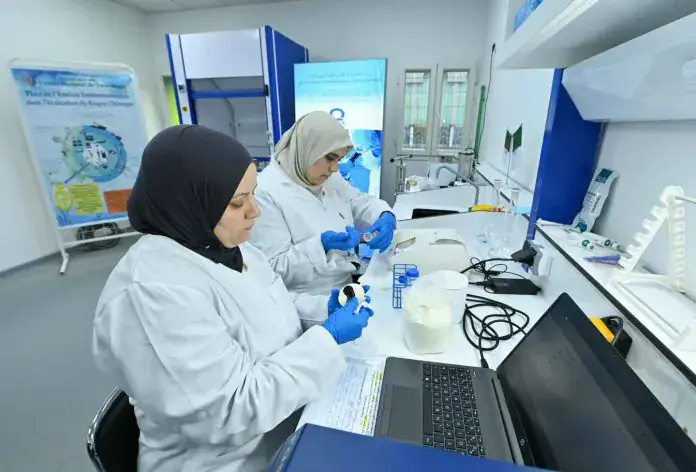
Algerian President Abdelmadjid Tebboune has instructed the government to increase the number of quality control laboratories at ports and airports nationwide. During a meeting of the Council of Ministers, he emphasized the need to go beyond the two recently launched laboratories in Algiers. The priority will be given to the busiest ports, including those in Oran, Mostaganem, Ghazaouet, Jijel, and Annaba.
The new laboratories are part of a broader effort to strengthen the country's health protection measures against the risks associated with importing non-compliant or hazardous products. The laboratories, built by the Central Construction Establishment (ECC) under the Ministry of National Defense, will be operated by the Algerian Center for Quality Control and Packaging (CACQE). They will conduct analyses to verify the conformity of imported goods with quality and safety standards.
The laboratories will have the capacity to process over 190 analyses per day. They will conduct biological and physico-chemical analyses to detect contaminants, pesticide residues, heavy metals, and natural and microbial toxins in imported products. The products to be tested include food items such as oils, meats, milk, and cereals, as well as non-food items like cosmetics, detergents, toys, and textiles.
The quality control system consists of two levels of intervention. The first level involves rapid analyses at the border, which can produce results within minutes or hours. The second level involves confirmation analyses at national laboratories. This multi-layered approach aims to ensure that imported products meet Algerian quality and safety standards before they are released to the market.
In addition to controlling imported goods, the government's efforts will complement the regular sampling and analysis operations conducted by the Ministry of Interior's agents. These operations aim to verify the compliance of products available for sale with existing regulations. The authorities have also announced plans to strengthen the legal framework to combat fraud, with severe penalties for individuals involved in introducing hazardous substances into the country.
President Tebboune has tasked the Minister of Justice with reinforcing the legal framework to impose maximum penalties on those involved in importing hazardous products. He has also called on state services to mobilize their resources around the clock to ensure permanent vigilance against the risks associated with importing dangerous products.
The expansion of quality control laboratories and the strengthening of anti-fraud measures are part of a broader strategy to enhance food safety and protect public health in Algeria. The authorities aim to establish a comprehensive network of laboratories and inspection teams to monitor the entire supply chain, from the entry of goods into the country to their availability for consumers.
Key points
- Algeria to prioritize quality control at busiest ports, including Oran, Mostaganem, Ghazaouet, Jijel, and Annaba.
- New laboratories to have capacity to process over 190 analyses per day.
- Authorities plan to strengthen legal framework to combat fraud and impose severe penalties on those involved in importing hazardous products.
Reporting sources
- CONTRÔLE SANITAIRE : Les laboratoires seront généralisés à d’autres ports · lecourrier-dalgerie.com