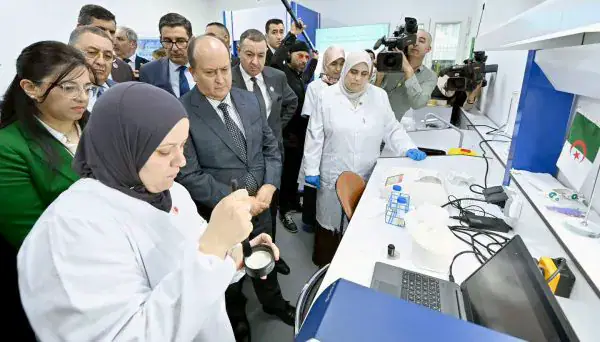
The Algerian government is set to establish 17 laboratories to enhance the control of imported products at the country's borders, ports, and airports. This initiative aims to accelerate health analyses and verify the conformity of goods before they are released into the national market. According to Yasmine Kemali, Director of Development and Monitoring of Laboratories at the Ministry of Domestic Trade, this move will also reduce customs clearance times. The project is in line with President Abdelmadjid Tebboune's instructions during the Council of Ministers meeting on June 7, 2026.
The first phase of the project has already seen the completion of two pilot structures at Algiers port and Algiers International Airport. Kemali emphasized that the goal is to reduce analysis and result restitution times, strengthen health control and commodity conformity, and improve coordination among concerned sectors. This effort primarily aims to preserve consumer health and safety, as well as the national economy. The law grants fraud repression agents extensive control powers, enabling them to search and investigate infractions at borders and within the national market.
The program involves three categories of laboratories: Type A for major ports like Algiers, Jijel, and Oran, equipped with seven automated systems; Type B for ports like Béjaïa and Mostaganem; and Type C for airports and land border posts, equipped with two automated systems. A committee co-chaired by the Ministers of Trade, Health, and Agriculture was established on June 11, 2026, to oversee the project. The Ministry of National Defense has been tasked with constructing the pilot laboratories.
The Ministry of Trade currently operates 42 laboratories for fraud repression, managed by the Algerian Center for Quality Control and Packaging (CACQE), in addition to the National Laboratory for Testing (LNE). By 2027, the number of laboratories under the trade sector is expected to increase to 58. A regulatory text is being drafted to ensure better coordination among laboratories across different ministerial departments.
The new laboratories will enable authorities to conduct controls directly at border posts, reducing analysis and clearance times for goods. This will help decongest ports and airports, allowing economic operators to complete customs procedures more quickly. The system will also enhance the prevention of health risks associated with imported products through rapid screening technologies.
The control will cover all imported goods that may impact consumer health and safety. Specific equipment will be dedicated to particular analyses, such as a portable NIR spectrometer for analyzing powdered milk and a lactosérum. Other equipment will focus on microbiological analyses for meat, poultry, fish, and canned tuna. DNA analysis may also be conducted to identify the animal origin of certain products.
Kemali assured that the selected equipment has been calibrated and homologated according to international standards, ensuring the reliability of the results. The implementation of these laboratories marks a significant step forward in Algeria's efforts to strengthen the regulation of imported goods and protect public health and safety.
Key points
- Algeria to establish 17 laboratories at borders, ports, and airports to control imported products.
- The project aims to reduce analysis and customs clearance times while enhancing health and safety controls.
- The new laboratories will be equipped with advanced technologies for rapid screening and analysis of imported goods.
Reporting sources
- Produits importés : Dix-sept laboratoires pour renforcer le contrôle aux frontières · Le Jeune Indépendant