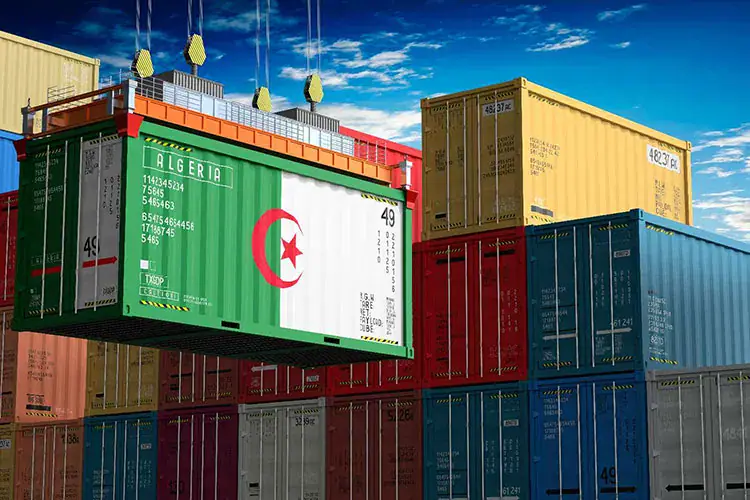
Algeria's non-hydrocarbon exports are expected to surpass $7 billion in 2026, up from over $5 billion in 2025. The country's authorities are working to broaden the range of products sold abroad and diversify export destinations. The number of countries receiving Algerian exports has increased from 33 to 57. This growth is part of a wider strategy to raise non-hydrocarbon exports to 50% of the country's total exports.
The expansion of Algerian exports has been significant in terms of both destination markets and sectors involved in international trade. New sectors have been included in export activity, such as food processing, agriculture, manufacturing, electrical equipment, and energy-related industries. The list of Algerian products now targeting international markets includes cement, ceramics, gypsum, and various types of paint. This growing range of exports reflects the expansion of Algeria's domestic production base and its increasing capacity to compete abroad.
According to Ali Bey Naceri, Vice-President of the National Association of Algerian Exporters, the increase in export destinations and sectors is a major shift in the country's export landscape. He highlights promising opportunities in the export of specialised machinery and equipment used in construction, public works, and land development. Building partnerships with international companies and global brands can help Algerian businesses benefit from technology transfers and strengthen their technical and industrial capabilities.
Naceri emphasizes that exporting is no longer a secondary economic option but has become a necessity and a strategic priority. The strategic objective is to increase the share of non-hydrocarbon exports to 50% of Algeria's total exports. Achieving this target will require continued expansion of the country's export base, integration of additional productive sectors, and a stronger international presence for Algerian goods.
On November 5, Foreign Trade and Export Promotion Minister Kamel Rezig announced that Algeria's non-hydrocarbon exports had reached $5.16 billion in 2025. This represents an increase of approximately $972 million compared with 2024. The figure provides the official baseline for projections of further growth in 2026. Algeria's non-hydrocarbon exports have been volatile, but the authorities are determined to consolidate the recent recovery and prevent a renewed decline.
The government had initially set a strategic target of generating $10 billion in non-hydrocarbon exports, which was later raised to $30 billion by 2030. African markets are identified as a key driver of growth, with a focus on sectors such as food products, agricultural goods, pharmaceuticals, manufactured products, and petrochemicals. To support this expansion, approximately 3,900 applications were submitted by exporters in 2025 to the Special Fund for Export Promotion.
The date sector is an example of Algeria's expanding export potential. The value of Algerian date exports rose from $78.06 million in 2024 to $98.32 million in 2025. Export volumes also increased, from 111,000 tonnes to 115,000 tonnes. The date industry demonstrates how export diversification can begin with a single agricultural product before extending to a wider range of economic sectors.
Key points
- Algeria aims to increase non-hydrocarbon exports to 50% of total exports.
- The country targets $7 billion in non-hydrocarbon exports by 2026.
- Algerian exports are expanding into new sectors, including food processing, agriculture, and manufacturing.
Reporting sources
- Algeria Targets $7 Billion in Non-Hydrocarbon Exports by 2026 · Echorouk El Yawmi