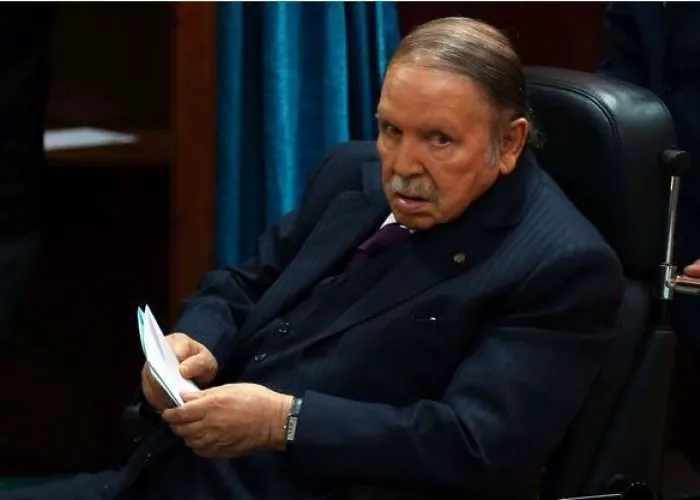
Algerian President Abdelaziz Bouteflika signed a decree on Tuesday, officially convoking the electoral body for the presidential election set to take place on April 18, 2019. This move marks the beginning of the electoral process for the country's most significant political event. According to the presidential decree, the election will be held on Thursday, April 18, 2019, as per Article 136 of the Organic Law on the Electoral Regime.
The decree also provides for an exceptional revision of the electoral lists, which will take place from January 23 to February 6, 2019. This revision is a crucial step in the electoral process, allowing eligible voters to register or update their information on the electoral lists. The President's signature on the decree sets in motion the various stages leading up to the election, including the submission of candidatures and the scrutiny of these candidatures by the Constitutional Council.
Potential candidates for the presidency will have to submit their declarations of candidacy within 45 days following the publication of the presidential decree. The Constitutional Council will then have ten days to validate or invalidate these candidatures. To be eligible, a candidate must meet specific conditions outlined in the 2016 Constitution, including being of Algerian nationality by origin, having reached the age of 40, and being of Muslim faith.
Candidates will also have to gather a significant number of signatures from elected officials or ordinary citizens. They can either present a list of 600 signatures from members of People's Communal Assemblies (APC), People's Wilaya Assemblies (APW), or the National People's Assembly (APN), covering at least 25 wilayas. Alternatively, they must collect a minimum of 60,000 signatures from registered voters across 25 wilayas, with a minimum of 1,500 signatures per wilaya.
The High Independent Instance for the Supervision of Elections will play a crucial role in monitoring the electoral process. Comprising 410 members, this body will oversee the revision of electoral lists, the submission and scrutiny of candidatures, and the voting process on election day. Its presence aims to ensure the transparency and integrity of the electoral process.
In addition to the High Independent Instance, a national commission for the preparation and organization of the presidential election will be set up within the next 30 days. This commission, chaired by the Prime Minister, will be responsible for guaranteeing the smooth running of the election by mobilizing the necessary human and material resources for candidates and voters.
The presidential election on April 18, 2019, is a significant event in Algeria's political calendar. With the convocation of the electoral body now official, various stakeholders, including potential candidates, political parties, and civil society organizations, are expected to engage actively in the electoral process. The election's outcome will likely have far-reaching implications for Algeria's future.
Key points
- The Algerian presidential election is set to take place on April 18, 2019.
- The electoral process has begun with the convocation of the electoral body by President Abdelaziz Bouteflika.
- Candidates must meet specific conditions and gather a significant number of signatures to be eligible for the presidency.