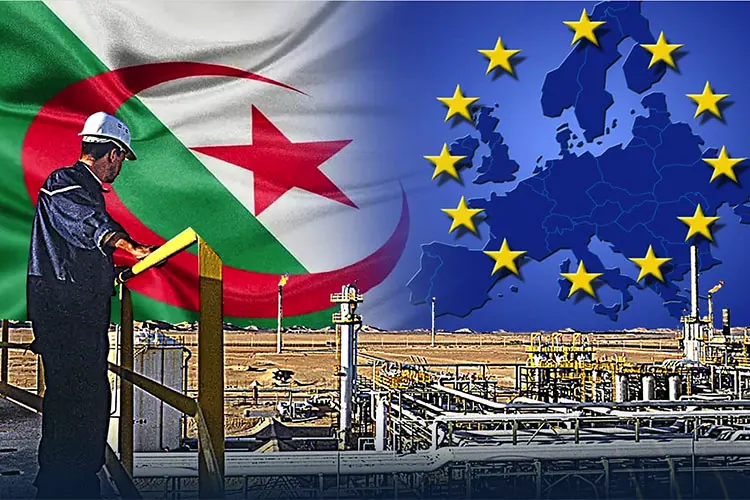
Algeria's economic partnership with the European Union requires significant adjustments to transition from a mere trade liberalization agreement to a partnership focused on production, investment, and technology transfer. A study by the National Chamber of Auditors, comprising 23 pages, highlights that the current agreement, signed in 2002 and effective since 2005, needs revision to promote a more diversified Algerian production base and attract productive investment. The proposed changes aim to increase the value added to the Algerian economy and enhance the country's integration into European value chains.
The study emphasizes that the current trade exchange between Algeria and the EU, valued at 43.4 billion euros in 2025, is not sufficient to measure the partnership's effectiveness. The composition of trade is equally important, with the EU importing primarily Algerian hydrocarbons, which accounted for 93.2% of its imports from Algeria. In contrast, EU exports to Algeria were dominated by machinery, equipment, chemicals, and food products. To strengthen the partnership, the study suggests focusing on investment, production, and technology transfer, rather than just trade liberalization.
One of the key proposals is to encourage Algerian businesses to integrate into European value chains and access new markets. This requires developing local subcontracting to maximize benefits from the partnership and creating an enabling environment for investment. The study also stresses the need to convert investment commitments into sectoral programs with clear objectives, indicators, and monitoring mechanisms. Furthermore, it recommends supporting Algerian enterprises in meeting European market requirements, including environmental and social standards.
The study identifies several obstacles to Algerian exports, including non-tariff barriers such as rules of origin, environmental and carbon emission requirements, and social governance standards. To overcome these challenges, the study proposes technical and financial assistance to Algerian businesses, as well as the development of measurement and verification systems to help them comply with European regulations. Additionally, the study suggests that protection of domestic industries should be temporary and linked to specific objectives, such as improving productivity, employment, and competitiveness.
The National Chamber of Auditors also emphasizes the importance of reliable economic data in evaluating the partnership's effectiveness. The study proposes that auditors play a more significant role in verifying the accuracy of economic and financial data related to investment projects and sustainability. This would involve specialized training and coordination with relevant authorities. Moreover, the study recommends establishing a more integrated negotiation framework that includes mechanisms for monitoring implementation, addressing disputes, and making adjustments as needed.
The study presents three possible scenarios for the future of the Algeria-EU partnership: maintaining the status quo, making limited revisions to address specific issues, or transitioning to a more comprehensive partnership focused on production and investment. The third option involves setting measurable targets for the partnership, such as the volume of investments, the number of businesses integrated into value chains, and the level of local integration. This approach is particularly relevant given the significant economic weight of the European market for Algeria.
The EU is Algeria's largest trading partner, accounting for 49.6% of its external trade in 2025. European foreign direct investment in Algeria totaled 14.5 billion euros at the end of 2024. The study's recommendations aim to increase the value added to the Algerian economy, enhance its integration into European value chains, and promote sustainable economic growth. By restructuring the partnership, Algeria seeks to move beyond its role as a consumer of European products and become a productive and exporting partner within the shared value chains.
Key points
- Algeria's National Chamber of Auditors proposes six changes to enhance economic ties with the EU.
- The study emphasizes the need to focus on investment, production, and technology transfer to strengthen the partnership.
- The proposed changes aim to increase the value added to the Algerian economy and enhance its integration into European value chains.