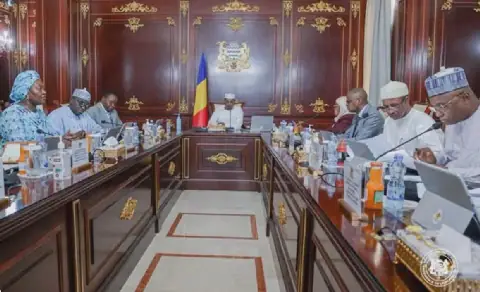
The Sahel region has witnessed accelerated diplomatic movements between Algeria, Chad, and Niger, as the area appears more divided than ever. These countries share a connected geographic and security landscape but are pursuing divergent policy options and external alliances. Algerian Foreign Minister Ahmed Attaf's visit to Chad as a special envoy for President Abdelmadjid Tebboune came amid intensified interactions between regional nations and a notable shift in relations between Algeria and Niger.
Niger, along with Mali and Burkina Faso, has opted to distance itself from France and reorganize its regional and international alliances in recent years. Conversely, Chad has strengthened its cooperation with Paris after a period of tension, with security and military issues regaining prominence in bilateral cooperation. This leaves two neighboring countries facing similar security threats with differing policy choices. However, this difference does not negate the fundamental reality that regional security cannot be confined within a single country's borders.
The desert region connecting Chad and Niger extends to Algeria, Libya, and Mali, where armed groups and smuggling networks operate beyond political boundaries. Developments in Libya and Sudan further complicate the situation, making local crises part of a broader regional crisis. In this context, the recent rapprochement between Algeria and Niger gains particular significance, occurring after a period of tension and amid deteriorating security conditions.
This new dynamic is also tied to economic interests and projects in energy and infrastructure, indicating that Sahel relationships are driven by changing interests and circumstances rather than fixed alliances. The interactions between Niamey, N'Djamena, and Algiers highlight that divergent political stances do not negate the need for communication, and differing external alliances do not alter the reality of shared security challenges.
However, transforming this geographic interconnectedness into broader political cooperation remains a difficult task. The region faces not only the threat of armed groups but also the competition of external powers, shifting alliances, and differing visions on managing security and addressing crises. It may be premature to discuss any party's ability to reconcile Sahel contradictions or establish a unified regional framework.
Recent diplomatic efforts reveal that, despite varying policy choices, regional nations remain tied to a shared geography and a common security fate. Algerian diplomatic initiatives aim to strengthen ties with Chad and Niger, fostering cooperation to address shared security concerns. This approach acknowledges the complex interplay of local, regional, and international factors influencing the Sahel's stability.
The evolving situation demands sustained diplomatic engagement and pragmatic cooperation among Sahel nations to address pressing security challenges. By navigating their differences and focusing on common objectives, regional actors may find opportunities for enhanced collaboration, ultimately contributing to a more stable and secure Sahel.
Key points
- Algeria's diplomatic efforts seek to strengthen ties with Chad and Niger amid shifting regional alliances.
Reporting sources
- الجزائر بين أنجمينا ونيامي.. هل يمكن جمع تناقضات الساحل؟ · Le Ndjam Post