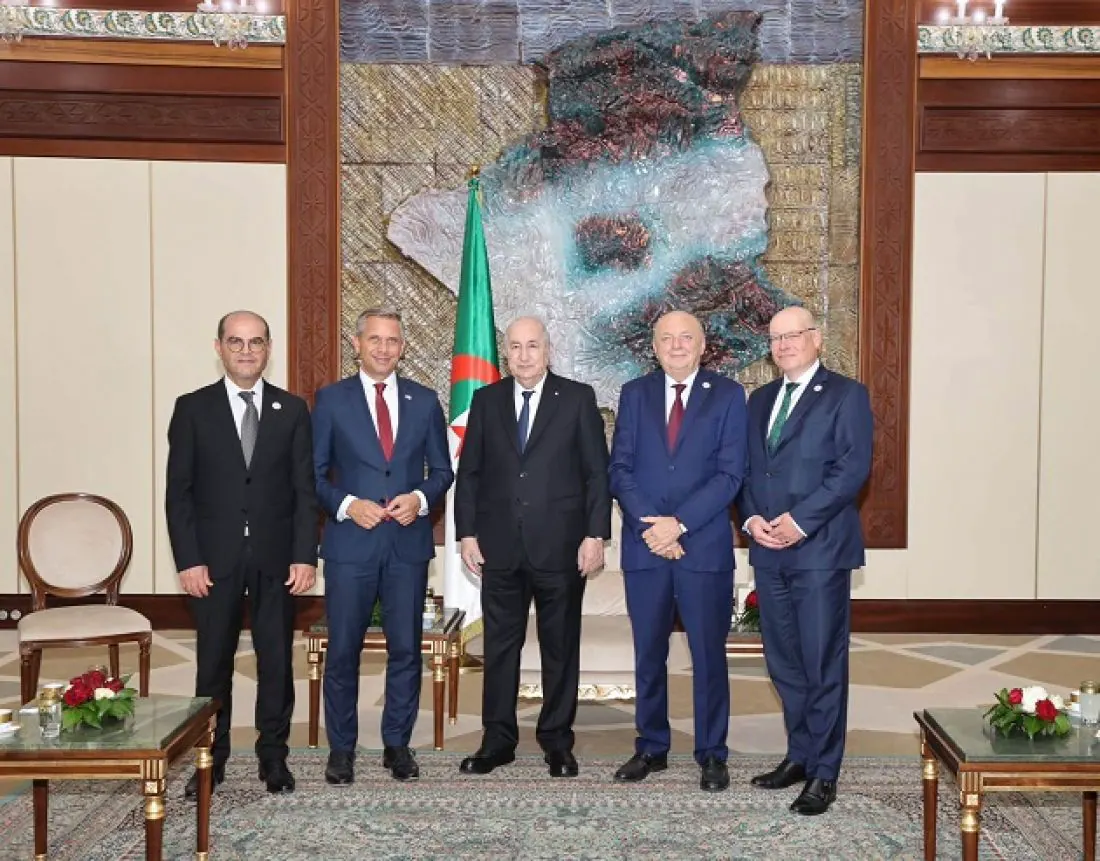
Algerian President Abdelmadjid Tebboune recently welcomed energy ministers from four countries, including Tunisia, to discuss a major project connecting North Africa to Europe. The meeting, which took place on October 1, 2026, was attended by ministers from Austria, Germany, Italy, and Tunisia, represented by Tunisia's Minister of Equipment, Industry, and Energy, Salah Zouaoui. The project, known as the SouthH2 Corridor, aims to create a strategic clean energy infrastructure linking North Africa to Europe.
The SouthH2 Corridor project is a significant initiative that seeks to transport green hydrogen from North Africa to Europe through Tunisia, Italy, and on to Germany and Austria. This project is expected to strengthen the energy partnership between the Mediterranean regions and enhance the role of North Africa in the transition to clean energy. According to the Algerian Presidency, the meeting was also attended by several high-ranking officials, including Minister of State Ibrahim Mourad and Minister of Energy and Renewable Energies, Mourad Adjali.
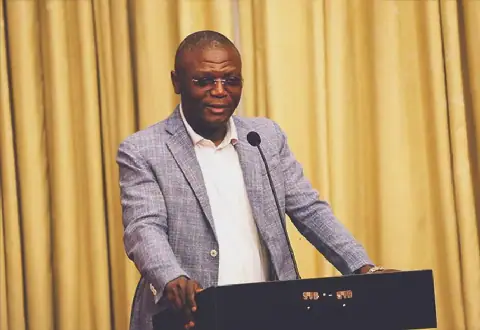
During the meeting, Minister Salah Zouaoui emphasized that the SouthH2 Corridor project is a strategic clean energy infrastructure designed to link North Africa to Europe. He noted that the complementary studies for the project are expected to be completed soon, paving the way for the announcement of the final details and implementation plans. The project is seen as a crucial step towards achieving a sustainable energy future for the region.
The SouthH2 Corridor project has the potential to play a vital role in the global transition to clean energy. By providing a route for green hydrogen transportation, the project can help reduce carbon emissions and promote the use of renewable energy sources. Algeria, as a key player in the region, is well-positioned to drive this initiative forward and foster cooperation among the participating countries.
The meeting between President Tebboune and the energy ministers marks a significant milestone in the development of the SouthH2 Corridor project. The project's success will depend on the continued collaboration and coordination among the participating countries. With the completion of the complementary studies, the project is expected to move forward, with the final details and implementation plans to be announced in the near future.
Tunisia's involvement in the SouthH2 Corridor project is seen as a strategic move to enhance its role in the regional energy landscape. The country's participation in this initiative is expected to have a positive impact on its economy and energy sector. The project also presents an opportunity for Tunisia to strengthen its partnerships with European countries, particularly Italy, Germany, and Austria.
The Algerian government's commitment to driving the SouthH2 Corridor project forward is evident in the high-level meeting hosted by President Tebboune. The project's success will require continued efforts from all participating countries to ensure its timely implementation and to achieve its goals of promoting clean energy and reducing carbon emissions.
Key points
- The SouthH2 Corridor project aims to link North Africa to Europe through a strategic clean energy infrastructure.
- The project is expected to strengthen the energy partnership between the Mediterranean regions and enhance North Africa's role in the transition to clean energy.
- The complementary studies for the project are expected to be completed soon, paving the way for the announcement of the final details and implementation plans.