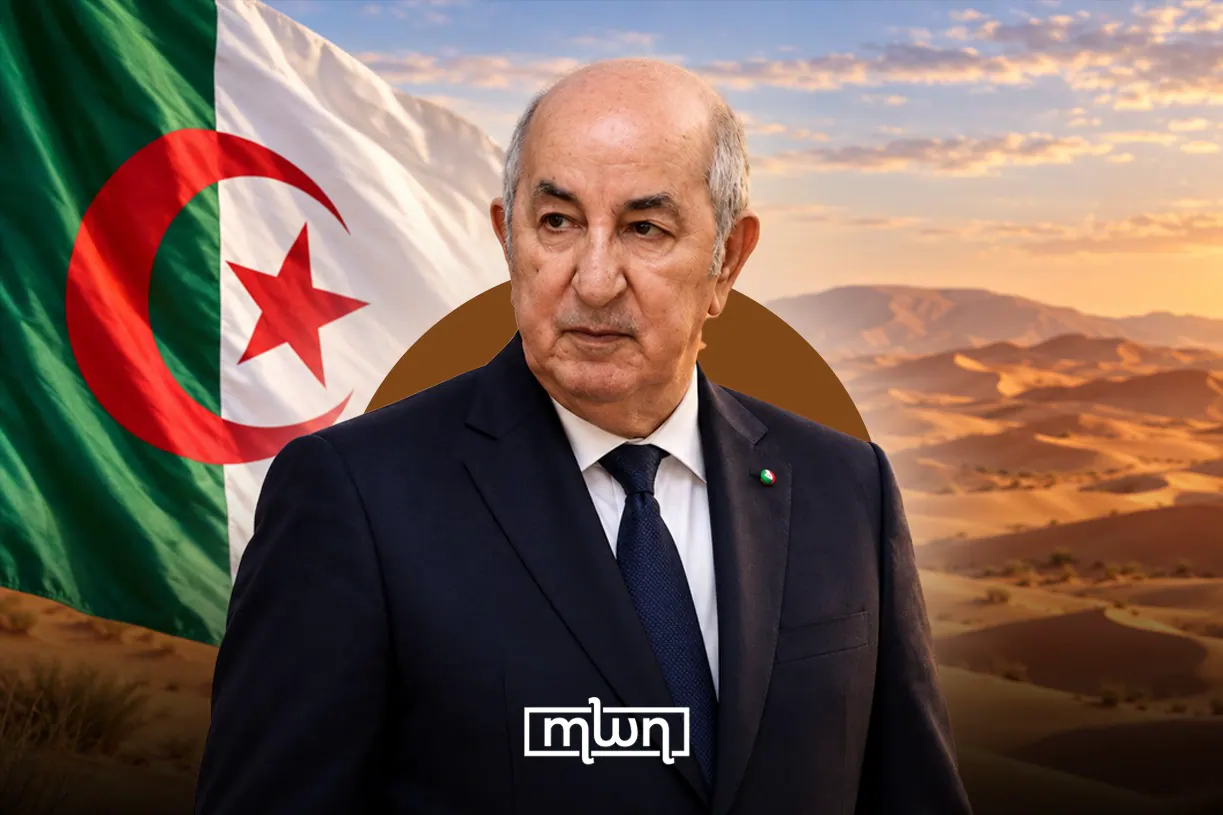
Algerian President Abdelmadjid Tebboune recently sat before three microphones and delivered a speech that was billed as a tour of the country's crises. However, the session turned out to be a slow, televised act of mourning, as Tebboune seemed to be learning to bury a fifty-year fiction while pretending to defend it. The speech was marked by contradictions and evasions, particularly when it came to the Western Sahara conflict.
Tebboune's comments on Western Sahara were notable for their admission of defeat. He acknowledged that the UN Security Council's Resolution 2797, adopted on October 31, 2025, is the instrument of his defeat. The resolution seats Algeria at the table alongside Morocco, the Polisario, and Mauritania, and anchors any settlement in Morocco's autonomy plan. Tebboune conceded that "the resolution is there, it exists," and that it does not include a self-determination referendum or a Polisario state.
Tebboune's statement that "we are not more Sahrawi than the Sahrawis themselves" was seen as a significant shift in Algeria's stance on Western Sahara. He added that "any decision the Sahrawis accept, we accept. That is all, I cannot say more than this." This statement was reminiscent of comments made by Moroccan Foreign Minister Nasser Bourita in 2020, when he said that Morocco "must not be more Palestinian than the Palestinians themselves."
The implications of Tebboune's comments are significant, as they suggest that Algeria is beginning to retreat from its long-standing support for the Polisario Front. For half a century, Algiers was the loudest Sahrawi in every room, providing financial, military, and diplomatic support to the Polisario. However, Tebboune's comments suggest that Algeria is now willing to walk away from the conflict, which it can no longer afford or win.
Tebboune also touched on the issue of the generation of Sahrawis warehoused in Tindouf. He conceded that the youth "born in '75" are now 50 years old and need prospects. He questioned whether they want to spend their whole lives and die under a tent, suggesting that they are looking for alternatives. He even noted that Sahrawis "have a presence in Europe," including in Spain.
Despite the shift in Algeria's stance, Tebboune still expressed concerns about Morocco's influence in the region. He mentioned the trans-Saharan gas pipeline, a project that Algeria has been pushing to bleed the Algerian treasury white and shadow the Nigeria-Morocco Atlantic line. He also justified the pressure campaign on Niger, which included the dispatch of military aircraft to Niamey after a failed coup.
Tebboune's comments on Algeria's relationships with other countries were also notable. He expressed grievances against the United Arab Emirates, accusing it of "provocations" and "interferences." He also mentioned the rupture with the UAE, stating that "when we make a decision, there is no going back… the situation has reached the point of no return." However, he remained silent on the relationship with Spain, which had been improving in recent months.
Key points
- Algeria's President Tebboune concedes defeat in Western Sahara conflict
- Tebboune signals shift in Algeria's stance, suggesting willingness to walk away from conflict
- Algeria's relationships with Morocco, Spain, and UAE are under scrutiny