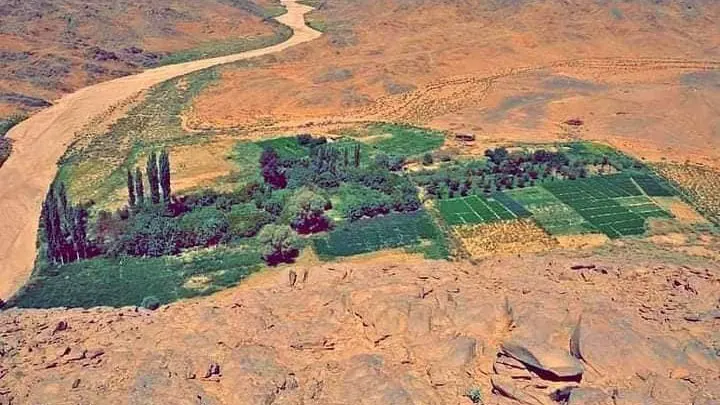
The municipality of Tazrouk in Algeria's Tamanrasset province is witnessing significant development in agricultural activity. This growth is primarily driven by the expansion of fruit tree cultivation and an increasing interest from young people in investing in the sector. According to data from local agricultural services, the area under cultivation has been steadily increasing, contributing to the local economy. The agricultural sector in Tazrouk is largely dependent on well water due to limited rainfall.
The total agricultural area in Tazrouk is estimated at 620 hectares, with approximately 300 hectares suitable for exploitation. Fruit trees, particularly grapes, apricots, peaches, and vines, are among the most prominent crops in the region. In the 2025-2026 agricultural season, fruit tree production reached around 6,235 quintals. This represents a notable achievement for local farmers and the agricultural sector as a whole.
In addition to fruit tree cultivation, the agricultural sector in Tazrouk also includes the production of vegetables, fodder, and grains. During the same agricultural season, the area produced 1,000 quintals of vegetables, 7,720 quintals of fodder, and 280 quintals of grains. These figures highlight the diversity of agricultural activities in the region and the efforts of local farmers to engage in various forms of production.
The livestock sector is another crucial component of Tazrouk's economy, with 496 farmers engaged in the activity. The region has a significant number of sheep, goats, and camels, with 9,932 sheep, 11,250 goats, and 3,100 camels. The local authorities and agricultural services are working to support farmers through various initiatives, including connecting farms to the electricity grid and providing financial assistance.
To support the agricultural sector, approximately 300 agricultural investments have benefited from being connected to the electricity grid, with 50% of their energy consumption costs covered. Additionally, programs are in place for drilling and equipping wells, utilizing solar energy, and supporting pumps, fodder, fruit trees, and drip irrigation systems. These initiatives aim to enhance agricultural productivity and sustainability in the region.
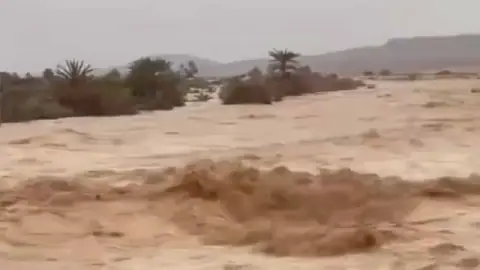
The local authorities are also exploring new agricultural opportunities, including the cultivation of olive and almond trees, to diversify production. This move is part of a broader strategy to promote sustainable agriculture and reduce dependence on traditional crops. However, the region faces challenges related to drought, declining water levels in wells, and the risk of soil erosion due to flooding.
The local authorities and agricultural services are committed to continuing their support for farmers, promoting the use of modern irrigation techniques, and encouraging young people to invest in and develop new agricultural sectors. By addressing the challenges and capitalizing on the opportunities, Tazrouk aims to further enhance its agricultural sector and contribute to the local economy.
Key points
- Algeria's Tazrouk municipality sees surge in fruit tree cultivation driven by youth investment.
- Region faces challenges including drought and soil erosion.
- Authorities support farmers with initiatives like electricity grid connections and modern irrigation techniques.