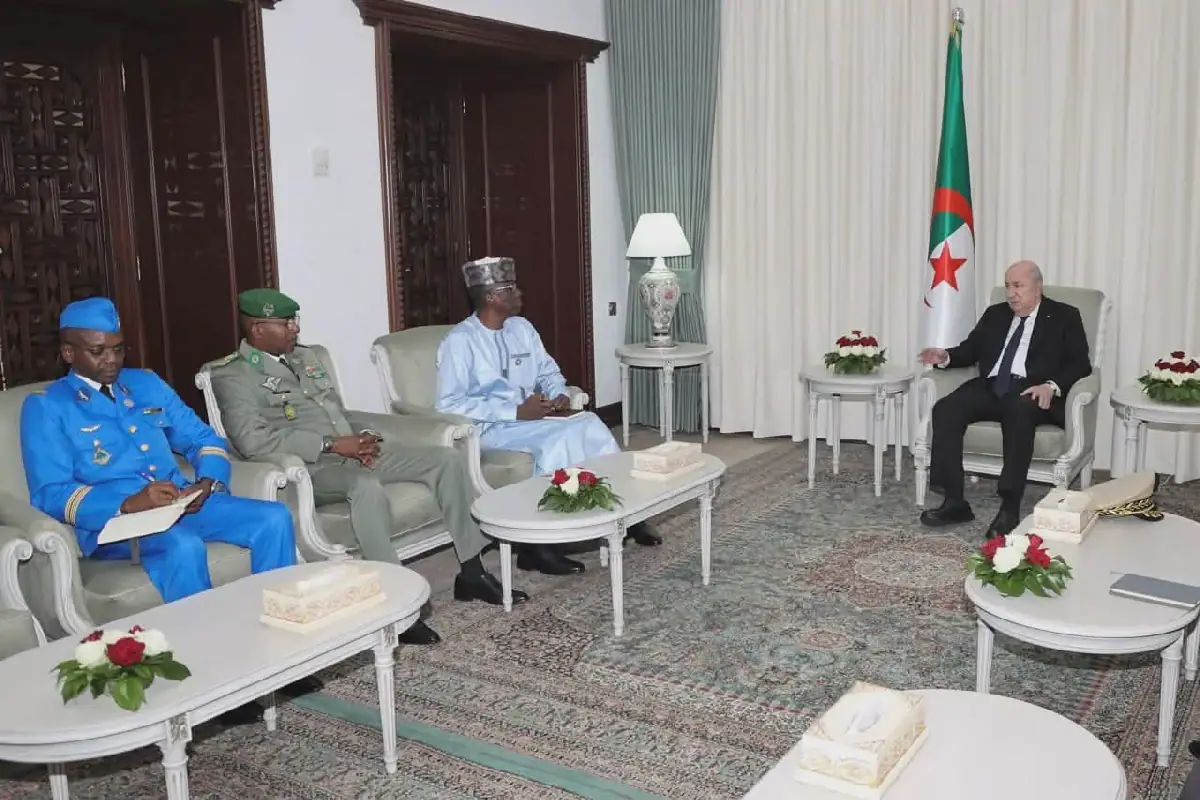
On November 2, 2026, Algerian President Abdelmadjid Tebboune delivered a message to the nation, commemorating the 72nd anniversary of the country's liberation revolution. The address highlighted the nation's strategic priorities and foreign policy, particularly in the Sahel region. Tebboune emphasized the importance of sovereignty, independence, and the right to self-determination, core principles guiding Algeria's diplomatic choices. He recalled the sacrifices of national heroes and the suffering endured during over 130 years of colonization. This historical context underscores the significance of the nation's ongoing commitment to these values.
Algeria's approach in the Sahel region is rooted in a deep understanding of its own history and the importance of national sovereignty. The country's experience in gaining independence has instilled a strong attachment to the principle of sovereignty, which is seen as a fundamental aspect of international relations. Algeria advocates for a solution to the Sahel crises that prioritizes the involvement of concerned countries, taking into account their unique realities and interests. This stance emphasizes the importance of national ownership and decision-making, with external partners playing a supporting role.
The Sahel region poses a direct security threat to Algeria due to its geographic proximity and the interconnected nature of security challenges. Terrorism, transnational crime networks, illicit trafficking, and institutional fragilities are some of the pressing concerns that require a concerted response. Algeria's interest in regional developments stems from legitimate national security concerns, rather than a desire to intervene in the internal affairs of neighboring countries. The country seeks to address these challenges through cooperation, security coordination, and diplomatic consultation, while respecting the sovereignty of each nation.
A key aspect of Algeria's approach is distinguishing between interference and freely consented cooperation between states. The country believes that diplomacy, mediation, and dialogue facilitation do not inherently constitute interference, provided they are conducted within a clear legal framework and with the consent of concerned parties. When a state participates in a cooperation mechanism or consultation, it exercises its sovereignty, and such initiatives should not be misconstrued as attempts at tutelage or political influence.
The Algerian doctrine prioritizes a political solution to the Sahel crises, recognizing that these challenges cannot be resolved solely through security measures. The country advocates for addressing the root causes of instability, including institutional weaknesses, internal tensions, and socio-economic difficulties. This approach emphasizes the importance of dialogue, reconciliation, and institution-building in fostering durable peace and stability. By focusing on comprehensive solutions, Algeria seeks to create an environment conducive to sustainable security.
As a key player in the African community, Algeria feels a strong sense of responsibility in promoting peace, security, and cooperation on the continent. The country's history, geography, and diplomatic experience position it to play a significant role in regional efforts. However, Algeria also acknowledges that the stability of the Sahel region is primarily the responsibility of the countries concerned, and it seeks to support their efforts while respecting their sovereignty and decision-making authority.
In conclusion, Algeria's Sahel doctrine is built on a commitment to sovereignty, cooperation, and a political approach to conflict resolution. By emphasizing the importance of national ownership, regional cooperation, and respect for sovereignty, Algeria aims to contribute to a stable and secure Sahel region. The country's diplomatic efforts prioritize finding solutions that are tailored to the unique contexts and needs of the countries concerned, rather than imposing external models or solutions.
Key points
- Algeria prioritizes national sovereignty and self-determination in its diplomatic approach to the Sahel region.
- The country advocates for a political solution to the Sahel crises, addressing root causes of instability.
- Algeria seeks to support regional efforts while respecting the sovereignty and decision-making authority of concerned countries.