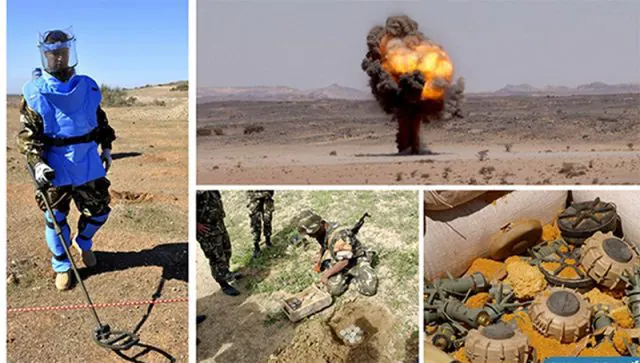
The UN Human Rights Council, during its 63rd session in Geneva, unanimously adopted a resolution titled "Impact of anti-personnel mines on the full enjoyment of all human rights: strengthening assistance to victims." The resolution was presented by Algeria as part of a group of countries including Peru, South Africa, Vanuatu, the UK, Mozambique, and Croatia. This resolution builds upon the 58/22 resolution initiated by Algeria during the 58th session of the Council.
The new resolution places victims, their families, and communities at the heart of efforts to ensure comprehensive assistance centered on their needs, particularly through social and economic reintegration. It expresses concern over the severe consequences of anti-personnel mines on fundamental rights, including the right to life, freedom of movement, health, education, work, access to sufficient food, and the right to development. The resolution garnered support from 70 sponsoring states, making it one of the texts with the most support within the Council.
The initiative received widespread support from participating delegations and civil society organizations, which praised Algeria's role in this area, given its historical experience with mines inherited from the colonial period and its success in eliminating them through national capacities. This broad support reflects the international consensus on the humanitarian and human rights dimensions of the anti-personnel mine issue and recognition of Algeria's constructive and consensual approach during consultations and negotiations.
The resolution encourages the strengthening of data collection systems and the integration of psychological and psychosocial support into victim assistance programs. It also emphasizes the need to ensure access to health facilities and public infrastructure for persons with disabilities. Among its main provisions, the resolution calls on states to respect their obligations under international human rights law and international humanitarian law and to consider seriously their accession to the Convention on the Prohibition of Anti-Personnel Mines.
The resolution also calls for enhanced international cooperation to accelerate demining operations and provide comprehensive and non-discriminatory assistance to victims. It encourages continued international cooperation, provision of technical assistance, and capacity-building for affected states, particularly developing countries, the least developed countries, and small island developing states. A roundtable will be organized during the 66th session of the Human Rights Council to examine the importance of strengthening assistance to victims.
In follow-up to the implementation of the resolution, the text invites special procedure mandate holders to give necessary attention to this issue within their mandates. The adoption of this resolution by consensus underscores Algeria's role in defending humanitarian causes related to human rights within UN bodies and its commitment to multilateralism and international cooperation, as the 30th anniversary of the Convention on the Prohibition of Anti-Personnel Mines approaches in 2027.
The resolution's adoption marks a significant step in the international effort to address the impact of anti-personnel mines on human rights and to strengthen assistance to victims. It highlights the importance of a collaborative approach to addressing this issue and the need for continued support and cooperation from the international community.
Key points
- The UN Human Rights Council adopts Algeria's resolution on anti-personnel mines with 70 sponsoring states.
- The resolution emphasizes victim assistance, social and economic reintegration, and respect for human rights.
- The adoption underscores Algeria's commitment to humanitarian causes and international cooperation.