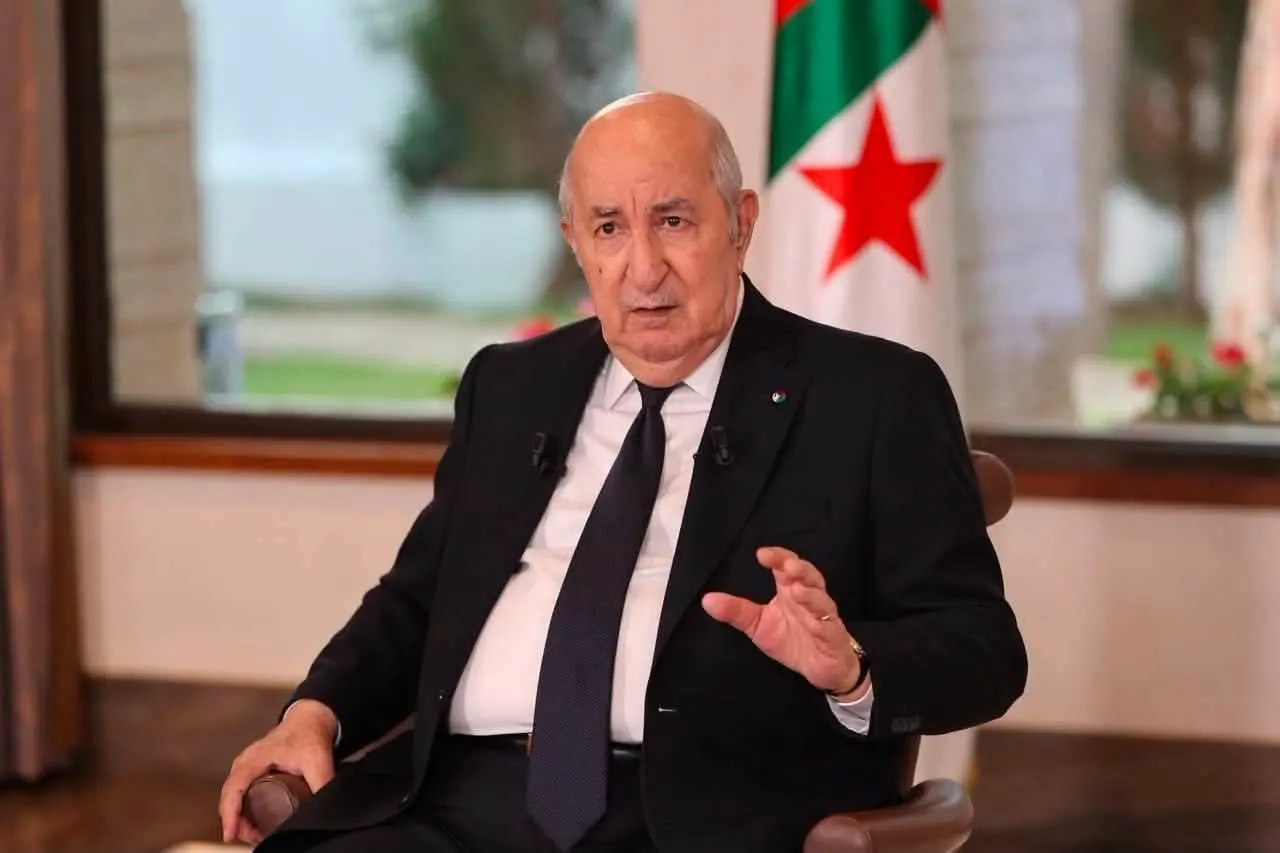
Algerian President Abdelmadjid Teboune has stated that his government will not backtrack on its decision to establish a special prison in the Grand Sahara for drug barons and traffickers. The prison, located in Tenzarouft, is part of a broader effort to combat crime and protect citizens. According to President Teboune, Algeria has been subjected to a "large-scale war" in this area. He emphasized that the recent decisions aim to safeguard the population and the country.
During a media encounter, President Teboune stressed that the state will not retreat from its stance on imposing harsh penalties on perpetrators of serious crimes. Specifically, he mentioned that capital punishment will be enforced for those responsible for intentionally setting forest fires and kidnapping children. These measures are intended to protect society and counter crimes that threaten citizens' security. The President's statements come after the National People's Assembly approved a modification to the penal code.
The modification to the penal code expands the scope of the death penalty to include crimes such as intentionally setting fires in forests and fields, as well as specific cases of child abduction. The update also covers other actions defined in the amendment. President Teboune responded to controversy surrounding the death penalty by pointing out that several countries worldwide, including the United States, implement this punishment. He questioned whether this implies that these countries are "undemocratic."
President Teboune also addressed the country's political landscape, announcing that dialogue with political parties will be limited to those with parliamentary representation. This engagement will follow a schedule agreed upon by the concerned parties. This approach aligns with the President's previous assertions about initiating a dialogue with parties represented in parliament to discuss national issues and a "societal project."
The Tenzarouft prison project involves converting a former military facility into a specialized detention center for drug barons and traffickers. According to the President, this project is part of a comprehensive strategy to tackle organized crime. By establishing this prison, the government aims to effectively manage and rehabilitate this category of offenders.
President Teboune's emphasis on enforcing severe penalties for serious crimes reflects the government's resolve to address pressing security concerns. The issue of forest fires and child abduction has been particularly sensitive in Algeria, with both incidents causing significant public concern. By expanding the death penalty's scope, the government hopes to deter such crimes.
The government's policies have been shaped by the need to ensure public safety and protect national interests. President Teboune's administration has prioritized a firm stance on crime, which is reflected in its policies and legislative actions. The implementation of these measures will likely have a significant impact on Algeria's crime rates and overall security situation.
Key points
- Algeria's President Teboune confirms the establishment of a special prison in Tenzarouft for drug barons and traffickers.
- The Algerian government will enforce capital punishment for serious crimes, including intentionally setting forest fires and kidnapping children.
- President Teboune announces that dialogue with political parties will be limited to those with parliamentary representation.