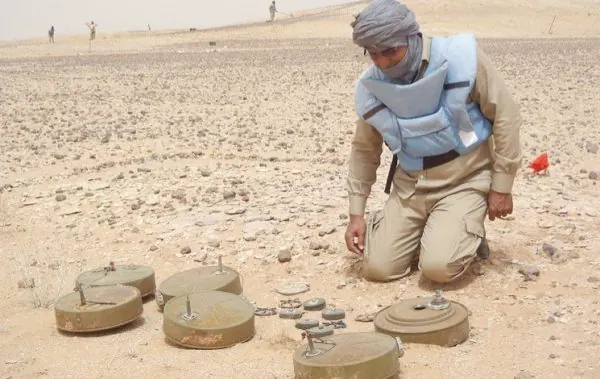
The UN Human Rights Council has adopted a landmark resolution on the devastating impact of anti-personnel mines on civilian populations. The resolution, introduced by Algeria, was adopted unanimously during the council's 63rd ordinary session. The document focuses on the urgent need for global assistance to survivors of anti-personnel mines. It emphasizes the long-lasting effects of these mines on communities and individuals.
The resolution, titled "Impact of anti-personnel mines on the full enjoyment of all human rights: strengthening assistance to victims," was sponsored by 70 countries. This widespread support reflects a global consensus on the issue. Algeria presented the resolution on behalf of a group of partner countries, including Peru, South Africa, and the United Kingdom. The resolution builds on a previous resolution adopted during the council's 58th session.
Algeria's experience with anti-personnel mines, which were extensively used during the country's colonial era, lends credibility to its efforts. The country has made significant progress in clearing and securing its territory through its own efforts and expertise. This expertise has contributed to the widespread support for the resolution. Several countries and international organizations have praised Algeria's leadership on this issue.
The resolution represents a fundamental shift in approach, prioritizing the needs of survivors and placing human rights at the forefront. It calls for a holistic and sustainable approach to assistance, including medical care, social and economic reintegration, and psychological support. The resolution also emphasizes the need for long-term commitment and support from states.
The resolution highlights the disproportionate impact of anti-personnel mines on vulnerable populations, including children and families. It also notes that the poorest countries bear the brunt of the effects of these mines. Algeria has stressed the importance of international solidarity and concrete actions, such as technology transfer and financial support, to address this issue.
To ensure the effective implementation of the resolution, mechanisms for follow-up and monitoring have been established. A high-level roundtable will review progress during the council's 66th session. The resolution also requests the UN High Commissioner to prepare a global report and invites independent experts to integrate this issue into their field investigations.
The adoption of this resolution marks a significant step towards addressing the humanitarian impact of anti-personnel mines. Algeria's efforts have demonstrated the importance of prioritizing human rights and the needs of survivors in addressing this issue. The resolution's impact will be closely watched as it is implemented in the coming years.
Key points
- The resolution prioritizes the needs of survivors of anti-personnel mines and calls for a holistic and sustainable approach to assistance.
- The resolution was sponsored by 70 countries, reflecting a global consensus on the issue.
- Algeria's experience with anti-personnel mines has contributed to its leadership on this issue and the widespread support for the resolution.