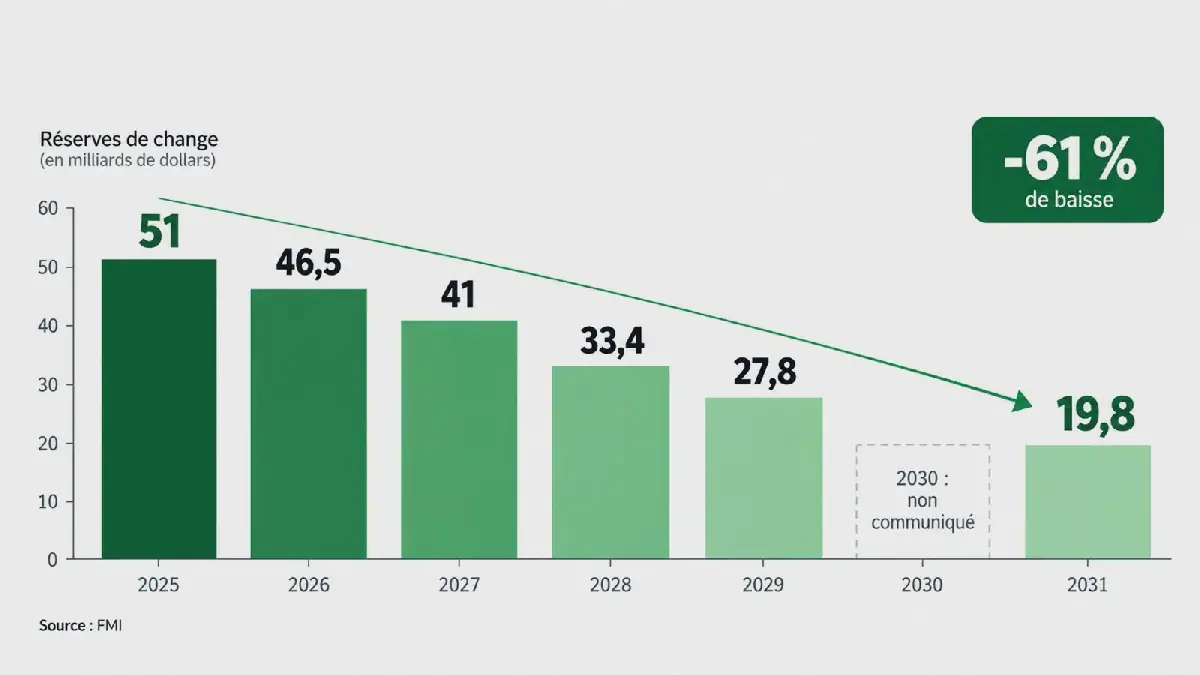
The International Monetary Fund (IMF) has projected a significant decline in Algeria's foreign exchange reserves, from $51 billion at the end of 2025 to $19.8 billion by 2031, representing a decrease of approximately 61%. This projection is based on the IMF's consultation with Algeria, which was concluded on September 11, 2026, under Article IV. The IMF attributes this decline to the country's external and budget deficits.
According to the IMF's table of economic indicators, Algeria's gross official reserves stood at $68.9 billion in 2024. The Fund estimates that the reserves will continue to decline, reaching $46.5 billion in 2026, $41 billion in 2027, $33.4 billion in 2028, $27.8 billion in 2029, and $19.8 billion in 2031. The IMF calculates that the reserves will cover only 3.3 months of imports by 2031, down from 8.6 months in 2025.
The IMF links the decline in reserves to the deterioration in Algeria's external accounts, driven by a surge in imports and a decline in hydrocarbon exports. In 2025, the current account deficit widened to 8.9% of GDP, from 1.1% in 2024. The IMF notes that the country's economic growth has been resilient, with a 3.9% increase in real GDP in 2025, driven by sustained investment.
The IMF expects the current account deficit to narrow to 1.9% of GDP in 2026, driven by higher hydrocarbon prices, but then widen again to 2.5% in 2027 and 3.1% in 2028. The Fund warns that persistent external deficits will continue to erode Algeria's reserves over the medium term. The country's budget deficit also remains a concern, with the IMF projecting it to decline to 10.5% of GDP in 2025 and 9.6% in 2026.
To address these challenges, the IMF recommends that Algeria implement a "progressive and credible" fiscal consolidation, taking advantage of the current increase in hydrocarbon prices to rebuild fiscal buffers. The Fund also suggests that the country limit its use of central bank financing and adopt a more flexible exchange rate policy to better absorb external shocks.
The IMF's projections and recommendations are based on its assessment of Algeria's economic policies and performance. The country's authorities will need to take into account these recommendations as they develop their economic plans and policies. The IMF's assessment also highlights the importance of economic diversification and the need for Algeria to continue its efforts to improve its business environment and attract investment.
The decline in foreign exchange reserves poses significant challenges for Algeria's economy, and the country's authorities will need to take decisive action to address these challenges and ensure economic stability. The IMF's recommendations provide a framework for Algeria to strengthen its economic fundamentals and improve its resilience to external shocks.
Key points
- Algeria's foreign exchange reserves are projected to decline to $19.8 billion by 2031.
- The decline in reserves is driven by external and budget deficits.
- The IMF recommends fiscal consolidation and a more flexible exchange rate policy to address these challenges.