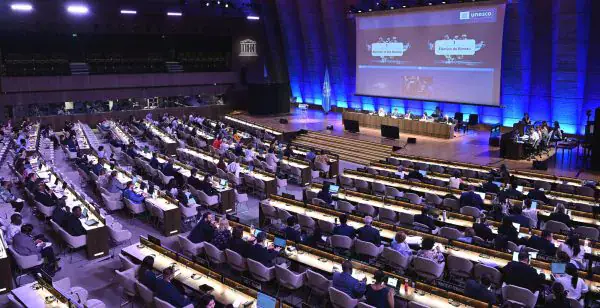
The annual international conference of the Orbicom network, held from October 26 to 30, 2026, at the University of Quebec in Montreal, brought together researchers, practitioners, and media actors from around the world to discuss the impact of artificial intelligence on democracy and critical thinking. The conference was part of the Global Media and Information Literacy Week 2026. This year's edition focused on the challenges posed by hybrid wars, manipulation strategies, and the fragmentation of digital public spaces.
Magda Fusaro, Secretary General of Orbicom and professor at the University of Quebec in Montreal, emphasized the ambivalence of the role played by communication, media, digital platforms, and artificial intelligence in democratic processes. While these tools can facilitate access to information and participation, they can also exacerbate manipulation, algorithmic hierarchization, exclusion, surveillance, and polarization. The conference provided a critical and interdisciplinary space to reflect on how these developments redefine information circulation, power dynamics, and democratic imaginaries.
The conference examined the rapid transformation of information spaces, with a focus on the impact of generative artificial intelligence on journalistic practice, content production, and fact-checking. Participants, including experts and online contributors, shared a common concern about the importance of media and information literacy as a civic bulwark against disinformation amplified by algorithms. They also stressed the need for information sovereignty, platform ethics, and the inclusion of diverse voices from around the globe.
Algeria was represented at the conference by Dr. Ryma Rouibi, a lecturer and researcher at the National School of Journalism and Information Sciences in Algiers. Her intervention highlighted the importance of anchoring fact-checking and verification in local sociocultural realities. Dr. Rouibi also discussed Algeria's experience in teaching media and information literacy, with a focus on training trainers, as well as the country's efforts to verify information through platforms like Algeria Check.
Dr. Rouibi also presented a pioneering concept of reinformation proposed to the public channel AL24 News during the 2025-2026 season. The show, called L'Fnar, aimed to provide a unique experience in reinformation, media education, and debunking fake news. This initiative is part of Algeria's efforts to promote critical thinking and media literacy in the face of disinformation.
The Orbicom conference highlighted the need for a human, educational, and political response to the challenges posed by algorithms and artificial intelligence. Participants emphasized that the response should not be solely technological, but rather multifaceted and inclusive. The conference provided a platform for experts to share their experiences and perspectives on the impact of artificial intelligence on democracy and critical thinking.
The conference also underscored the importance of international collaboration and knowledge sharing in addressing the challenges of media and information literacy. The participation of experts from various regions, including Algeria, contributed to a richer understanding of the complex issues at stake. The Orbicom network continues to play a vital role in promoting critical thinking and media literacy worldwide.
Key points
- Algeria's experience in media and information literacy was highlighted at the Orbicom conference.
- The conference emphasized the importance of media and information literacy in preserving democracy and critical thinking.
- Experts stressed the need for a human, educational, and political response to the challenges posed by algorithms and artificial intelligence.