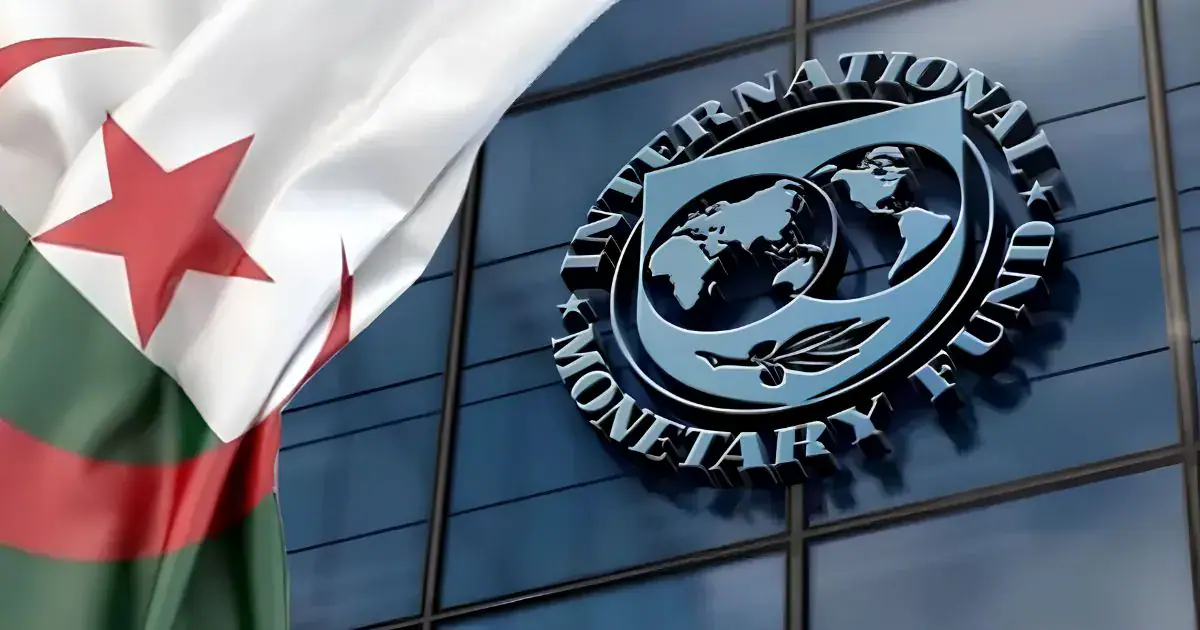
The International Monetary Fund (IMF) has released a statement praising Algeria's progress towards a more diversified economy. According to the IMF, Algeria has made "encouraging" advancements in reducing its dependence on oil and gas. The country's large investment projects, support for national production, and promotion of exports outside of the energy sector were highlighted as key factors contributing to this progress.
The IMF noted that Algeria has made significant strides towards a more diversified economy, citing its natural wealth, investment volume, reform efforts, and proximity to African and European markets as areas of strength. This assessment is not an isolated incident, as the IMF had previously estimated the size of Algeria's economy and projected its GDP to be the highest in the Maghreb region by 2026.
The IMF's evaluation also highlighted two key indicators that have caught its attention: the growing share of non-oil activities in the country's real wealth and exports. Additionally, revenues from non-hydrocarbon exports have increased in recent periods. Algeria's efforts to transform its economy have been underway for several years, with a focus on consolidating food and water security, modernizing transportation networks, and improving commercial circuits.
The country's mining sector has also been identified as a key area of focus, alongside programs aimed at strengthening food and water security. Algeria's authorities have prioritized these areas for several years. The modernization of infrastructure aims to improve domestic services and connect the country to its commercial partners, which is crucial for industrial sectors seeking external markets.
On the administrative front, the IMF noted the revision of texts governing investment, land, and mining activities. The creation of a national one-stop shop for investment has been presented as a tool to simplify procedures for project proponents, as part of a broader effort to improve governance and facilitate exchanges.
Despite these advancements, the IMF acknowledged that hydrocarbons remain a significant aspect of Algeria's economy. The country remains one of the continent's top exporters in this sector and maintains strong commercial relationships with European buyers. The IMF emphasized that hydrocarbons continue to be one of the country's "strong points."
The IMF's projections confirm Algeria's growth trajectory, with an expected 3.8% expansion of the country's GDP in 2026, following 3.7% in 2024 and 3.9% in 2025. Non-hydrocarbon activities grew by 4.3% in 2025 and are expected to remain above 4% in the coming years.
Key points
- Algeria's economy is making progress towards diversification, driven by large investment projects and support for national production.
- The IMF has projected Algeria's GDP to be the highest in the Maghreb region by 2026.
- Hydrocarbons remain a significant aspect of Algeria's economy, but the country is working to reduce its dependence on oil and gas.