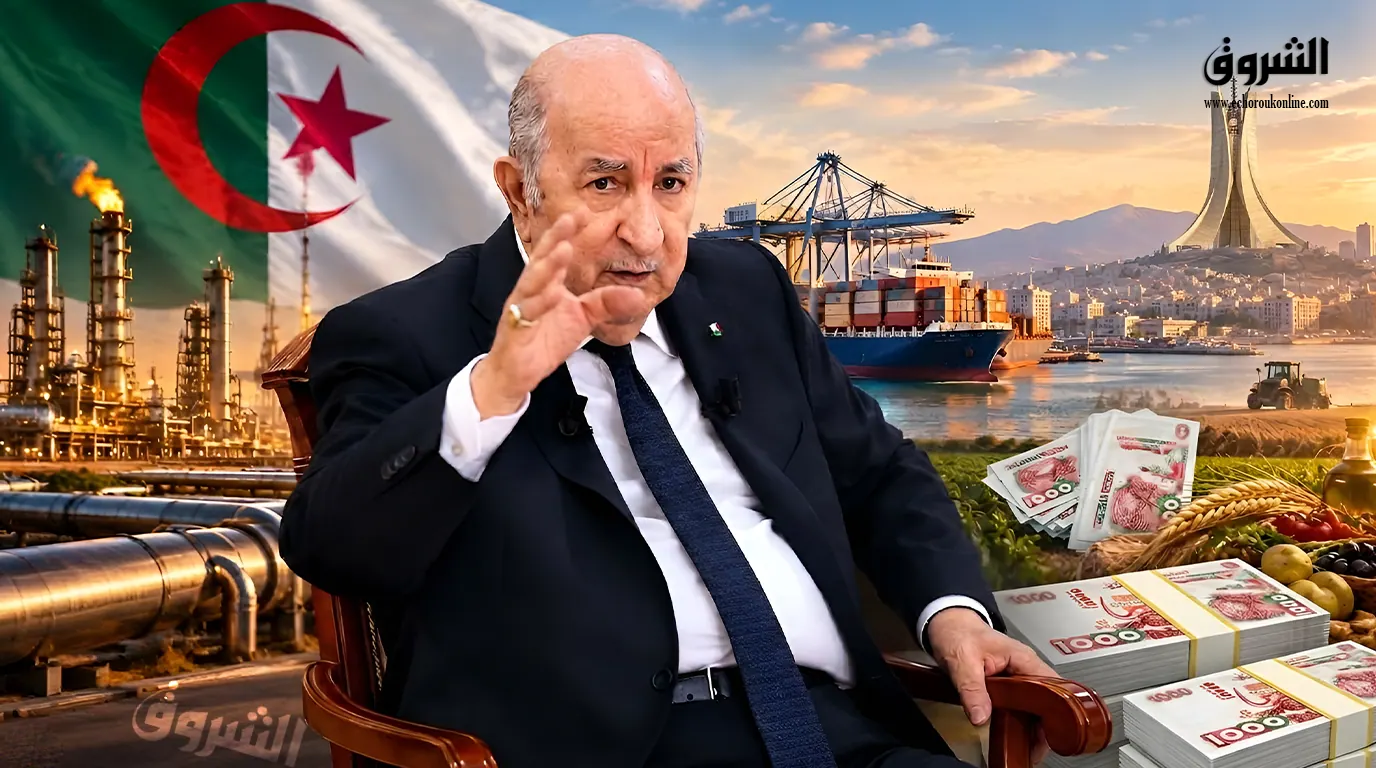
Algerian President Abdelmadjid Tebboune has outlined ambitious economic goals, including a GDP of $400 billion by 2026-2027. This target is linked to the country's investment drive and thousands of registered projects. The President's statements highlight a focus on boosting growth, supporting purchasing power, and accelerating investment and production. Algeria's economy is expected to grow between 4.01% and 4.02% in 2026, surpassing the International Monetary Fund's forecast of 3.8%.
The country's investment landscape is showing signs of improvement, with around 10,000 projects registered, including small, medium, and large-scale initiatives. President Tebboune attributes this dynamism to an improved investment climate and expanding economic activity. Algeria is also committed to increasing wages in 2027, with the President assuring that these increases will be included in next year's budget as part of a policy aimed at protecting purchasing power.
The gas sector is a significant area of focus, with Algeria positioning itself as a key player in the African gas market. The President highlighted the importance of the Trans-Saharan Gas Pipeline, which will connect Nigeria to Algeria via Niger. This project is seen as a strategic move to enhance Algeria's role as a gas transit hub for Europe. Economic expert Houari Tegrisi notes that the pipeline's success will depend on cost, financing, infrastructure, and speed of access to markets.
Tegrisi compares the Trans-Saharan pipeline to the proposed Nigeria-Morocco pipeline, which faces significant economic challenges, including a lengthy route and high investment costs. The expert estimates that the Morocco pipeline would require around $26 billion in investment and span over 7,000 kilometers, making it a complex and costly project. In contrast, the Trans-Saharan pipeline can leverage Algeria's existing gas infrastructure, including a wide national gas network and export facilities.
Algeria's government is also focused on supporting domestic producers and regulating the market. President Tebboune announced that the state will purchase surplus production from farmers to organize the market and stabilize prices. The government will also continue to monitor trade practices, with the President warning against inflated invoices and misuse of investment and import schemes to siphon off hard currency.
The construction sector is another area of focus, with the President assuring that housing programs will continue, driven by the availability of local building materials. Algeria aims to avoid a repeat of the housing crisis experienced in the 1980s and 1990s. Large-scale projects, including those related to water desalination, railways, and ports, will also continue, reflecting ongoing public investment in infrastructure.
The country's economic outlook is closely tied to its ability to balance growth with stability. President Tebboune's initiatives aim to promote investment, support purchasing power, and enhance Algeria's role in the regional gas market. The success of these efforts will depend on effective implementation and the country's ability to navigate global economic trends.
Key points
- Algeria aims to reach a GDP of $400 billion by 2026-2027.
- The Trans-Saharan Gas Pipeline is a strategic project to enhance Algeria's role as a gas transit hub for Europe.
- Algeria's government is committed to supporting domestic producers and regulating the market.