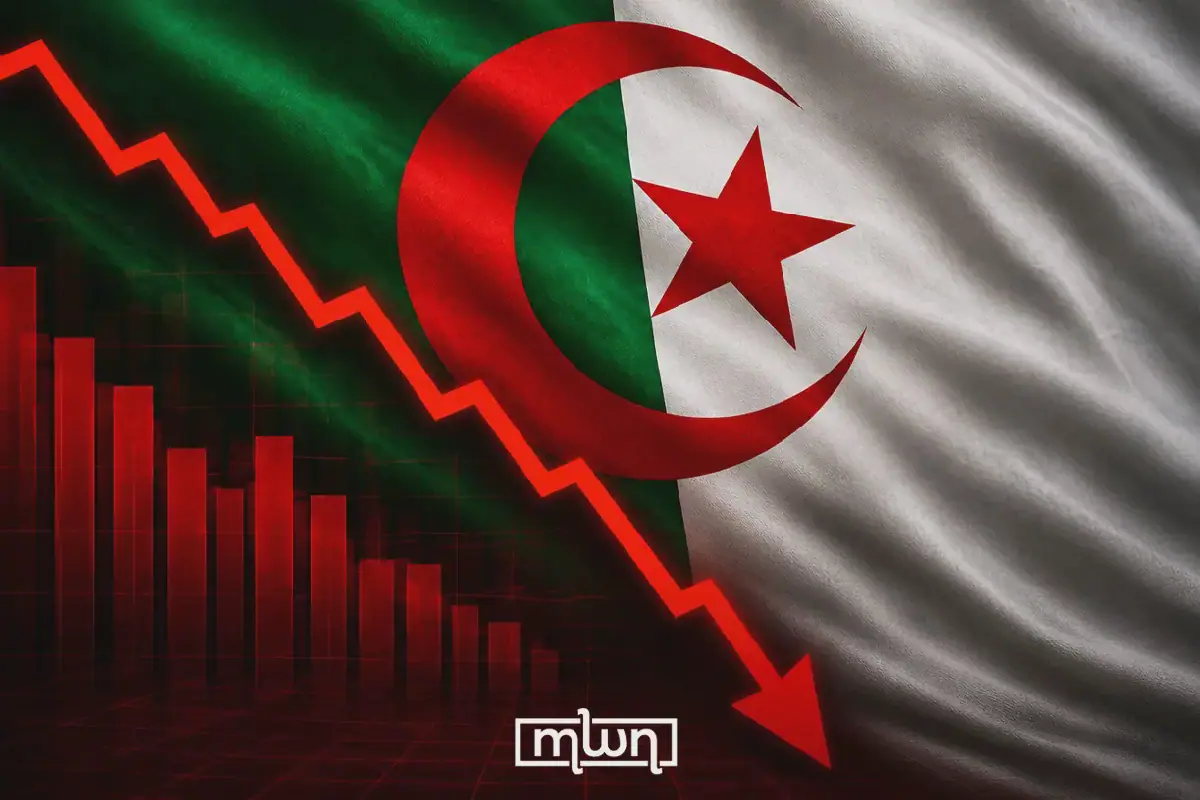
Algeria, Africa's largest country by area, has long been considered an island of stability in a turbulent region. However, its economic dependence on hydrocarbons, mounting fiscal pressures, political stagnation, and growing regional isolation are raising questions about the country's long-term stability. The country's current trajectory points toward a gradual decline rather than an imminent collapse. Algeria's economy is heavily reliant on hydrocarbons, which account for only about 13% of its gross domestic product (GDP) but generate roughly 84% of its exports and 48% of public revenue.
The country's rentier economy model, where the state collects proceeds from oil and gas and redistributes them through subsidies, public employment, and construction, has crowded out the taxpaying private sector. Public spending averaged 36% of GDP between 2020 and 2024, and estimates suggest that the oil price needed to balance the budget is around $142 per barrel, against an expected market price of $60 in 2026. This gap is significant, and only an extraordinary price spike would close it. As a result, Algeria's public accounts have been severely impacted, with the International Monetary Fund (IMF) putting the overall fiscal deficit at 13.9% of GDP in 2024.
The IMF has projected that the fiscal deficit will remain high, at 11.5% for 2025 and 12.4% for 2026. Although the 2025 deficit narrowed to 10.5% of GDP, the IMF still considers it very large. The current account, which was in surplus for two years, swung back into deficit in 2024 as imports surged while hydrocarbon exports fell. Public debt, historically low, has risen above 50% of GDP. The IMF has urged Algeria to undertake a sizable fiscal consolidation, warning that persistent deficits would push debt higher and reserves lower over the medium term.
Algeria's economic challenges are compounded by its political stagnation. The country's modern politics is characterized by a sequence of interrupted openings, including the riots of 1988, the multiparty experiment that followed, the cancelled elections of 1992, and the civil war that resulted in an estimated 250,000 deaths. The long presidency of Abdelaziz Bouteflika, who ruled from 1999 to 2019, was marked by corruption and cronyism. The current president, Abdelmadjid Tebboune, has faced significant challenges in addressing the country's economic and social issues.
The country's hydrocarbon dependence is a significant concern, particularly as the global energy transition gathers pace. Algeria has attempted to diversify its economy, with efforts in industry, agriculture, services, and mining, but progress has been modest. The country's buffers accumulated in the boom years are eroding, and the next shock would arrive with thinner reserves, higher debt, and a political system with less capacity to persuade citizens to accept austerity.
The IMF has noted that Algeria's fiscal consolidation measures are planned from 2027, which will likely be a challenging period for the regime. The country's social contract, which traded material provision for political quiescence, is no longer sustainable. The hydrocarbon-funded handouts that pacified the population are becoming increasingly expensive, and the state is reluctant to address the source of its economic challenges.
In conclusion, Algeria's economic and political challenges point to a bleak future. The country's dependence on hydrocarbons, mounting fiscal pressures, and political stagnation have raised concerns about its long-term stability. While the country's authoritarian system has surprised critics by lasting longer than expected, its current trajectory suggests a gradual decline rather than an imminent collapse.
Key points
- Algeria's economic dependence on hydrocarbons and mounting fiscal pressures are significant concerns for its long-term stability.
- The country's political stagnation and growing regional isolation are compounding its economic challenges.
- Algeria's attempts to diversify its economy have been modest, and the country's buffers accumulated in the boom years are eroding.
Reporting sources
- Read article: Algeria and the Bleak Future Ahead · Morocco World News