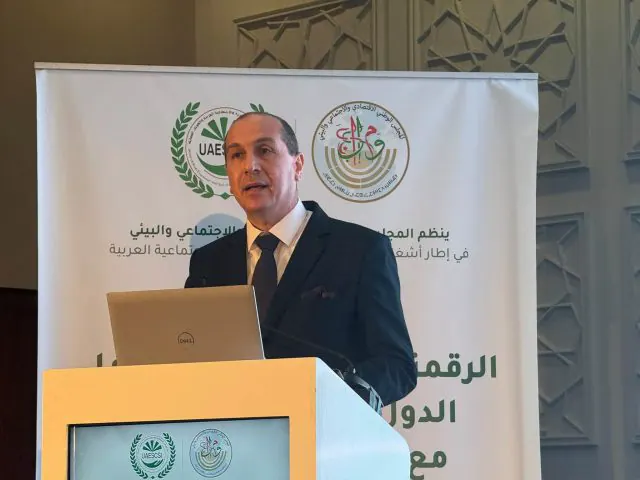
Algeria's National Economic, Social, and Environmental Council (CNESE) has reaffirmed its commitment to providing concrete recommendations to address the country's pressing economic, educational, and healthcare challenges. During the 3rd ordinary session of the CNESE General Assembly, held on October 1, 2026, in Algiers, CNESE President Mohamed Boukhari highlighted the council's focus on producing actionable plans. The CNESE has prepared three comprehensive reports on the effectiveness of public industrial and commercial establishments, the phenomenon of private tutoring, and the care of breast cancer patients.
The first report examines the financing of public services and the efficiency of public industrial and commercial establishments (EPIC). Boukhari emphasized the need to balance public service requirements with financial viability and economic efficiency. He stressed that these establishments must fulfill their public interest missions while improving governance, effectiveness, and performance. The report aims to identify areas for improvement and propose solutions to enhance the overall efficiency of EPIC.
The second report investigates the widespread practice of private tutoring in Algeria. Boukhari noted that this phenomenon extends beyond a simple parallel educational activity, with significant social, economic, and pedagogical implications. The report analyzes the causes and consequences of private tutoring on the education system and explores approaches to address this issue. The CNESE has adopted an objective and balanced perspective on the matter, seeking to understand its underlying causes and effects.
The third report focuses on institutional synergy in the care pathway for breast cancer patients. Boukhari acknowledged the substantial efforts made by the Algerian government in this area while highlighting areas for improvement. He emphasized the need for optimized care, from prevention and diagnosis to treatment, follow-up, rehabilitation, and support. The report aims to identify opportunities for enhancing the overall care experience for breast cancer patients in Algeria.
According to Boukhari, the CNESE's work is not limited to diagnosing problems but also involves developing concrete recommendations and action plans. The council's approach involves a thorough methodology, including literature reviews, comparative analysis of international experiences, and consultations with relevant stakeholders. The reports will be submitted to high authorities, providing a foundation for informed decision-making.
A key aspect of the CNESE's work is its emphasis on auto-saisine, allowing council members to identify pressing issues from their interactions with reality and propose studies and recommendations. This approach enables the CNESE to address emerging challenges and provide targeted solutions. The council's recommendations are accompanied by key performance indicators, timelines, expected outcomes, and identification of responsible parties.
The CNESE's efforts aim to contribute to Algeria's sustainable development and address pressing socio-economic challenges. By providing actionable recommendations and engaging with stakeholders, the council seeks to make a positive impact on the lives of Algerian citizens. The council's work underscores the importance of collaboration and evidence-based decision-making in addressing complex national challenges.
Key points
- The CNESE has developed three comprehensive reports on pressing issues in Algeria, including the effectiveness of public industrial and commercial establishments, private tutoring, and breast cancer care.
- The reports provide concrete recommendations and action plans, accompanied by key performance indicators and timelines.
- The CNESE's work emphasizes the importance of collaboration, auto-saisine, and evidence-based decision-making in addressing Algeria's socio-economic challenges.